 edory
edory
Interactive stories make children's eyes light up because they allow young adventurers to make their own decisions in the course of the story. It sounds exciting and fun on a screen or tablet. But what will surprise many people is this: Studies show that interactive stories not only entertain, but can increase reading competence by up to 30 percent. Who would have thought that these digital narratives offer more educational value than classic books?
Table of Contents
- What are interactive stories for children?
- Why are interactive stories important for development?
- How do interactive stories work and what elements are included?
- What advantages do interactive stories offer in the learning process?
- How can parents integrate interactive stories into everyday life?
Brief Summary
| Takeaway | Explanation |
|---|---|
| Interactive stories promote creative thinking. | Children can make decisions and experience their consequences, which stimulates creative and critical thinking. |
| Personalization improves learning processes. | Stories can be tailored to children's developmental level and interests, which increases engagement. |
| Emotional intelligence is strengthened. | Through role changes in stories, children learn empathy and how to deal with different emotions. |
| Shared use promotes family bonds. | Parents should experience interactive stories together with their children and reflect on them to strengthen interaction. |
| Use technology as a learning tool. | Interactive stories combine fun with learning and help children explore education in a playful way. |
What are interactive stories for children?
Interactive stories are a modern form of storytelling that actively involves children in the narrative process and allows them to influence the course of the story. Unlike traditional stories where children are passive listeners, interactive stories allow for dynamic participation that promotes creativity, decision-making, and emotional development.
Characteristics of interactive stories
The special feature of interactive stories lies in their flexibility and personalization. Modern storytelling technologies enable children to shape the narrative through various decision points. These stories can take different formats:
- Digital multimedia experiences with touchscreen interactions
- Interactive picture books with augmented reality elements
- Computer-controlled narratives with choice options
Through this interactivity, children are not only entertained but also cognitively challenged. They learn to anticipate consequences, explore different perspectives, and understand complex narrative structures.
Psychological and educational values
Interactive stories offer more than just entertainment. Educational research shows that such narratives support children's development on multiple levels:
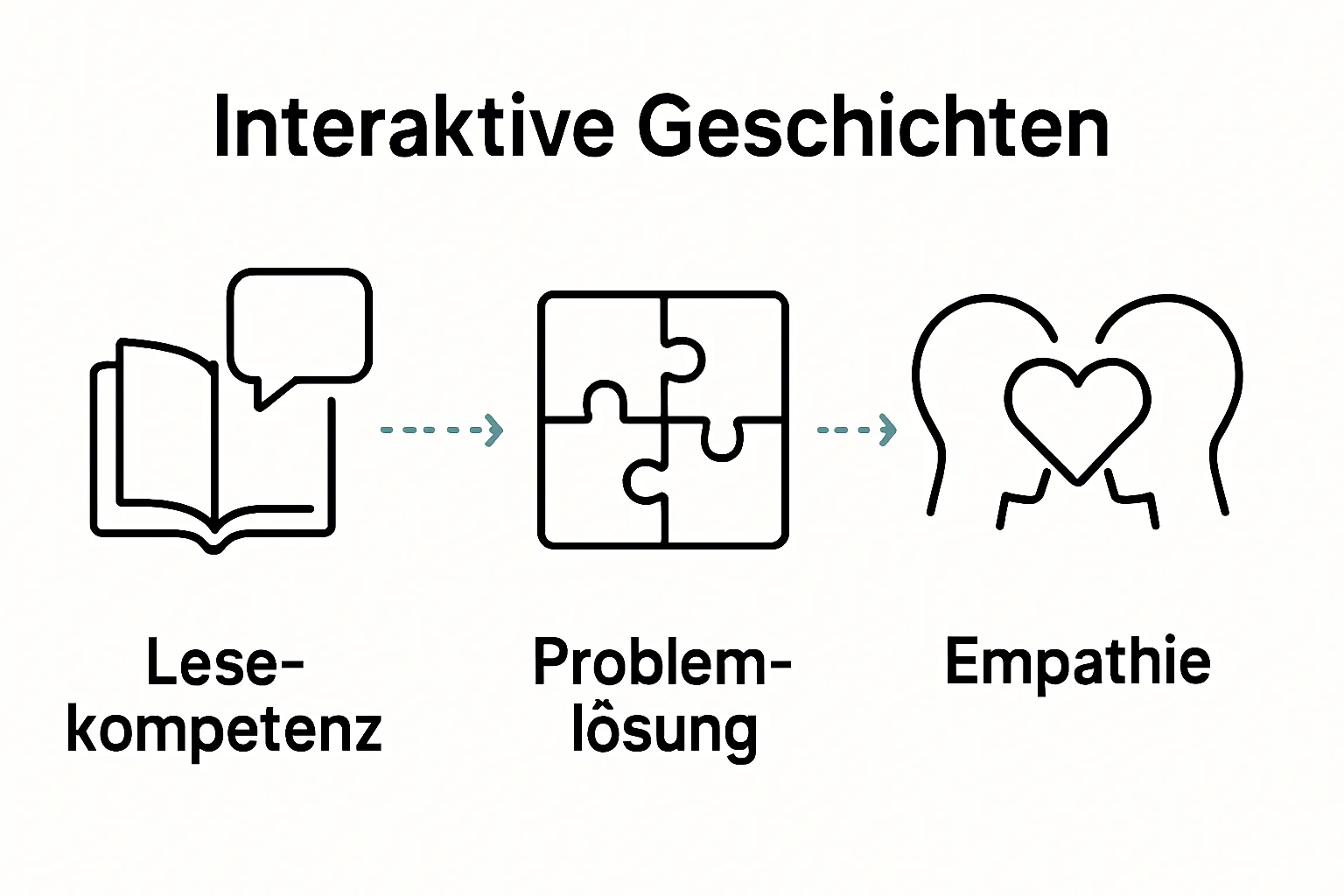
- Promotion of reading competence through active participation
- Development of problem-solving skills
- Strengthening emotional understanding through different action alternatives
The technology makes it possible to personalize stories that are tailored precisely to the individual child's developmental level and interests. Our platform understands these needs and develops stories that not only entertain children but also educate them.
Interactive stories represent a bridge between traditional storytelling and modern digital education – a fascinating way to introduce children to storytelling.
Why are interactive stories important for development?
Interactive stories are more than just an entertaining activity for children. They represent a significant developmental mechanism that promotes the cognitive, emotional, and social abilities of young people in a unique way. These innovative narratives go far beyond traditional storytelling forms and provide children with an active learning environment.
Cognitive development and problem-solving
Cognitive development studies show that interactive stories are crucial for mental maturation. By having the opportunity to make decisions and experience their consequences, children train important thinking processes:
- Logical thinking and strategic planning
- Anticipatory problem-solving
- Critical decision-making
When children explore different narrative paths in a story, they develop a deeper understanding of cause-and-effect relationships and learn to analyze complex situations.
Emotional and social intelligence
Interactive stories provide a safe space for emotional exploration. Our educational platform enables children to take on different perspectives and explore emotional reactions:
- Development of empathy through role-playing
- Understanding of different emotional states
- Learning social interaction patterns
By being able to control different characters and influence their decisions, children learn to understand subtle interpersonal dynamics.
Interactive stories are more than a technological tool - they are a modern educational approach that combines creativity, learning, and personal development in a playful and accessible way. They represent an innovative bridge between entertainment and education that helps children better understand the world around them.
To clearly compare the different areas of development and the respective benefits of interactive stories, the following table shows the most important effects on children.
| Development area | Benefits through interactive stories |
|---|---|
| Cognitive development | Promotion of logical thinking, strategic planning, problem-solving skills |
| Reading competence | Increase of up to 30%, improved text comprehension through active participation |
| Emotional intelligence | Development of empathy, improvement of emotional perception |
| Social intelligence | Learning social interaction patterns, understanding perspective-taking |
| Creativity | Stimulation of creative and critical thinking through action decisions |
| Learning motivation | Increased intrinsic motivation, strengthening of self-confidence |
How do interactive stories work and what elements are included?
Interactive stories are complex digital storytelling systems that skillfully combine technology, storytelling, and educational principles. They differ fundamentally from traditional linear narratives through their dynamic and personalized structure.
Technical architecture and structure
Media psychology research shows that interactive stories are based on a sophisticated decision-tree model. This mechanism allows children to navigate through different narrative paths:
- Branch points with multiple action options
- Dynamic storylines that change based on decisions
- Algorithmic adaptation of the narrative flow
The underlying technology combines elements from game design, artificial intelligence, and narrative programming to create an adaptive storytelling experience.
Key interactive elements
What makes a good story is redefined in interactive formats. The main elements include:
- Multimedia input options (touch, voice, gestures)
- Audiovisual feedback on user decisions
- Personalized character development
Through these elements, children's attention is not only captured but their active participation and immersion in the story is also promoted.
The technical complexity of such systems requires a careful balance between user-friendliness and narrative depth. Interactive stories must be intuitive to use while also offering enough challenges and moments of surprise to keep children engaged.
Modern interactive stories are more than simple entertainment - they are adaptive learning systems that enable children to become active shapers of their own narrative experience.
What advantages do interactive stories offer in the learning process?
Interactive stories transform traditional learning methods and create a dynamic educational environment that goes far beyond conventional pedagogical approaches. They offer children a unique opportunity to acquire knowledge by combining learning with entertainment and active participation.
Motivational learning promotion
Empirical studies on reading development show that interactive stories significantly increase reading motivation and text comprehension. By having the ability to influence the course of a story, children develop deeper engagement:
- Increased intrinsic motivation
- Active knowledge acquisition instead of passive reception
- Strengthening of self-confidence through freedom of choice
This form of playful learning allows children to explore educational content in a natural and self-determined way.
Cognitive development opportunities
Our educational platform understands that interactive stories are more than entertaining media. They function as complex cognitive training environments that address different learning areas simultaneously:
- Promotion of critical thinking
- Development of problem-solving strategies
- Improvement of information processing
By the need to anticipate the consequences of decisions, children train important mental skills in a playful way.
Interactive stories represent an innovative bridge between entertainment and education.
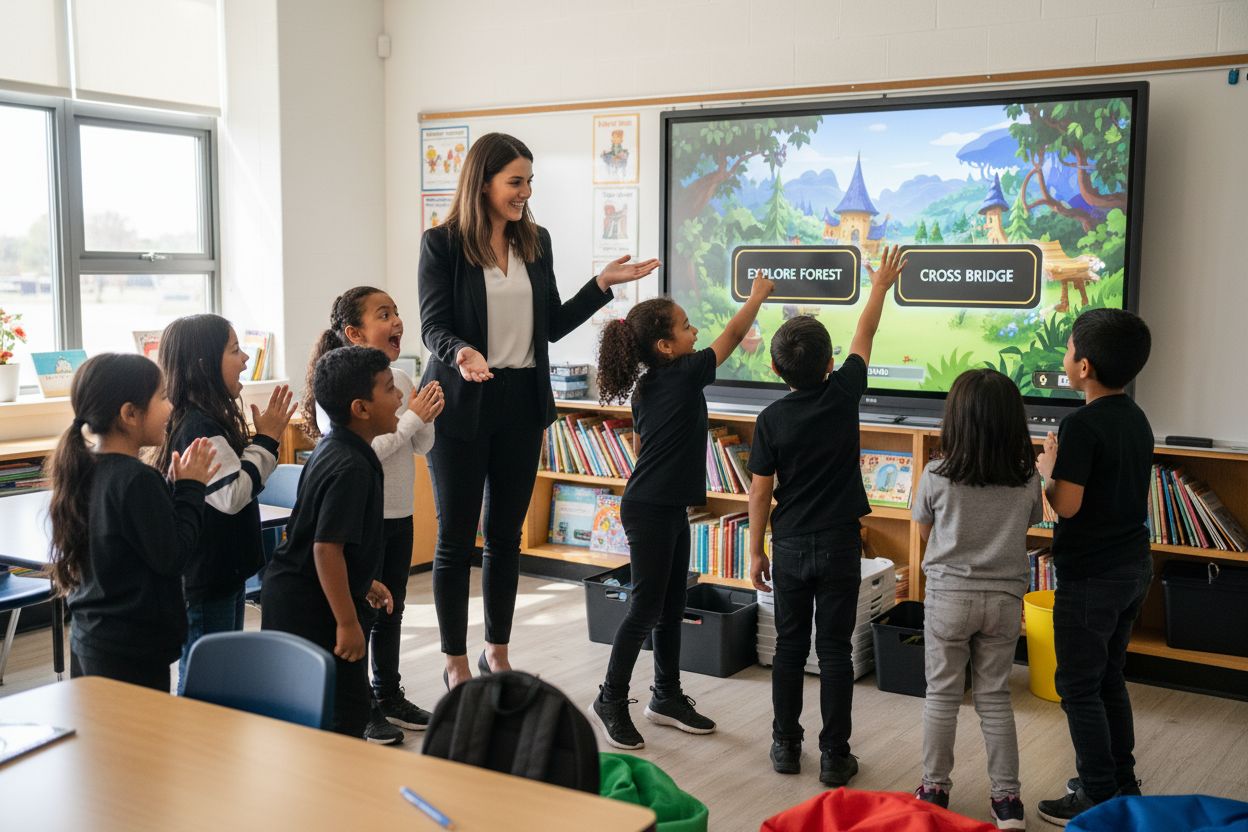 They transform the learning process from a monotonous knowledge transfer to a dynamic, personalized experience that motivates children to be curious and actively participate in their own educational journey.
How can parents integrate interactive stories into everyday life?
Integrating interactive stories into family life requires a conscious and strategic approach. Parents play a key role in making digital storytelling forms meaningful and education-promoting without compromising the quality of parent-child interaction.
Technical and spatial requirements
Family psychology studies recommend structured use of digital media. Important aspects for integration include:
- Set time windows for interactive stories
- Shared use of digital devices
- Age-appropriate selection of content
Parents should view digital media as a supplement, not a replacement, for traditional forms of communication. Active guidance and reflection on content is crucial.
Shared experience and interaction
Storytelling in family life means more than just technical use. Central to it are shared experiences and pedagogically valuable moments:
- Conversations about character decisions
- Reflection on the story after experiencing it
- Encouraging critical engagement
Through shared experience, interactive stories become a valuable tool for family interaction and education.
Successfully integrating interactive stories