 edory
edory
More than 80 percent of all children listen to fairy tales regularly – yet their influence extends far beyond bedtime stories. Fairy tales act like a secret training ground for creativity, emotional intelligence, and social skills. They convey values, stimulate imagination, and help children understand difficult situations. Those who want to understand how these ancient narratives shape children sustainably will find surprising insights here into the power of classic fantasy stories.
Table of Contents
- Fairy Tales and Their Educational Impact on Children
- Values and Morals in Classical Fairy Tales
- Promoting Fantasy and Creativity Through Fairy Tales
- Developing Social Skills and Emotional Intelligence
- Risks, Misunderstandings, and Safe Fairy Tale Selection
Key Takeaways
| Point | Details |
|---|---|
| Educational Impact of Fairy Tales | Fairy tales promote emotional development and help children learn complex life lessons in a playful way. |
| Values Education | Classical fairy tales convey moral principles and show the consequences of actions in a compelling way. |
| Promoting Fantasy | Fairy tales stimulate children's creativity and imagination by creating fantasy worlds. |
| Development of Social Skills | Shared storytelling helps children develop social and emotional skills and promote empathy. |
Fairy Tales and Their Educational Impact on Children
Fairy tales are more than just imaginative stories. They are powerful tools for education and development that introduce children playfully to important life lessons. Fantasy stories can support children in understanding complex emotional relationships and help them grasp social and moral concepts.
The impact of fairy tales on children is diverse and profound. They offer more than entertainment – they are a mirror of human experience. Through encounters with characters who overcome challenges, children learn resilience, empathy, and problem-solving skills. Narrative structures help them understand conflicts and adopt different perspectives. Educational content in fairy tales has a subtle but lasting pedagogical dimension that goes far beyond simple entertainment.
Particularly noteworthy is the way fairy tales convey moral dimensions. They present complex ethical dilemmas in a form understandable to children. Good versus evil, courage versus fear, kindness versus selfishness – these contrasts are presented not as rigid concepts but as dynamic experiential worlds. Children learn that actions have consequences and that virtues like compassion, honesty, and helpfulness are central values. The metaphorical language of fairy tales enables them to intuitively grasp complex moral concepts long before they can explain them rationally.
Values and Morals in Classical Fairy Tales
Classical fairy tales are more than just entertaining stories – they are moral textbooks that convey ethical principles to children in subtle and effective ways. Fairy tale values can make complex moral concepts understandable to children by translating abstract ideas into tangible narrative experiences.
The characters in traditional fairy tales often embody clear moral archetypes. The brave, selfless hero stands opposed to the selfish antagonist – a depiction that helps children distinguish between good and bad behaviors. Moral decisions are presented not as theoretical constructs but as living action options. Through identification with the protagonists, children learn to appreciate and develop compassion, honesty, and courage.
A central element of values education in fairy tales is the consequence of actions. Characters who are mean, greedy, or dishonest often suffer negative consequences, while virtuous figures are rewarded. This narrative structure conveys to children, not in a moralizing way but playfully, that ethical behavior pays off. Age-appropriate values education through fairy tales creates an emotional foundation for moral understanding that goes far beyond mere instruction.
Promoting Fantasy and Creativity Through Fairy Tales
Fairy tales are a magical tool for developing children's creativity, opening fantasy worlds and stimulating imagination in a playful way. How fairy tales can stimulate children's imagination shows that narrative structures fundamentally promote creative thinking.

Through the rich, often surreal worlds of fairy tales, children learn to think beyond existing boundaries. Fantastical stories encourage them to imagine unconventional solutions and consider complex situations from different perspectives. The fairy tale characters – wizards, talking animals, enchanted princesses – inspire children to reinterpret reality and develop their own creative narratives.
What is special about fairy tales is their ability to stimulate children's fantasy processes without being preachy. They offer a safe space for emotional and intellectual exploration. Children can play through imaginary challenges, explore feelings, and understand complex concepts playfully. The open narrative structures actually challenge children to develop their own interpretations and actively shape their imagination.
Developing Social Skills and Emotional Intelligence
Shared storytelling can help children develop social and emotional competencies in a playful and profound way. Fairy tales offer a unique framework in which children can explore and understand complex interpersonal dynamics and emotional states.
The characters in fairy tales serve as emotional models that help children interpret and navigate different emotional states. Emotional intelligence is promoted when children experience and empathize with the motivations, fears, and hopes of the protagonists. They learn empathy by understanding the perspectives of different characters and observing their emotional reactions to challenges.
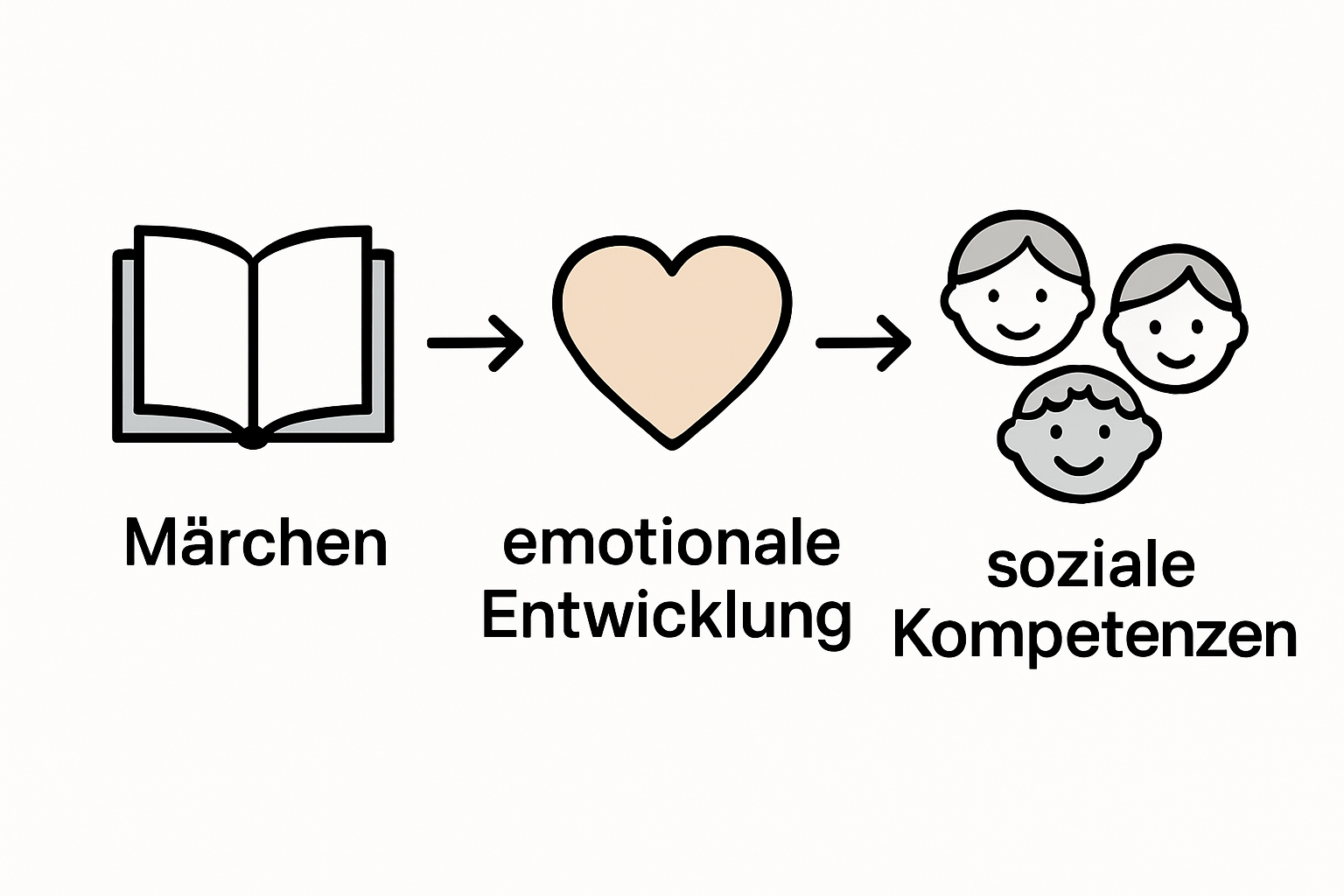
The interpretation of fairy tale characters like the Princess and the Pea shows how such stories can convey subtle social skills. Children learn sensitivity, communication skills, and the importance of respect and understanding for the feelings of others. Fairy tales create a safe space where complex social interactions can be explored and reflected upon playfully.
Risks, Misunderstandings, and Safe Fairy Tale Selection
Not all fairy tales are equally suitable for children. Development-promoting children's stories require careful selection that takes age-specific and individual needs into account. Parents should pay special attention to their children's emotional and psychological maturity when selecting fairy tales.
Age-appropriate selection is crucial. Very young children can be disturbed by stories that are too dark or contain violence, while older children can better process complex narrative structures and moral dilemmas. It is important to choose fairy tales that present challenges and conflicts in a constructive and non-traumatizing way.
The parent-child relationship can be strengthened through carefully selected stories. Reading together and discussing the fairy tales not only creates closeness but also makes it possible to contextualize difficult passages and directly address any fears or misunderstandings. Open dialogue helps children understand the metaphorical and symbolic levels of the stories.
Playfully Promote Learning Content in Fairy Tales with Edory.ai
Fairy tales shape children through their unique combination of playful fantasy and profound values education. However, parents often face the challenge of finding age-appropriate and suitable stories that both entertain and convey important learning content. This is exactly where Edory.ai comes in: Our innovative platform helps you create personalized fairy tales that specifically promote educational goals and touch emotions. This way, children can develop resilience, morality, and creativity perfectly at their own pace.
Discover in our category Uncategorized – Edory AI – Educational Children's Stories how you can optimally use the pedagogical impact of fairy tales for your child with individually generated narratives. Take advantage of the opportunity to receive new stories daily that are tailored to your child's interests and age, and playfully increase learning success. Visit Edory.ai now and start your journey to customized learning fun with fairy tales today.
Frequently Asked Questions
What is the educational content in fairy tales?
Fairy tales convey learning content by presenting moral and ethical values through narrative structures. They help children understand complex emotional and social concepts.
How do fairy tales promote emotional intelligence in children?
Fairy tales support emotional intelligence by giving children the opportunity to understand different perspectives of characters and empathize with their feelings. This way, they develop empathy.
How do fairy tales contribute to promoting creativity?
Through imaginative stories, fairy tales open up new ways of thinking for children and encourage them to develop their own creative solutions. They promote innovative and unconventional thinking.
How do I select appropriate fairy tales for my child?
It is important to choose age-appropriate fairy tales that take into account your child's emotional and psychological maturity. Avoid stories with content that is too dark or violent, especially for younger children.
Recommendation
- Educational Content in Fairy Tales: Everything Explained – Edory AI – Educational Children's Stories
- Why Are Fairy Tales Important for Children and Families? – Edory AI – Educational Children's Stories
- How Fairy Tales Come About: The Comprehensive Guide – Edory AI – Educational Children's Stories
- How Fairy Tales Stimulate Imagination: Complete Parent's Guide – Edory AI – Educational Children's Stories
- Understanding the Benefits of Imaginative Play – The Zoofamily
- 7 Fascinating Types of Abstract Art Simply Explained