 edory
edory
Every other family uses stories as a fixed part of their daily routine. Parents do much more than just read aloud – they actively shape, accompany, and explain stories for their children. Especially because stories are an effective tool for developing language, empathy, and thinking skills, it's worth taking a close look at the diverse parental tasks in storytelling. Understanding this role allows parents to support their children in their daily lives and strengthen emotional closeness.
Table of Contents
- What does parental tasks in storytelling mean
- Parental roles and goals in storytelling
- Applying age-appropriate storytelling techniques
- Using storytelling for cognitive development
- Strengthening emotional bonds through stories
- Risks and parentification in storytelling daily life
Key Takeaways
| Point | Details |
|---|---|
| Parental tasks in storytelling | Parents play an active role in selecting, conveying, and reflecting on stories, which contributes to fostering emotional intelligence and critical thinking. |
| Strengthening emotional bonds | Through active listening and shared reflections, parents can create emotional connections that foster trust and interpersonal competence. |
| Applying age-appropriate techniques | Storytelling techniques must be adapted to the child's developmental stage to be effective and not overwhelming. |
| Recognizing the risks of parentification | Parents should be careful not to transfer emotional burdens to their children in order to preserve their carefree childhood. |
What does parental tasks in storytelling mean
Parental tasks in storytelling describe the active role of parents in shaping, conveying, and interpreting stories for their children. This task goes far beyond simple reading aloud and involves complex educational interaction. According to narrative theory, parents are not just readers but also important mediators of narrative structures and emotional experiences.
The core tasks of parents in storytelling can be divided into different areas:
- Story selection: Finding appropriate stories that match the child's developmental stage and interests
- Narrative accompaniment: Active listening and interaction during storytelling
- Reflection and interpretation: Discussing story content together
- Emotional support: Creating a safe atmosphere for narrative experiences
Particularly interesting are learning stories as a specific method of educational documentation. Learning stories enable parents to document and support their children's individual learning processes through narrative descriptions. It's not just about storytelling itself, but about the deeper meaning of stories for child development.
For parents, this means concretely: Storytelling is more than entertainment. It is a powerful educational tool for promoting language development, emotional intelligence, and critical thinking. By actively and reflectively shaping and accompanying stories, parents create valuable learning spaces for their children.
Parental roles and goals in storytelling
Parents play a crucial role in storytelling as emotional companions and educational designers. They are not just storytellers but active builders of educational and developmental spaces through stories. Biographical-narrative conversation shows that sharing personal experiences is a powerful method to promote identity development and emotional connections.
The central goals of parents in storytelling include:
- Emotional education: Learning to understand and regulate feelings
- Value transmission: Introducing moral and social concepts playfully
- Promoting creativity: Stimulating imaginative abilities and fantasy
- Communication skills: Developing linguistic and narrative abilities
Narrative therapy emphasizes that stories are more than mere entertainment. They are a tool to broaden perspectives, process experiences, and develop new viewpoints. Through conscious storytelling, parents can help their children understand and interpret complex life situations.
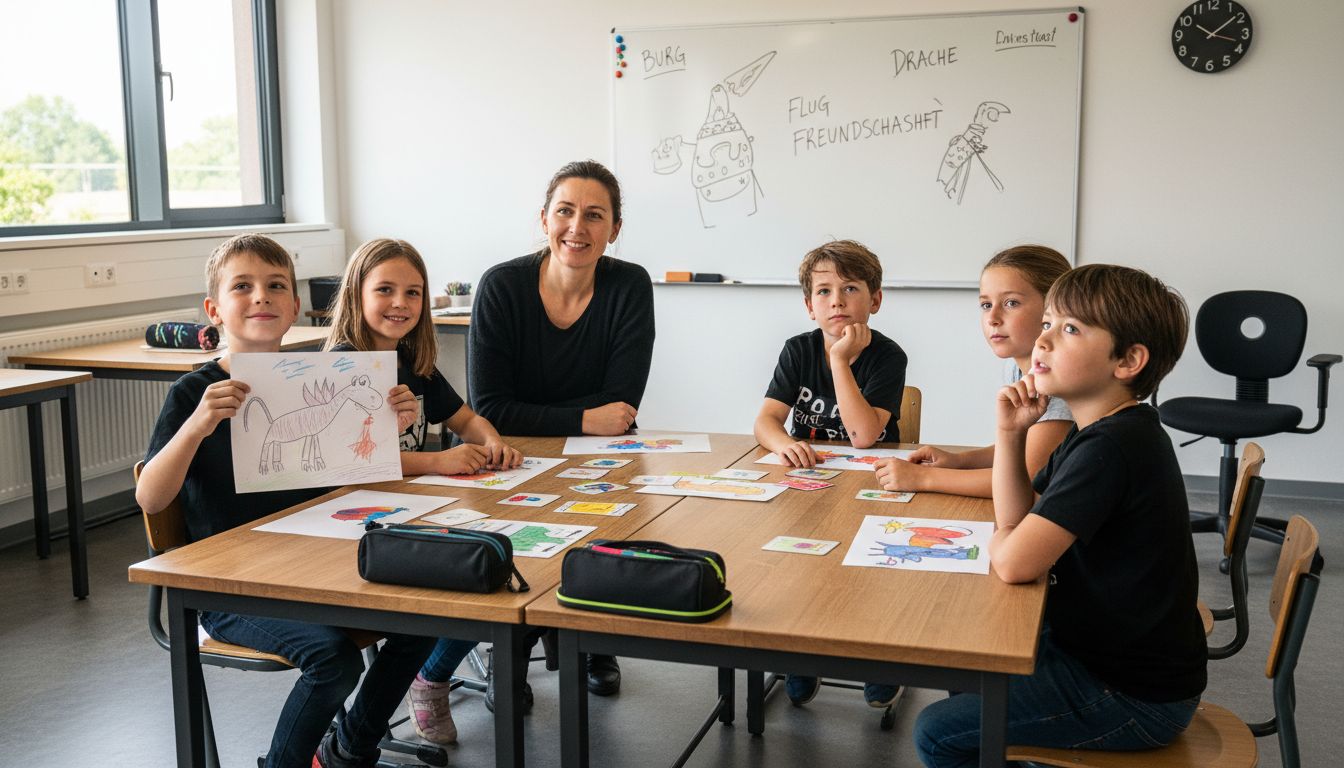
Ultimately, it's about not just telling stories but experiencing them together. By bringing stories to life and making them interactive, parents create a safe space for learning, discovery, and emotional development.
Applying age-appropriate storytelling techniques
Applying age-appropriate storytelling techniques requires a differentiated approach that adapts to the developmental stage and perception abilities of children. Narrative theory shows that the structure and impact of narrative texts must systematically vary to optimally address children in different developmental phases.
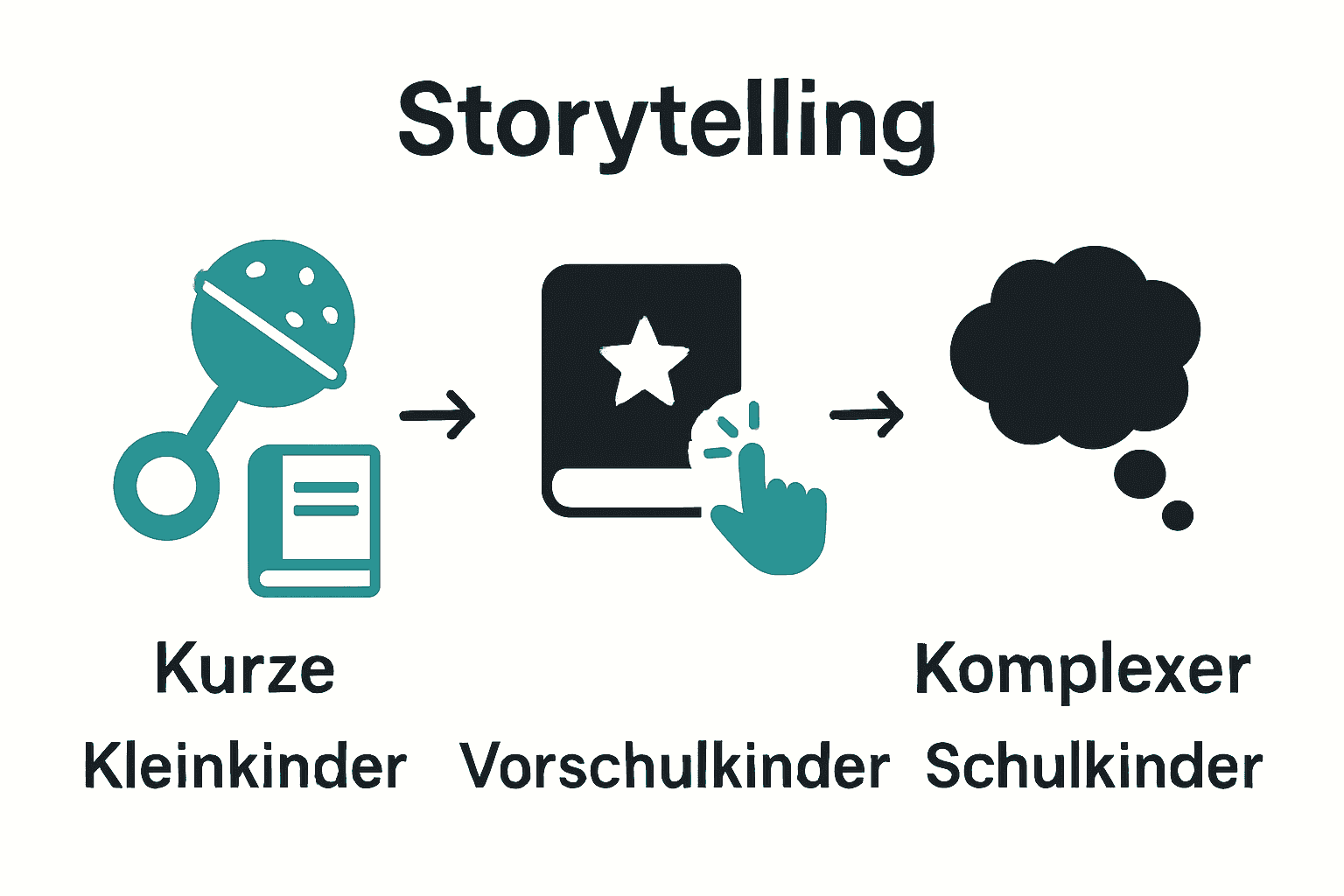
Specific storytelling strategies apply to different age groups:
- Toddlers (0-3 years):
- Short, rhythmic stories
- Repeating elements
- Simple sound language
- Nonverbal communication
- Preschoolers (3-6 years):
- Fairy tales and fantasy stories
- Interactive storytelling formats
- Emotional identification figures
- Simple moral lessons
- School children (6-12 years):
- More complex storylines
- Multidimensional characters
- Ethical challenges
- Room for critical thinking
Learning stories offer parents an additional way to document and understand developmental processes through narrative descriptions. This method enables parents to strategically integrate individual learning progress and interests of the child into stories.
Flexibility is key: Every child is unique. Parents should continuously observe, adapt their storytelling techniques, and carefully perceive their children's reactions. An empathetic, responsive storytelling approach creates the foundation for meaningful narrative experiences.
Using storytelling for cognitive development
Storytelling is a powerful tool for cognitive development of children that accomplishes much more than mere entertainment. Through carefully selected stories, parents can systematically stimulate and promote various cognitive abilities of their children. The narrative structure of stories helps children understand complex relationships, develop logical thinking, and build emotional intelligence.
Key cognitive development areas through storytelling:
- Language competence: Expanding vocabulary
- Logical thinking: Understanding cause-and-effect relationships
- Memory: Storing and retrieving information
- Creative imagination: Developing mental images
- Problem-solving skills: Discovering alternative solutions
The challenge for parents is to design stories so that they are cognitively stimulating but not overwhelming. This means considering age-specific degrees of complexity and enriching stories with interactive elements. Small thought-provoking questions and shared reflections on storylines additionally stimulate cognitive development.
Ultimately, it's about understanding storytelling as a playful learning tool. By not just telling stories but exploring them together with their children, parents create a dynamic learning environment that awakens curiosity, promotes critical thinking, and holistically supports child development.
Strengthening emotional bonds through stories
Stories are more than words – they are a bridge between hearts. Through targeted storytelling, parents can build a deep emotional connection with their children while promoting important interpersonal competencies. Parent-child relationships through stories shows how narrative experiences strengthen trust, empathy, and mutual understanding.
Key elements for strengthening emotional bonds:
- Active listening: Space for children's feelings and reactions
- Authentic emotional language: Naming and normalizing emotions
- Shared reflection: Discussing the meaning of story content
- Physical contact: Physical closeness during storytelling
- Regularity: Creating ritual storytelling moments
The art of emotional storytelling lies in the ability to not just tell stories but experience them together. Children sense their parents' unconditional attention and affection. Each story becomes a protected space of connection where feelings are named, understood, and accepted.
Ultimately, it's about conveying more than words. Through storytelling in family life, parents create emotional memories that run deeper than any everyday communication. A single story can create more closeness than a thousand pieces of advice.
Risks and parentification in storytelling daily life
Parentification is a subtle but significant psychological process in which children unwittingly take on emotional responsibilities from adults. In storytelling, this can occur when parents unconsciously project their own emotional needs and conflicts onto their children through stories. Stories against fear illustrates how sensitive narrative communication can be.
Warning signs of potential parentification:
- Excessively complex emotional topics in stories
- Using children as primary emotional support
- Using stories as an outlet for one's own unresolved problems
- Making children therapists or advisors
- Transferring emotional burdens through narratives
Parents must draw a clear line between storytelling as an educational tool and as a screen for their own needs. The educational value of storytelling emphasizes that stories should primarily serve the child's development and support.
The art is to design stories as a space of empowerment rather than overwhelm. Children need age-appropriate narratives that inspire their imagination without emotionally overwhelming them. A conscious, reflected storytelling approach protects against unintentional parentification and preserves childhood carefreedom.
Parental tasks in storytelling: Creating individual stories with Edory.ai
Parents know how important it is to tell stories in an age-appropriate and empathetic way to promote language development and emotional bonding. Yet often the time or the right idea is missing to actually implement these creative parental tasks. The challenge is to find personalized narratives that not only entertain but also provide lasting support and development.
This is where Edory.ai comes in. Our innovative platform gives parents the opportunity to generate new stories daily that are individually tailored to the age and interests of their children. This way, we support the parental role as narrative designers with child-friendly and pedagogically valuable content. Use the opportunity to expand your storytelling techniques and playfully accompany learning and development processes. Discover now in the section Uncategorized – Edory AI – Educational Children's Stories how easy it can be to strengthen emotional bonds and promote cognitive abilities with customized stories. Visit Edory.ai and start today creating valuable and individual stories for your children.
Frequently Asked Questions
What are the main tasks of parents in storytelling?
Parents play an active role in storytelling by selecting stories, accompanying them narratively, reflecting together, and providing emotional support to promote child development.
How can storytelling promote children's emotional intelligence?
Through targeted storytelling, children learn to understand and regulate feelings, leading to better emotional education and empathy.
Which storytelling techniques are suitable for different age groups?
For toddlers, short and rhythmic stories are optimal, while preschoolers benefit from interactive formats and school children prefer more complex storylines.
What is parentification and how can it be avoided in storytelling?
Parentification occurs when children take on emotional responsibilities. To avoid this, parents should be careful not to project their own emotional needs onto their children and choose age-appropriate narratives.