 edory
edory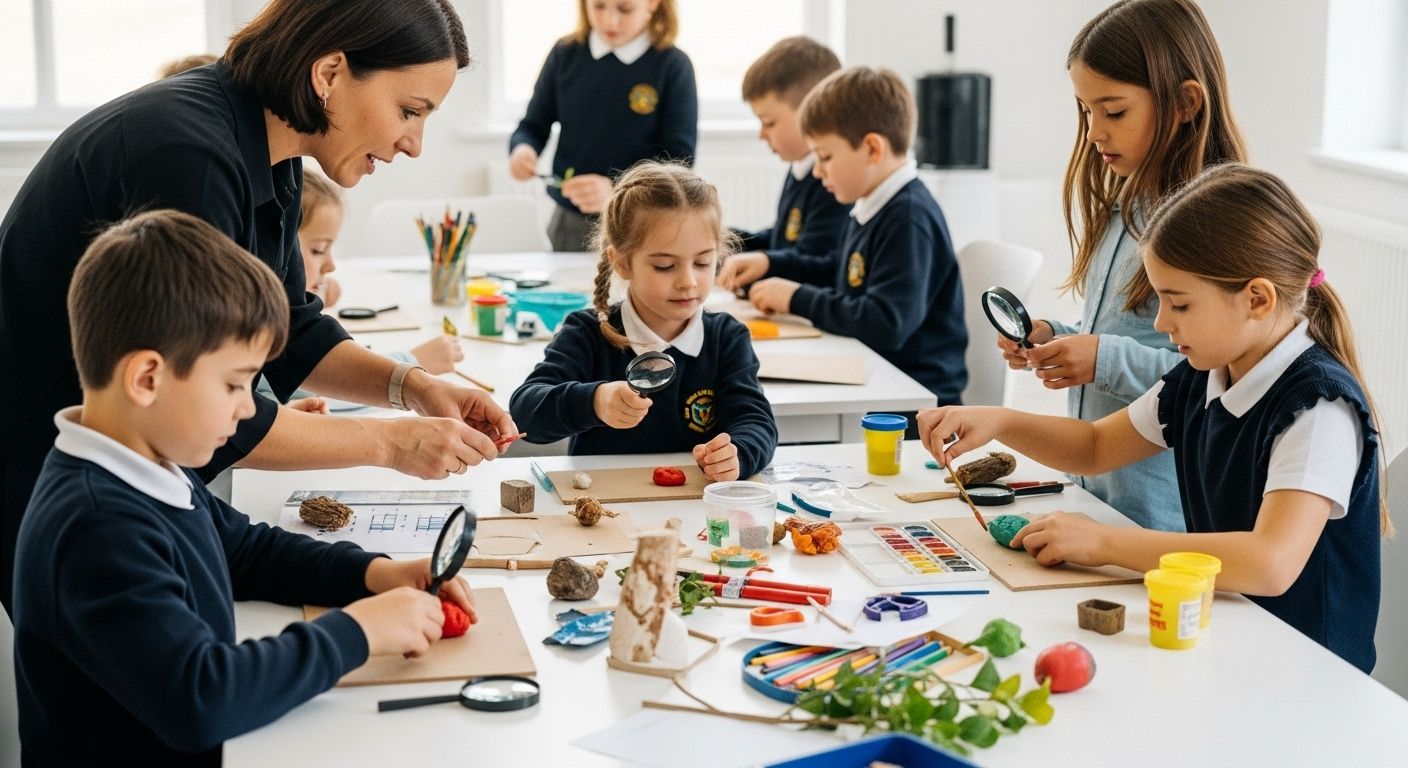
Children are happiest when they can try things out and make discoveries. Surprisingly, very little is needed for this. Simple everyday materials can create learning adventures where children playfully develop their skills. Anyone who thinks expensive toys teach knowledge will be amazed at how curiosity and creativity can create something great from just a few simple steps.
Table of Contents
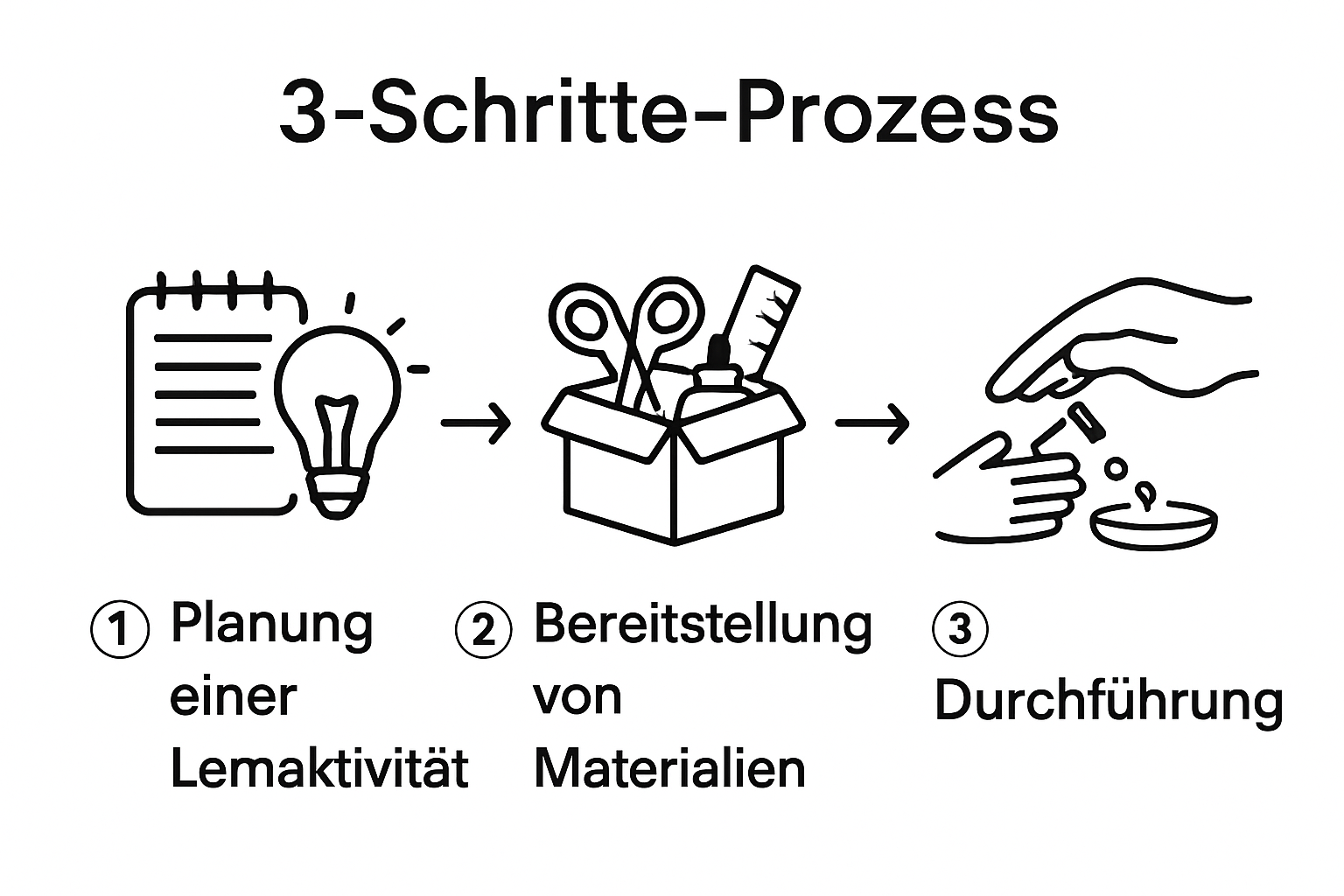
- Step 1: Plan interactive learning activities
- Step 2: Prepare materials for implementation
- Step 3: Conduct activities with children
- Step 4: Observe reactions and learning progress
- Step 5: Reflect and adjust activities
Quick Summary
| Main Point | Explanation |
|---|---|
| 1. Plan interactive learning activities | Design creative activities that motivate children and promote their skills. |
| 2. Select materials carefully | Use versatile materials that foster creativity and accommodate different learning styles. |
| 3. Conduct activities as a companion | Be a supportive guide who leaves room for independent exploration. |
| 4. Observe children's reactions | Pay attention to body language and interaction to understand learning progress. |
| 5. Reflection and adaptation of activities | Have joint conversations about experiences and flexibly adjust activities. |
Step 1: Plan interactive learning activities
Interactive learning activities are the key to enabling children to learn through experience. The first step is to create creative and engaging learning experiences that not only entertain children but also promote their cognitive and social skills.
Start with a careful inventory of your child's interests and learning needs. Observe closely which topics excite them, which activities they choose spontaneously, and where their natural curiosity is strongest. These observations form the foundation for customized learning experiments.
Selecting appropriate learning activities
When planning activities, remember that learning through experience means more than traditional teaching methods. It's about giving children space for discoveries, experiments, and independent exploration. According to the Brookings Institution, parents can support this by involving children in everyday activities and creating creative spaces.
Choose activities that engage multiple senses and accommodate different learning styles. For example, a science experiment could be designed differently for a visually oriented child than for one who likes hands-on work. Activities should be challenging but not overwhelming.
Practical implementation and flexibility
Plan sufficient time and resources, but remain flexible. Not every activity will work perfectly right away, and that's completely fine. What's important is the willingness to learn together, accept mistakes, and make adjustments. Document your child's results and reactions to better tailor future activities.
You can recognize a successful interactive learning activity by the fact that your child:
- Is enthusiastic and motivated
- Asks questions and shows interest
- Participates actively and concentratedly
- Can formulate new insights independently
The key is to make learning an exciting adventure in which children not only absorb knowledge but actively experience and process it.
Step 2: Prepare materials for implementation
The second step in the process of learning through experience is the careful selection and provision of materials that promote creativity, a sense of discovery, and active learning. A well-thought-out collection of materials is key to providing children with varied and inspiring learning experiences.
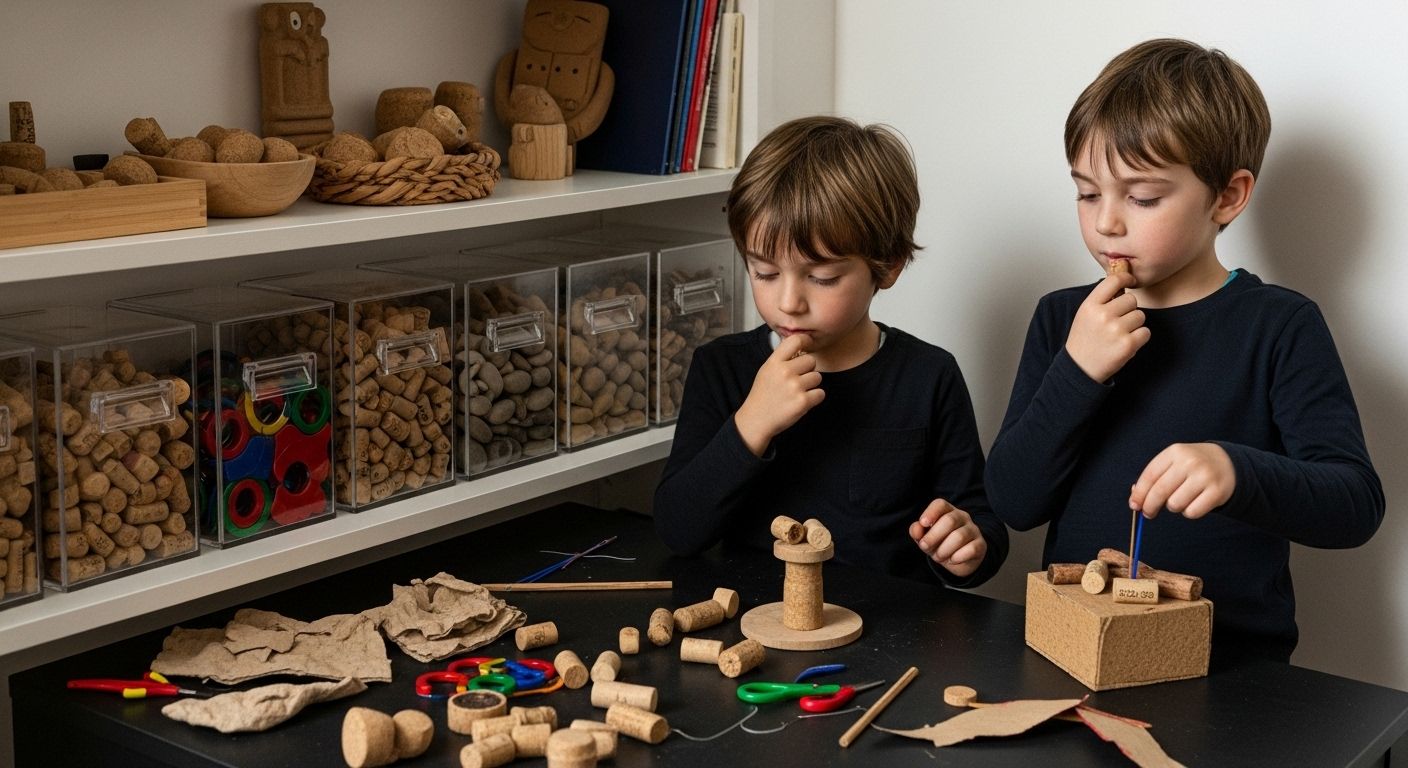
Start by taking inventory of the resources available in your household. Look for materials that engage different senses and support various learning styles. Open-ended materials, which leave room for children's imagination and interpretation, are particularly valuable.
Diverse material selection
According to insights from the Virtual Lab School, your materials should be versatile and stimulating. Gather a mix of natural and artificial objects. Perfect examples include wood pieces, cardboard tubes, boxes, toothpicks, modeling clay, magnets, magnifying glasses, and natural materials like leaves, stones, and twigs.
Organize materials in transparent boxes or open shelves so children can access them independently and without restrictions. The presentation of materials should be inviting and clear to spark curiosity and desire to experiment.
An overview table summarizes the most important materials for creative learning activities and provides information about their properties and applications.
| Material | Properties | Use in the learning process |
|---|---|---|
| Wood pieces | Natural, stable | Building, constructing, balancing |
| Cardboard tubes | Light, flexible | Crafting, experimenting |
| Boxes | Reusable | Sorting, collecting, stacking |
| Toothpicks | Small, versatile | Building models, connecting |
| Modeling clay | Moldable, colorful | Creating, modeling figures |
| Magnets | Magnetic, safe | Discovering magnetism, researching |
| Magnifying glasses | Magnification, handy | Observing, discovering |
| Leaves, stones, twigs | Natural, varied | Experiencing nature, sensory experience |
Flexibility and safety
Pay attention to your child's age and developmental stage when selecting materials. Younger children need larger, non-choking materials, while older children can use more complex construction elements. Always prioritize safety and supervise younger children during activities.
You can recognize a successful material collection by the fact that:
- Your child spontaneously interacts with the materials
- Different play ideas and constructions emerge
- The materials engage different senses and abilities
- Your child shows joy and enthusiasm when exploring
Remember: The best learning materials aren't necessarily expensive or highly complex. Creativity and a sense of discovery often emerge from simple, versatile objects that give children room for imagination and exploration.
Step 3: Conduct activities with children
Now begins the most exciting part of learning through experience: the joint implementation of planned activities. This step requires patience, flexibility, and a willingness to shape the learning process together with the child.
The role of the adult is crucial. You are not the teacher, but the guide and supporter. Approach activities with openness and curiosity, similar to your child. Show genuine interest in their discoveries and experiments.
Instruction and support
According to insights from the Virtual Lab School, activities should be designed as open-ended and playful. Give a brief introduction first, but then leave your child space for independent exploration. Ask open-ended questions like "What do you think will happen?" or "How could you do that differently?"
Observe attentively without directing too much. If your child gets stuck, offer discrete assistance. What's important is that the child experiences the activity as a self-determined adventure. Praise the process of exploring, not just the end result.
Dealing with challenges
Not every activity will go smoothly. Moments of frustration or failure are valuable learning experiences. Help your child see challenges as opportunities. Show how to solve problems creatively and learn from mistakes.
You can recognize a successful activity by the fact that:
- Your child is focused and motivated
- They show joy in experimenting
- New questions and ideas emerge
- The child can independently reflect on their experiences
Pay attention to your child's reactions and needs. Sometimes learning through experience also means ending an activity early or revisiting it later. Every child has their own learning pace and individual interests.
The key is to make learning a shared, exciting adventure in which discovery and curiosity are central.
This table provides a step-by-step overview of the entire "Learning Through Experience" process with guidance on the goal of each stage.
| Step | Goal of the stage |
|---|---|
| Plan interactive learning activities | Recognize interests, select creative activities |
| Prepare materials for implementation | Collect diverse materials, ensure accessibility and safety |
| Conduct activities with children | Shared experience, enable self-directed experimentation |
| Observe reactions and learning progress | Perceive development, recognize individual strengths |
| Reflect on and adjust activities | Open conversation rounds, optimize and develop learning process |
Step 4: Observe reactions and learning progress
The fourth step in the process of learning through experience is a careful and mindful observation of children's development and reactions. This phase is crucial for understanding individual learning potential and optimally designing future activities.
Observation means more than just watching. It's about capturing the subtle nuances of the child's learning process. Pay attention to body language, facial expressions, verbal expressions, and the way your child interacts with materials and challenges.
Documentation of the learning journey
Keep a learning journal in which you record observations, progress, and special moments. Note not only successes but also situations where your child stumbled or faced challenges. This documentation helps you recognize learning patterns and identify individual strengths and areas of development.
Use different documentation methods. Photos, short video recordings, or audio notes can provide valuable insights into the learning process. Preserve these documents and review them regularly with your child.
Understanding individual learning progress
Every child learns differently. Don't compare development with standardized expectations or other children. Focus on individual progress and the joy of learning. Learning progress is evident not only in achievements but also in curiosity, persistence, and problem-solving skills.
You can recognize successful observation by the fact that you