 edory
edory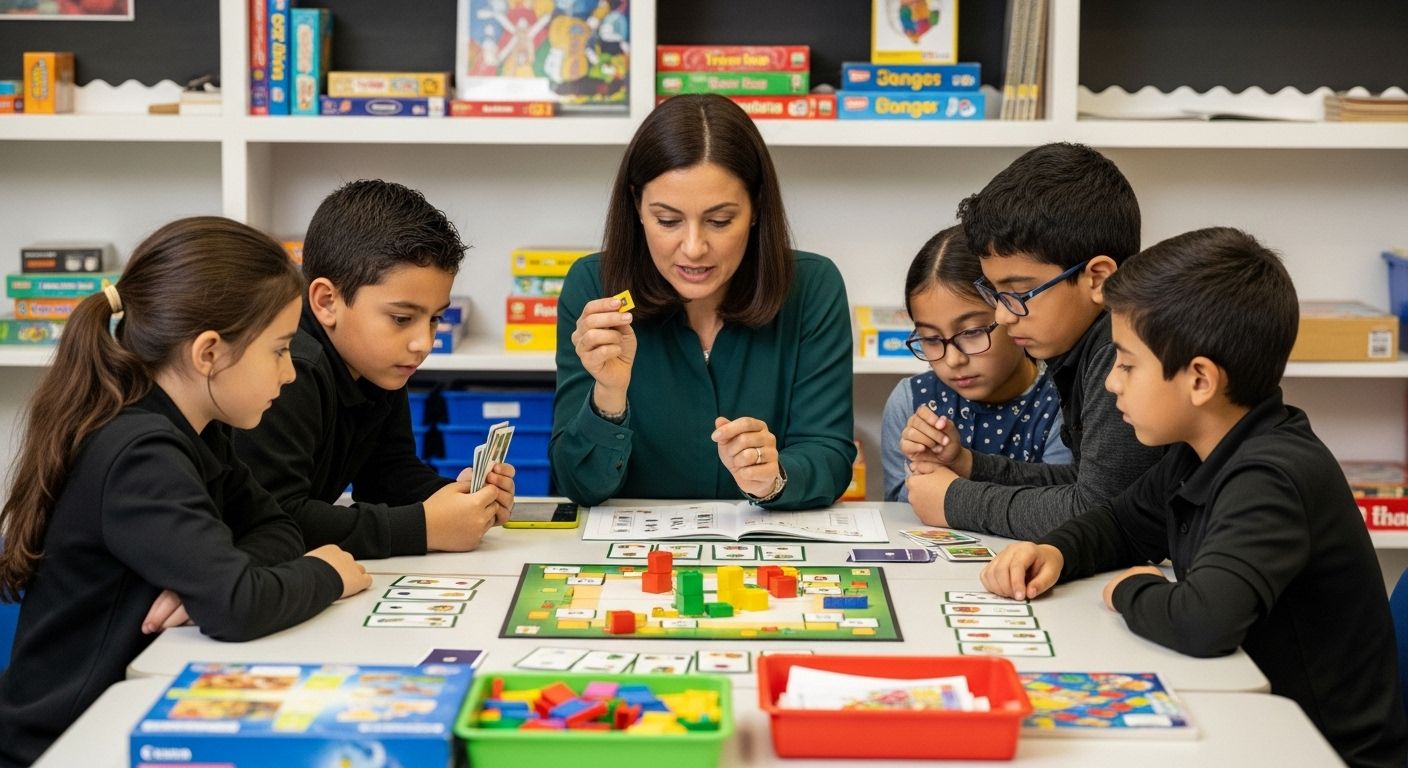
Children often learn through play much faster than through traditional teaching. Studies show that learning games can increase children's attention by up to 40 percent. Many people think that playing is just a nice way to pass time. However, through targeted learning games, knowledge can be conveyed so sustainably that children barely notice how much they actually learn.
Table of Contents
- Step 1: Choose Appropriate Learning Games
- Step 2: Prepare the Game Materials and Environment
- Step 3: Present the Game Rules Clearly and Understandably
- Step 4: Conduct the Game with the Children
- Step 5: Evaluate Learning Based on Game Results
- Step 6: Repeat the Game and Adapt It
Quick Summary
| Main Point | Explanation |
|---|---|
| 1. Choose Appropriate Learning Games | Look for games that are both entertaining and educational to promote learning. |
| 2. Prepare the Learning Environment | Create a distraction-free, friendly atmosphere with appropriate materials. |
| 3. Explain the Game Rules Clearly | Communicate the rules simply and understandably to avoid misunderstandings. |
| 4. Actively Accompany the Game | Promote motivation and individual support during the game for optimal learning progress. |
| 5. Evaluate the Learning Process | Examine not only results, but also the course and learning strategies of the children. |
Step 1: Choose Appropriate Learning Games
The key to successful learning through games lies in the careful selection of the right learning games. Not every game is equally suitable for educational purposes, so it is crucial to find games that are both entertaining and educational.
When selecting, parents and educators should consider several important criteria. First, you need to analyze the child's age and developmental stage. A game that is too complex or too simple can quickly dampen learning motivation. Look for games that offer a slight challenge while also enabling success experiences.
According to researchers at Cambridge University, games are particularly effective when they have the following characteristics:
- Interactive elements that promote active problem-solving
- Clear learning objectives conveyed playfully
- Adaptable difficulty levels
Also pay attention to the quality of the learning content. Good learning games combine entertainment with targeted knowledge transfer. They should not just present facts, but encourage children to think critically and explain complex connections playfully.
In the selection process, it is advisable to explore different types of games. Strategy games promote logical thinking, role-playing games develop social skills, and puzzle games train problem-solving abilities. Experiment with different game genres to find out what motivates and supports your child the most.
Another crucial aspect is technical quality. Choose games with appealing graphics, an intuitive user interface, and a meaningful educational concept. Avoid games with too many distracting elements or excessive advertising.
For a better overview, you will find here a comparison table of different game types and their learning effects in teaching.
| Game Type | Skills Developed | Example |
|---|---|---|
| Strategy Games | Logical Thinking, Planning | Chess, Connect Four |
| Role-Playing Games | Social Skills, Empathy | Role-Playing, Theater |
| Puzzle Games | Problem Solving, Creativity | Sudoku, Crossword Puzzles |
| Quiz Games | General Knowledge, Memory | Knowledge Quiz, Kahoot |
| Construction Games | Fine Motor Skills, Spatial Thinking | Building Blocks, LEGO |
Ultimately, it is about finding a balance between fun and education. The perfect learning game brings joy to children and conveys knowledge in a natural, non-preachy way.
Step 2: Prepare the Game Materials and the Environment
Preparing the game environment is crucial for a successful learning experience. Thoughtful material selection and a carefully designed learning landscape can make the difference between a mediocre and an inspiring gaming experience.
The right atmosphere is the key to learning success. Start by creating an inviting, distraction-free zone. Choose a quiet area that offers enough space for movement and interaction. The environment should be bright, friendly, and equipped with sufficient table or floor space.
According to studies from the Zurich University of Teacher Education, the following materials are essential for effective learning through games:
- Complete game materials with all necessary components
- Sufficient writing utensils
- Additional aids such as calculators or reference materials
Preparing the materials requires care and attention. Before starting the game, check all game elements for completeness. Sort cards, game pieces, and accessories clearly. For board games, it is recommended to count and check all parts. Digital learning games should be tested for functionality beforehand.
Consider the individual needs of participants. Children with different learning styles may need adapted materials. Ensure that game elements are clearly visible and accessible to all participants.
This table provides a quick overview of the most important preparation aspects and materials needed for a successful learning game in the classroom.
| Material/Aspect | Description |
|---|---|
| Complete Game Materials | Check that all parts are present and functional |
| Ergonomic Seating | Comfortable chairs, sufficient table or floor space |
| Lighting | Bright and pleasant atmosphere for focus |
| Additional Aids | Calculators, pens, reference materials as needed |
| Technical Preparation | Devices charged, software pre-installed, WiFi checked |
Pay attention to ergonomic aspects. For longer gaming sessions, comfortable seating and adequate lighting are important. Plan short breaks to maintain concentration and motivation.
Technical preparations are also crucial. For digital learning games, devices should be charged, internet connections checked, and required applications pre-installed. Keep charging cables and spare devices ready.
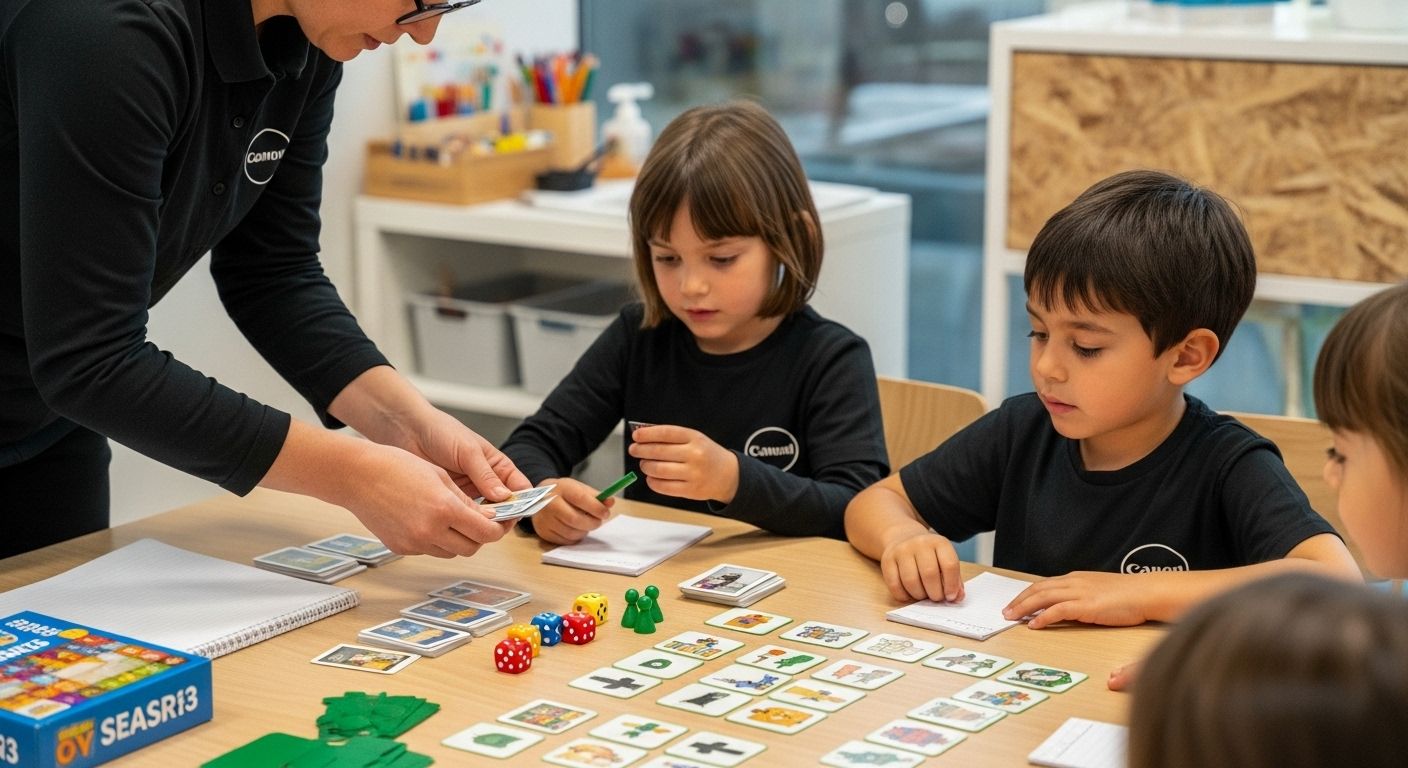
Successful preparation is evident when all participants are motivated and can start the game without technical or material obstacles. Flexibility and a positive attitude help overcome unexpected challenges.
Step 3: Present the Game Rules Clearly and Understandably
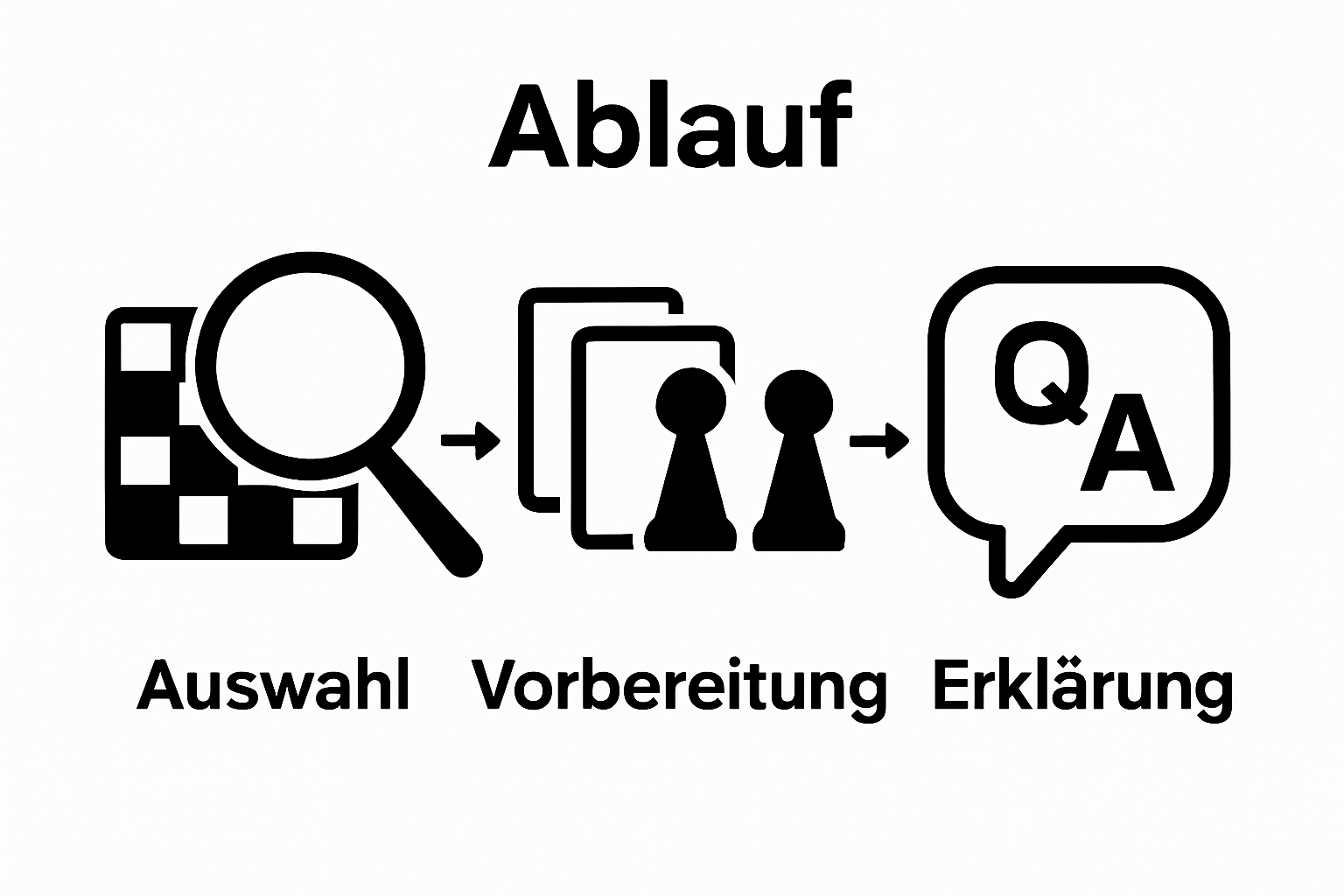
The communication of game rules forms the foundation for a successful learning experience. Clear, understandable rules create orientation and reduce misunderstandings that could hinder the learning process.
The first rule of good rule presentation is simplicity. Avoid complicated technical language and translate technical concepts into language that is accessible to all participants. Use short, precise sentences and visual aids such as examples or small demonstrations.
According to research from Ludwig Maximilian University of Munich, the following approach is recommended:
- Explain rules one at a time and in logical order
- Encourage participants to ask questions
- Clarify complex rules through practical examples
Interactivity is the key to rule understanding. Ask participants to repeat the rules in their own words. This method helps identify and close comprehension gaps early. For younger children, this can happen playfully through small role-plays or quiz questions.
Consider the different learning types in the group. While some participants understand rules best by listening, others need visual or practical explanations. Combine different explanation approaches to address all learning styles.
Pay attention to a positive, encouraging communication atmosphere. Emphasize that rules are not a restriction but a guide. Explain the purpose and meaning of each rule so that participants understand the significance and don't just follow mechanically.
For more complex games, it may be useful to create a brief written summary of the main rules. This can serve as a reference during the game and helps reduce uncertainty.
A sign of successful rule presentation is when all participants are motivated and confident. Observe reactions and be prepared to explain or simplify rules again if needed. Flexibility and patience are essential for a positive learning experience.
Step 4: Conduct the Game with the Children
Conducting the learning game requires finesse, attention, and the ability to respond flexibly to children's needs. This step largely determines learning success and participant motivation.
The role of the facilitator is crucial. You are more than just a game master - you are a moderator, motivator, and discreet learning companion. Observe the dynamics carefully, intervene only when really necessary, and give children space for independent learning and discovery.
According to research from Heidelberg University of Education, the following aspects should be considered:
- Promote active participation
- Provide constructive feedback
- Gently guide the learning process
Motivation is the key to success. Make sure to create a positive atmosphere. Praise effort, not just results. Encourage children to take on challenges and learn from mistakes. Show enthusiasm and interest, which will be transmitted to participants.
Pay attention to individual differences. Not every child learns at the same pace or in the same way. Some need more time, others need more challenge. Be patient and offer individually adapted support.
Watch the group dynamics. Promote cooperation rather than competition. Help children communicate respectfully with each other and support one another. In conflicts, mediate calmly and constructively.
Document learning progress discreetly. Note observations about learning progress, challenges, and individual strengths. These insights can later be used for targeted support.
A successful game session is evident when children are motivated, focused, and enjoying themselves. If you see enthusiasm, curiosity, and learning progress, you have achieved your goal.
Step 5: Evaluate Learning Based on Game Results
Evaluating learning success is a crucial step that involves more than simply assessing points or results. It is about gaining deeper insights into the learning process and individual developmental progress.
Holistic consideration is the key to precise evaluation. Look not only at the end result, but at the entire learning path. Pay attention to problem-solving strategies, communication skills, teamwork, and individual developmental steps.
According to research from the University of Freiburg, the following aspects should be considered:
- Document qualitative observations
- Analyze individual learning progress
- Evaluate not just results, but learning processes
Develop a structured evaluation approach. Create an observation sheet that covers different competency areas. Record observations during the game - how do children handle challenges? Do they show persistence? Do they communicate constructively?
Consider different evaluation methods. In addition to direct observation, self-reflection conversations, short questionnaires, or creative documentation forms such as learning journals can provide valuable insights.
Focus on learning gains rather than comparison. Each child develops individually. Do not compare performance with other children, but with their own previous performance. Present progress transparently and motivatingly.
Involve children in the evaluation process. Encourage them to reflect on their own learning experiences. Ask open questions: What was challenging? What did they learn that was new? Where do they want to improve?
Documentation is crucial. Keep meaningful notes that show not only deficits, but above all strengths and development potential. This documentation serves as a valuable foundation for future learning strategies.
Successful evaluation is evident when children are motivated to continue learning, enjoy discovering, and develop confidence in their abilities. The focus is not on perfection, but on continuous, joyful learning.