 edory
edory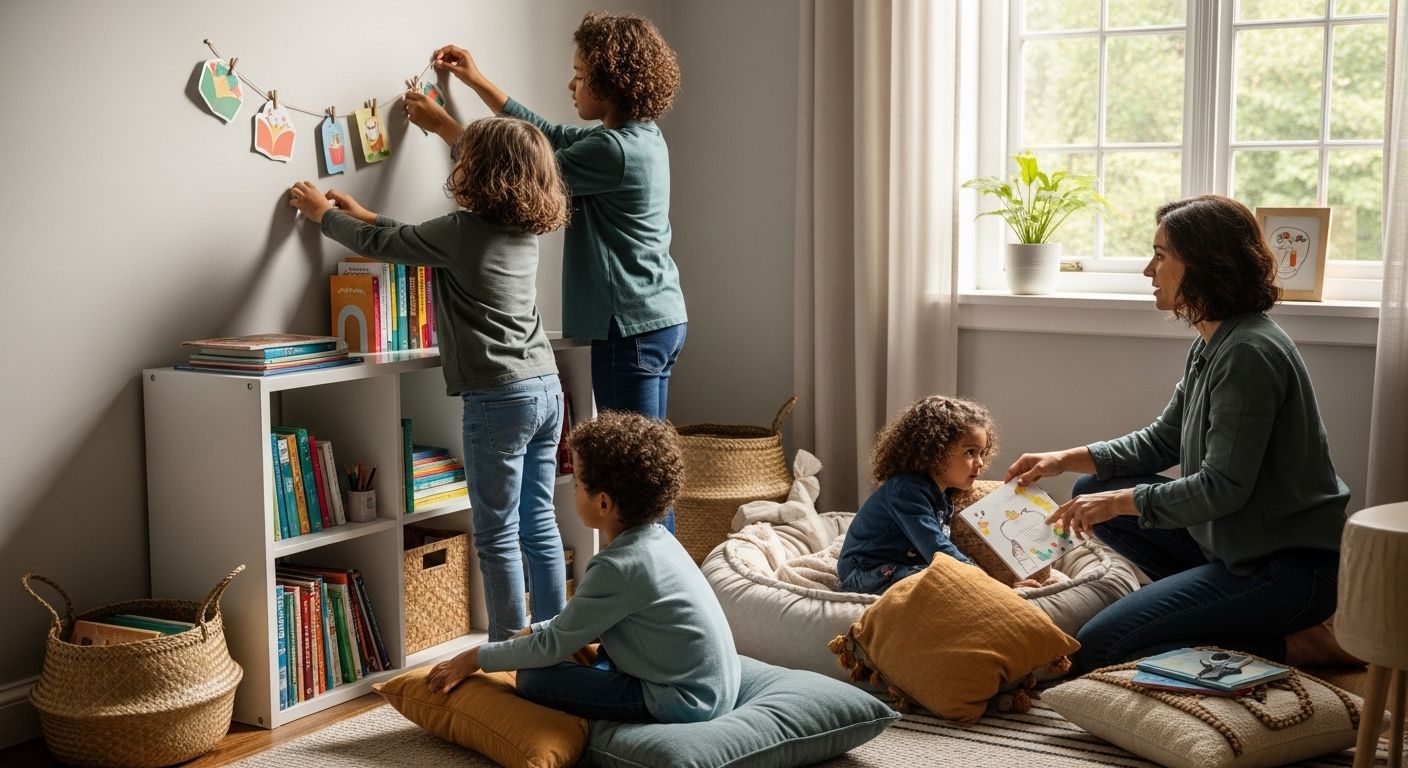
Inspiring children to love reading might sound more difficult than it actually is. Many parents know the problem: Books stay on the shelf while tablet time increases. However, it's surprising that a print-rich environment makes the biggest difference and motivates children from the start to become true book fans. It's not about magic tricks – but about small changes that spark great enthusiasm.
Table of Contents
- Step 1: Create an Inspiring Reading Environment
- Step 2: Choose Age-Appropriate and Engaging Books
- Step 3: Integrate Regular Reading Times into Daily Life
- Step 4: Encourage Shared Reading and Interaction
- Step 5: Check Progress and Adjust Selection
Quick Summary
| Important Point | Explanation |
|---|---|
| 1. Create an Inspiring Reading Environment | An inviting reading environment sparks curiosity and reading motivation in children. Design a cozy space that encourages them. |
| 2. Select Age-Appropriate Books | Choose books that match the child's interests and abilities to increase reading enjoyment. |
| 3. Integrate Regular Reading Times | Establish fixed reading times in daily life to make reading a pleasant ritual and foster enthusiasm. |
| 4. Make Shared Reading Interactive | Integrate questions and role-play during reading to strengthen the bond between parent and child. |
| 5. Check Progress Regularly | Document reading development and flexibly adjust book selection to maintain and increase reading enthusiasm. |
Step 1: Create an Inspiring Reading Environment
An inviting and stimulating reading environment is the key to awakening children's love of reading. Children need a special space that motivates them to discover and immerse themselves in stories. The first step is to create an environment that sparks curiosity and enthusiasm for books.
Start by creating a cozy reading area. Choose a quiet place in your home, away from distractions like television or loud noises. A soft armchair, a cozy corner with pillows and blankets, or even a self-built reading den can give children a sense of security and comfort. According to the Reading Improvement Study, a print-rich environment is crucial for reading development.
The design should be interactive and inviting. Place books at child height so they're easily accessible. Use colorful shelves or baskets that present books attractively. Organize books by theme or age group to make selection easier for children. Make sure to offer a variety of reading materials: picture books, early reader books, comics, magazines, and even interactive books with flaps or sound effects.
Consider your child's individual interests. If your child loves dinosaurs, make sure corresponding books are prominently displayed. For children who enjoy adventures, books about discoveries or fantasy worlds might be particularly exciting. Personal customization makes the reading area a magical place where children can discover their own stories.
Tips for a successful reading environment:
- Good lighting (natural light or soft reading lamps)
- Comfortable seating
- Books at child height
- Personal decoration with book themes
Check whether your child enjoys spending time in this area. A successful reading space shows itself when children come here on their own to read or browse.
Step 2: Choose Age-Appropriate and Engaging Books
Books are like keys to magical worlds that inspire children to read. The art of choosing the right books determines whether a child develops a love of reading or turns away from it. According to the Reading Rockets Study, it's crucial to choose books that match the child's developmental stage exactly.
Start by carefully observing your child's interests and abilities. A preschooler with a passion for dinosaurs will be motivated quite differently than a first-grader who loves detective stories. Let your child help decide which books to choose - this increases anticipation and motivation. Make sure books aren't too difficult, but also not too easy. A good trick is the so-called Five-Finger Test: If the child opens a page and doesn't know more than five words, the book is probably too complicated.
Book selection should offer a balanced mix of different genres and difficulty levels. Recommended are books with colorful illustrations, clear fonts, and appealing page layout. Picture books with little text work well for younger children, while early readers prefer short stories with simple sentences. For advanced readers, longer chapter books can be interesting.
Special attention deserves interactive books or those with unusual narrative structures. Pop-up books, books with flaps or sound effects can further motivate children. Non-fiction books on topics that excite the child can also be great reading incentives. A child interested in space will devour astronomy children's books.
Important criteria when choosing books:
- Consider the child's age and reading ability
- Include personal interests
- Pay attention to comprehensibility and motivation
- Offer diverse genres
A sign that you've made the right book choice is your child's enthusiasm. If they reach for the book on their own, enjoy reading aloud, or retell stories, you've found the perfect way to spark a love of reading.
To give you a quick overview of the most important criteria for choosing children's books, here's a clear comparison table of recommended book features.
| Criterion | Importance | Example/Recommendation |
|---|---|---|
| Child's age | Adapt books to developmental stage | Picture books for preschoolers |
| Interests | Choose topics that excite the child | Dinosaurs, detectives, space |
| Reading ability | Difficulty neither too easy nor too hard | Apply Five-Finger Test |
| Genre variety | Offer different book types and genres | Comics, non-fiction, fantasy |
| Interactivity | Special book forms for motivation | Pop-up, flap, or sound books |
| Design | Appealing illustrations and clear font | Large print, colorful pictures |
Step 3: Integrate Regular Reading Times into Daily Life
The key to reading happiness lies in regularity. According to the National Library of Medicine Study, regular reading times can decisively promote children's cognitive development. Reading should be perceived not as a duty, but as a magical adventure.
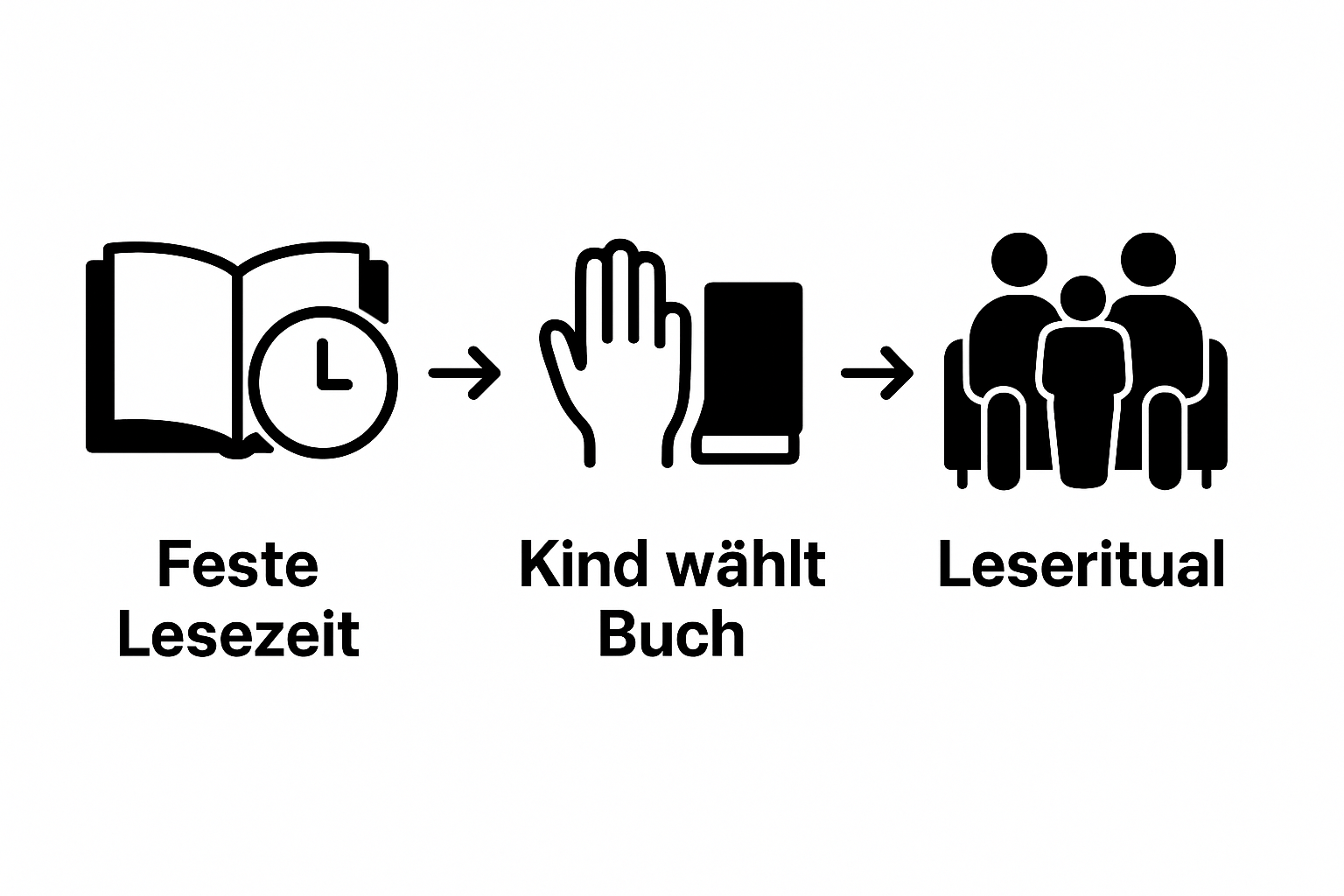
Integrate reading times naturally into your family's daily routine. Bedtime is particularly suitable: An evening reading ritual creates comfort and prepares children for a peaceful night. Start with short stories of 5-10 minutes and increase duration depending on your child's age and concentration ability. Mornings or weekends can become popular family events with shared reading hours in the cozy corner or on the couch.
Be creative in designing reading times. Themed reading days can give children extra motivation. A "Pirate Reading Day" with appropriate costumes or a "Dinosaur Afternoon" with matching books makes reading an experience. Let your child choose which story to read - this strengthens initiative and increases anticipation.
Consider different reading formats. Reading aloud is not all the same. Sometimes it can be a calm story, other times an interactive reading with distributed roles. Use different voice tones, make sounds, and let your child participate. For older children, reading in rounds, where everyone takes a paragraph or page, works well.
Challenges will always arise. If your child doesn't feel like reading, don't force them. Respect their current mood, but remain persistent and encouraging. Some days might involve just two pages, other days a whole story can be devoured.
Below you'll find a practical table listing common reading challenges in daily life and offering simple solutions.
| Challenge | Possible Cause | Recommended Solution |
|---|---|---|
| Child shows no interest in reading | Day is too full, exhaustion | Flexible reading times, try short sessions |
| Books stay on the shelf | Selection not age-appropriate | Ask about interests, choose new books together |
| Overwhelmed while reading | Book too difficult | Adjust difficulty level, use Five-Finger Test |
| Child loses interest quickly | Inappropriate book choice or environment | Optimize environment, incorporate diverse genres |
| No interaction while reading aloud | Reading time too monotonous | Ask questions, include role-play |
Important tips for successful reading times:
- Plan fixed times
- Let child choose
- Try different reading formats
- Stay flexible
- Emphasize fun and enjoyment
A sign of successful reading times is when your child retrieves books on their own, retells stories, or even begins reading independently. The enthusiasm for reading grows with each shared reading time.
Step 4: Encourage Shared Reading and Interaction
Shared reading is more than just reading words aloud - it's a bridge of communication and connection between parents and children. According to the long-term study on children's language development, interactive reading has direct effects on children's linguistic and academic development.
Interaction is the key to successful shared reading. Transform reading aloud into a dynamic experience by actively engaging with your child. Ask open-ended questions about pictures and stories: "What do you think will happen next?" or "How does the main character feel right now?". Let your child make guesses, describe characters, and develop their own interpretations.
Use different interaction techniques to increase reading enjoyment. Sometimes you take on character roles with different voices, sometimes you let your child make sounds or movements for certain book pages. A story about a dog, for example, can be accompanied by barking or tail wagging together. Such playful elements make reading a multisensory experience.
Pay attention to your child's age when using interaction. For toddlers, it's more about visual stimulation and simple questions, while older children can already have more complex discussions about plot, character development, and feelings. Adjust your approach flexibly and be surprised by your child's thoughts and ideas.
Special interaction moments:
- Swap roles and let child read aloud
- Develop stories together
- Act out book characters
- Connect personal experiences with book stories
A sign of successful interaction is when your child asks questions, makes guesses, and shows enthusiasm. When stories continue after reading aloud, book characters appear in play, or your child spontaneously invents their own little stories, you've created a deep connection to reading.

Step 5: Check Progress and Adjust Selection
The development of reading skills is a dynamic process that requires continuous attention and adjustment. According to the Study on Reading Development, systematic monitoring is crucial to effectively support children in learning to read.
Observe your child's reading development carefully and without pressure. Pay attention to how their reading abilities and interests change over time. A simple way is documentation: Note in a reading book or diary which books were read, how long the child could concentrate, and what reactions they showed. Were their eyes shining? Did they ask questions? Were there moments when they were particularly attentive?
Develop a playful progress check. Let your child complete small challenges after reading: Tell a short summary of the story, draw something about what was read, or describe their favorite character. These creative methods not only show reading progress but make reading an interactive experience.
Be flexible with book selection. What excites today can be boring tomorrow. Children go through rapid developmental phases, and their reading interests change accordingly