 edory
edory
Parents often look for ways to teach their children important values and prepare them for life. Many think of endless lectures or strict rules. But did you know that age-appropriate stories have been proven to promote children's language comprehension and emotional intelligence? These narratives often work quietly, yet much more powerfully than one might expect.
Table of Contents
- What are Parenting Guide Stories?
- Why Are Stories Important for Parenting?
- How Do Parenting Guide Stories Affect Children?
- Key Concepts in Parenting Guide Stories
- Practical Applications of Stories in Parenting
Quick Summary
| Takeaway | Explanation |
|---|---|
| Parenting Guide Stories Transmit Values | They help children understand concepts like kindness, respect, and collaboration. |
| Emotional Intelligence is Promoted | Stories enable children to reflect on and regulate their own feelings and those of others. |
| Stories Support Cognitive Development | Through storytelling, children develop language skills and logical thinking abilities. |
| Safe Identification with Characters | Children can experience conflictual situations through the eyes of characters and learn without feeling threatened. |
| Strategies for Conflict Resolution | Through stories, children learn positive ways to handle social conflicts and develop empathy. |
What are Parenting Guide Stories?
Parenting Guide Stories are special narrative tools that help parents and educators convey complex educational messages in an engaging and understandable way. These stories combine entertaining narratives with targeted learning goals to teach children important life skills and moral values.
Characteristics of Parenting Guide Stories
Good Parenting Guide Stories are characterized by several essential features:
- Easy-to-understand language for children
- Clear moral or educational message
- Realistic and age-appropriate characters
- Emotional depth that touches children and encourages reflection
These stories function like a subtle teaching tool that helps children understand complex situations and feelings.
The following table provides an overview of the most important characteristics of Parenting Guide Stories as described in the article.
| Characteristic | Description |
|---|---|
| Easy-to-understand language | The stories use language that children can easily follow. |
| Clear educational message | Each narrative conveys a clear moral or educational message. |
| Realistic, age-appropriate characters | Figures and their actions are understandable and relevant to the specific age group. |
| Emotional depth | Stories evoke feelings and encourage children to reflect on their experiences. |
| Subtle teaching tool | The stories promote understanding of complex situations through narrative transmission. |
| Our experts in child development emphasize that such narratives are a powerful method for teaching children social and emotional competencies. |
How They Work and Their Importance
Parenting Guide Stories work on multiple levels. They create a safe emotional distance by presenting conflicts and challenges through characters and events. In this way, children can view complex situations from an outside perspective without feeling threatened.
The educational value lies in the fact that children learn to develop empathy, recognize problem-solving strategies, and understand social norms. A story can show, for example, how a character resolves conflicts peacefully or shows compassion, serving as a positive role model for children.
The power of these stories lies in their ability to convey abstract concepts like kindness, respect, and collaboration in a tangible and understandable way. They help children develop emotional intelligence and understand complex social dynamics.
Why Are Stories Important for Parenting?
Stories are more than just entertainment for children. They play a crucial role in the cognitive and emotional development of young people and offer parents a powerful tool for knowledge transmission and value formation.
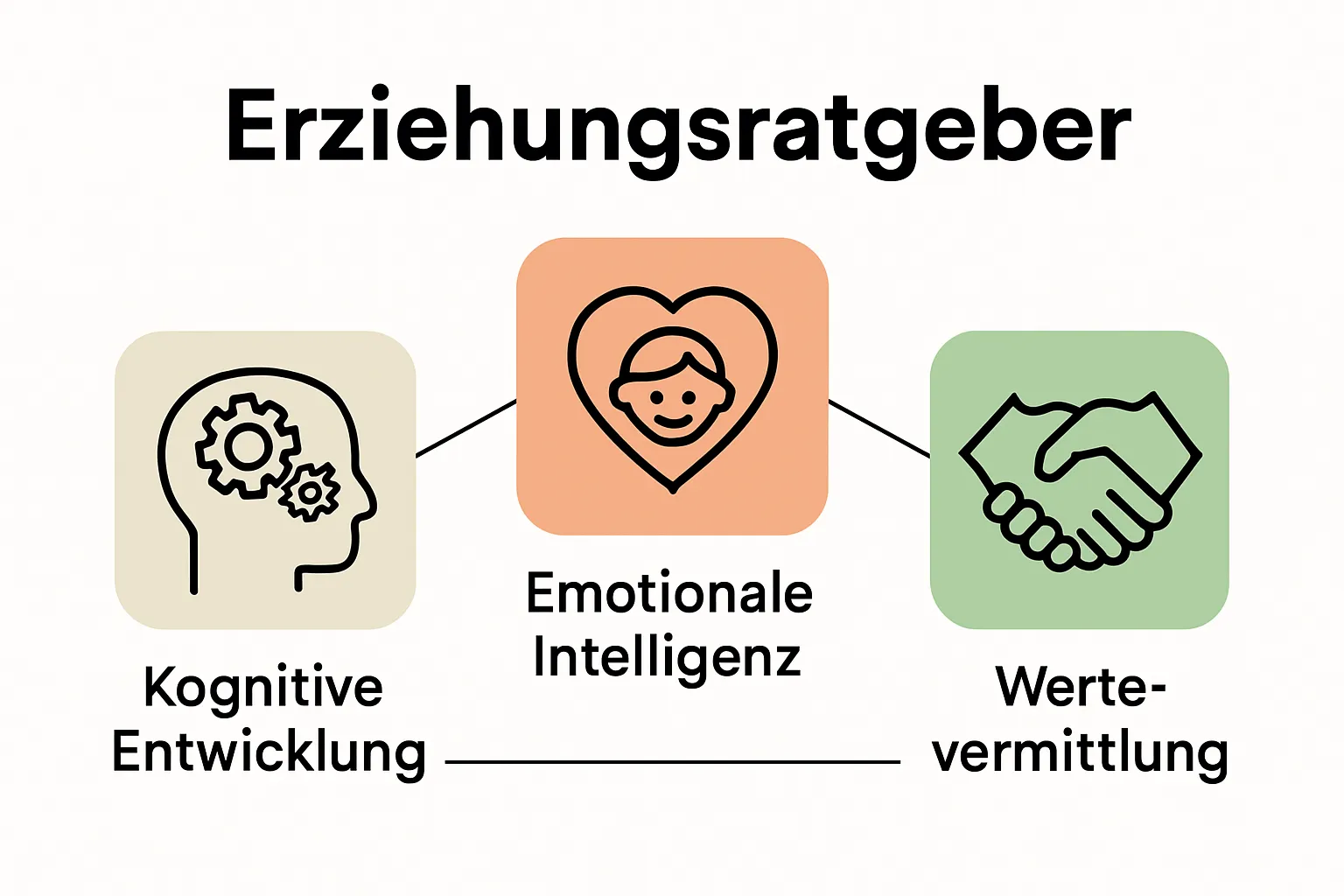
Cognitive Development Through Storytelling
Narratives stimulate children's imagination and promote important cognitive skills. By listening to and experiencing stories, children develop:
- Language skills and vocabulary expansion
- Logical thinking and problem-solving abilities
- Understanding of cause-and-effect relationships
- Creative and abstract thinking
Developmental psychologists confirm that stories play a significant role in children's mental development. They help convey complex information in an understandable and accessible way.
Emotional Intelligence and Social Learning
Stories function as spaces for emotional education. They enable children to explore, understand, and reflect on feelings. By identifying with characters, children learn empathy, emotional regulation, and social competencies.
When a child hears a story where a character overcomes challenges or resolves conflicts peacefully, they unconsciously internalize important behavioral strategies. These narrative experiences shape emotional understanding and social interaction abilities.
Cultural and Moral Value Transmission
Stories have been a central medium for transmitting knowledge, traditions, and moral principles for thousands of years. They transport cultural values, ethical principles, and social norms in a subtle and effective manner.
Through stories, children learn concepts like respect, compassion, honesty, and cooperation. They understand abstract moral principles not through dry lectures, but through emotional and narrative experiences that remain deeply anchored in their memory.
How Do Parenting Guide Stories Affect Children?
Parenting Guide Stories unfold their effects on children at various psychological and neurological levels. They are not simple entertainment media, but complex educational instruments that deliberately support children's developmental processes.
Neurobiological Mechanisms of Action
While children listen to stories, multiple areas of their brain become active. Neuroscientific research on child development shows that narrative experiences stimulate specific brain regions:
- Language centers for language comprehension
- Emotional processing zones in the limbic system
- Memory areas for information storage
- Creative centers for imagination and imagination
These neural activations enable profound cognitive and emotional processing of the narrative.
The following table summarizes central neurobiological and psychological mechanisms of action that explain how Parenting Guide Stories affect children.
| Mechanism of Action | Description |
|---|---|
| Activation of language centers | Listening promotes language comprehension and further develops language skills. |
| Stimulation of emotional brain areas | Stories address the limbic system and promote emotional processing. |
| Support of memory formation | Storytelling strengthens the storage and retrieval of information in the brain. |
| Promotion of imagination | Narratives stimulate fantasy and expand creative thinking processes. |
| Emotional identification | Children experience feelings and conflicts from a safe distance through characters. |
| Development of empathy and problem-solving | Through narrative models, children learn social behavior and conflict resolution. |
Psychological Learning Processes
Parenting Guide Stories utilize psychological mechanisms of children's learning. Children do not absorb information through abstract lectures, but through emotional identification and narrative experiences.
By identifying with characters, children experience hypothetical situations. They learn problem-solving strategies, develop empathy, and understand complex social dynamics. A story can show, for example, how a character constructively manages conflicts, serving as a behavioral model for children.
Emotional and Social Development
Stories act like an emotional development space. They enable children to explore, understand, and regulate feelings. Through narrative experiences, children learn to reflect on their own emotions and interpret the emotional worlds of others.
The subtle transmission of values, moral concepts, and social norms occurs not through instruction, but through emotional engagement. Children internalize these messages unconsciously and sustainably.
Key Concepts in Parenting Guide Stories
Parenting Guide Stories are based on complex educational principles that deliberately support child development. They are more than simple entertainment and follow precise narrative strategies to optimize learning processes.
Narrative Structure and Learning Goals
Every effective Parenting Guide Story has a well-thought-out narrative architecture. Our guide for age-appropriate educational stories emphasizes the importance of clear structural elements:
- Age-appropriate plot complexity
- Clear moral or educational message
- Identifiable characters
- Clear conflict situation and solution approach
The narrative structure serves as a vehicle for educational content, not as an end in itself.
Psychological Learning Mechanisms
The effectiveness of Parenting Guide Stories is based on specific psychological learning mechanisms. Children do not learn through direct instruction, but through emotional engagement and narrative experiences.
By identifying with characters, children experience hypothetical situations. They develop empathy, learn problem-solving strategies, and understand complex social interactions. The story creates a safe space to explore behaviors and their consequences.