 edory
edory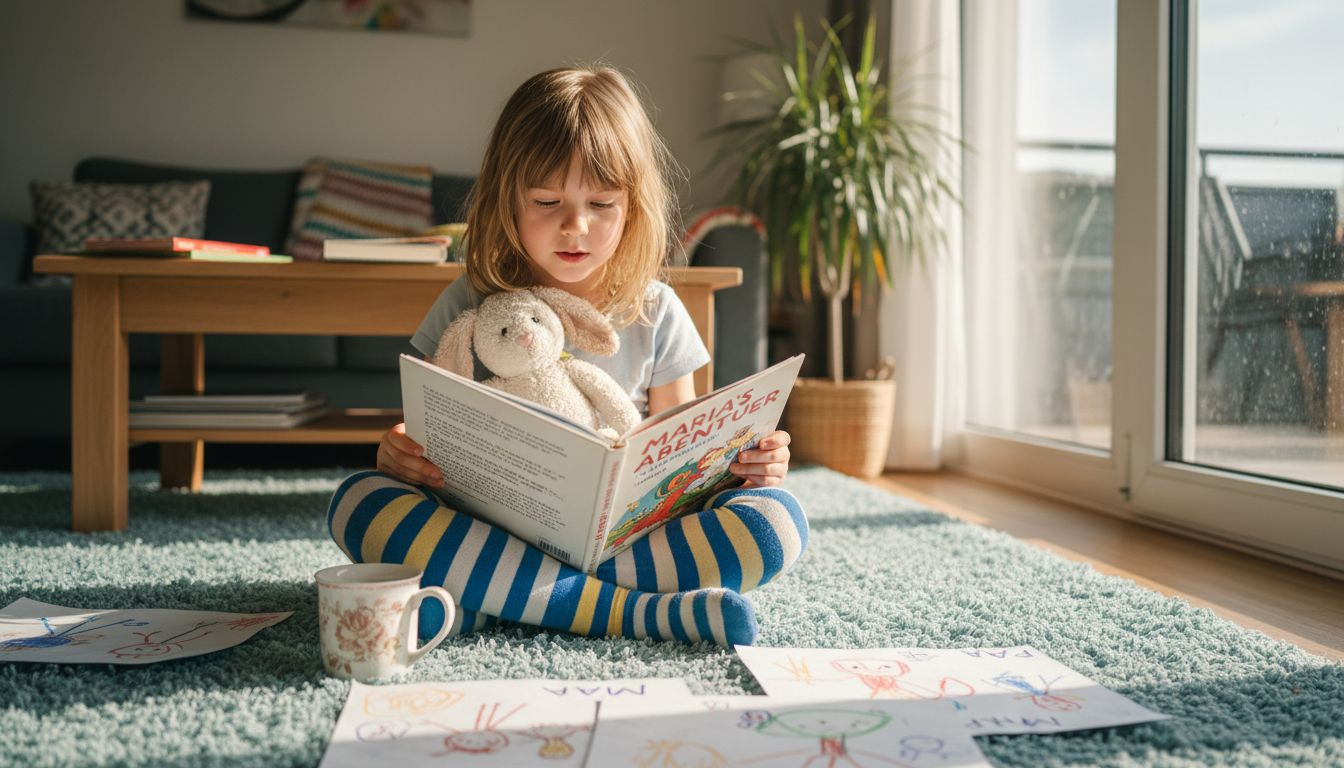
Every day with a preschool child is filled with new questions and big imagination. If your child would love to be part of their favorite stories, a personalized children's book opens up very different possibilities than conventional books. Personal adventures not only promote reading motivation, but also create a particularly strong connection to books as a medium and awaken creative ideas. Unique stories with your child at the center inspire, build confidence, and make reading an exciting discovery process.
Table of Contents
- What a Personalized Children's Book Really Is
- Types and Formats of Personalized Children's Books
- How AI Creates Personalized Stories
- Educational Benefits and Emotional Value
- Security and Data Protection for Parents
- Avoiding Common Mistakes in Book Selection
Key Findings
| Point | Details |
|---|---|
| Personalization | Personalized children's books are unique because they incorporate the child's interests and characteristics into the story and create an emotional connection. |
| Learning Promotion | These books not only support reading motivation, but also promote important learning goals and the development of emotional intelligence. |
| Technological Progress | Through digital platforms, personalized stories can be created quickly and easily, making access to diverse narratives easier. |
| Data Protection | Parents should inform themselves about the data protection policies of platforms to ensure that their children's data is protected. |
What a Personalized Children's Book Really Is
A personalized children's book is much more than just a standard children's book with your child's name on the cover. It is a custom-made story where your child is the main character and the story is specifically built around your child's interests, characteristics, and experiences. That makes the difference: While classic fairy tales tell stories about generic characters, personalized books speak directly to your child and create an emotional connection to the story that no other book can match.
When creating a personalized children's book, various elements are integrated that make your child unique. The child's name is naturally woven into the plot, not just printed on. But appearance, preferred colors, hobbies, and even personal strengths or fears can flow into the narrative. For example, if your daughter Anna loves to paint and loves butterflies, the story could show how Anna discovers a secret world of butterflies. This is far removed from a generic book that another family could have purchased in the same way. A personalized children's book with individual characteristics of the child creates a unique, emotionally valuable reading experience that significantly increases reading motivation.
What sets personalized books apart from others is their function as a tool for emotional connection and educational growth. They help children not only discover the joy of reading, but also convey important lessons in a way that feels personal. When the main character solves a problem that your child also has, the story becomes a learning aid. When the book tells you that "Anna is brave," your child internalizes this positive message much more strongly than if it came from an unknown character. Exactly here lies the core: Personalized books use the power of self-reflection. Your child sees themselves as the hero of a story, not as an outside observer. This shift in perspective has measurable effects on confidence and reading joy. If you seek deeper insights into the importance of personalized books, you will find that this goes far beyond mere entertainment.
The practical implementation has been greatly simplified by digital solutions. In the past, you either had to hire expensive printers or improvise with crafts. Today, specialized platforms can generate new stories daily that adapt to your child's age and interests. This means you are not limited to a single personalized book, but can offer your child new, custom-made adventures again and again.
Pro Tip: For your child's first personalized story, choose a topic that already fascinates them, such as dinosaurs, pirates, or fairy tale characters, to immediately strengthen the emotional connection to the story.
Types and Formats of Personalized Children's Books
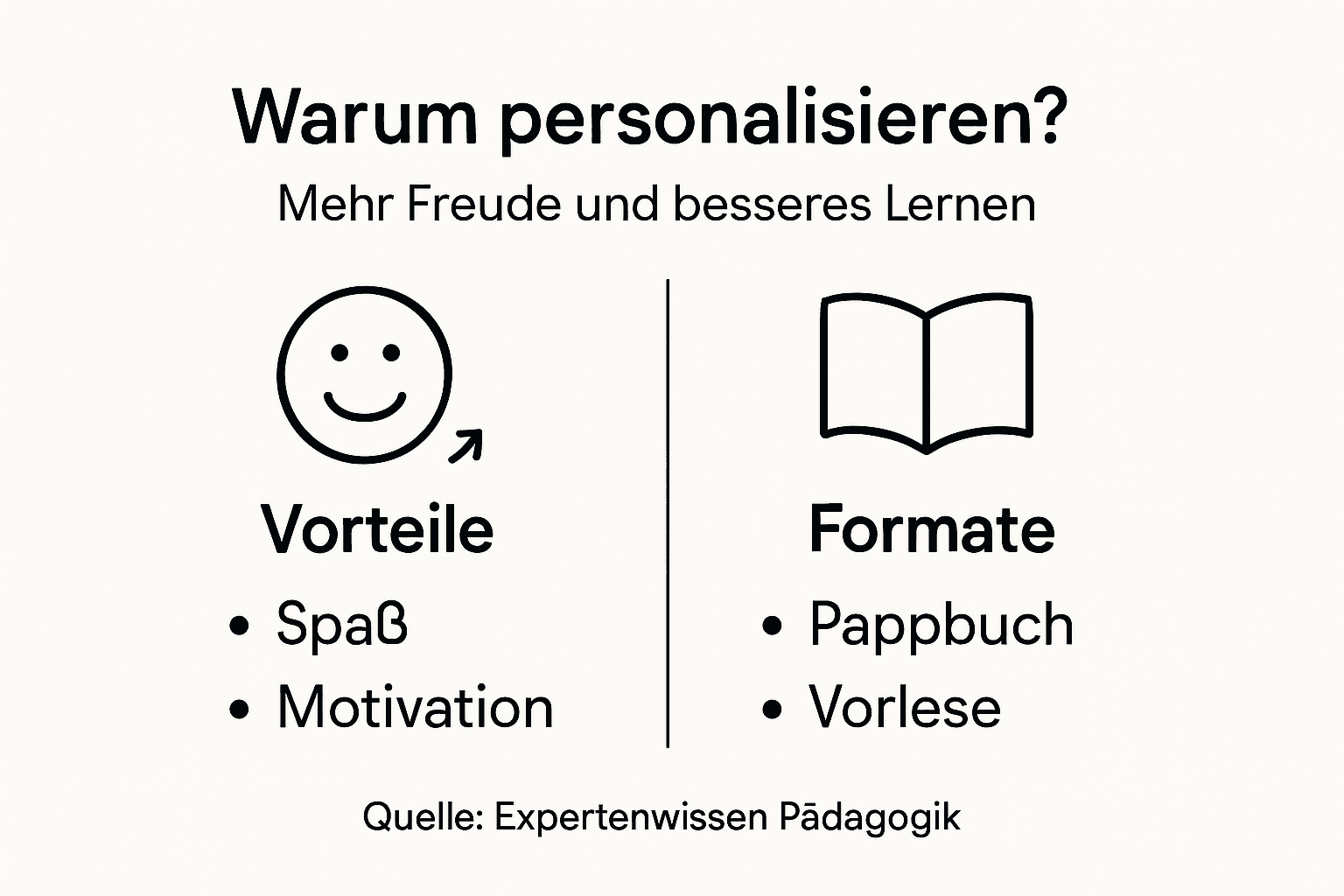
Personalized children's books do not come in one size fits all. Like traditional children's books, they are differentiated by age groups and developmental stages to ensure that the content and format are perfect for your child. The different formats correspond to the natural learning phases of your child. A baby needs something completely different from a preschooler or school-age child. The good news is that personalized books are available in different formats for different age groups, adapted to each child's developmental stage and reading skills.
Picture Books and Board Books for the Littlest Ones
For babies and toddlers from about six months to three years, board books are ideal. These personalized versions focus primarily on large, colorful illustrations with minimal or no text. Your child's name can appear on every page, along with familiar objects or simple scenes. The sturdiness of the board pages is crucial since small hands like to put these books in their mouths, chew, and throw them. The story is beside the point; more important is visual stimulation and experiencing cause and effect.
Story Books for Kindergarten Age
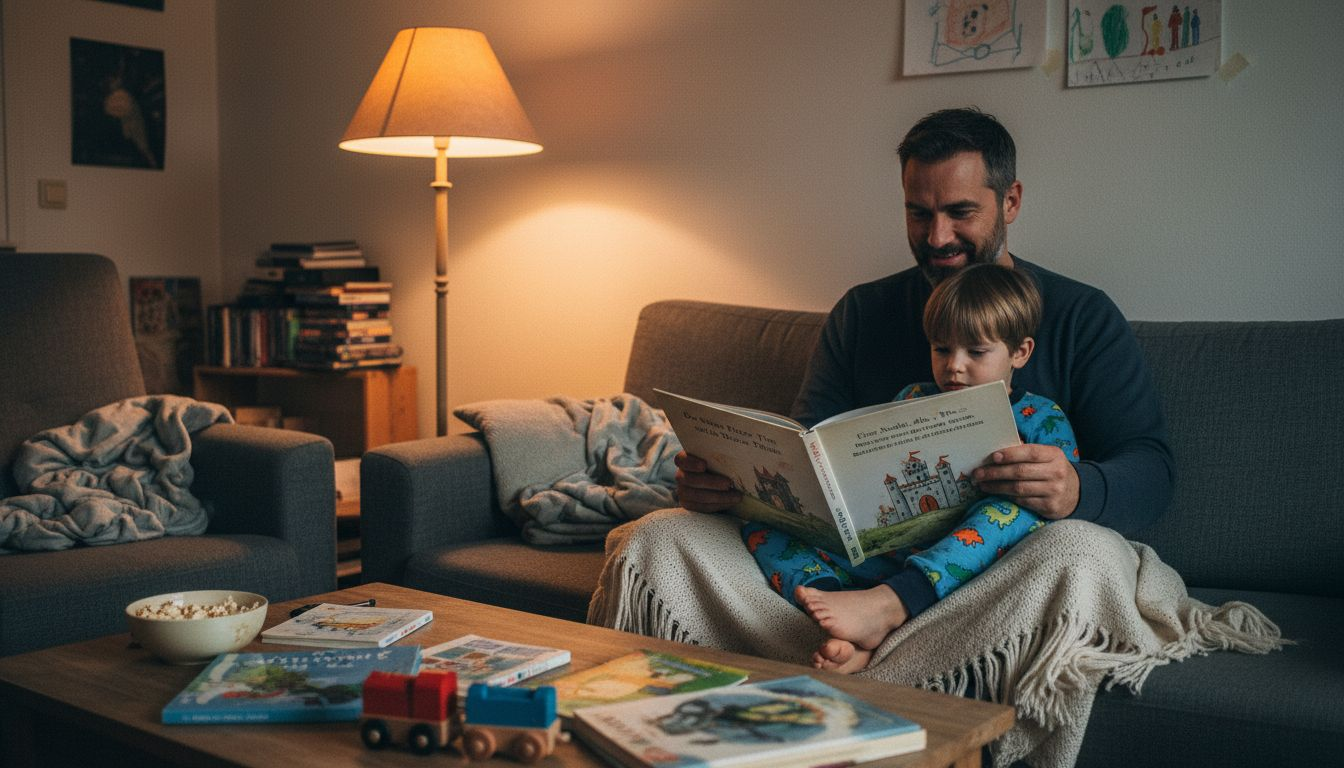
Children from about four years old enter a new phase. Here, personalized story books work fantastically, offering a balanced mix of text and illustrations. The stories become more complex, with simple storylines that a child can understand but also be surprised by. The text is large enough to read aloud and the pictures captivate the child visually as the story progresses. This is the point where personalization becomes particularly effective, as your child can now understand that they themselves are the hero of the story and actively participate in the adventures.
Beginning Reader Books for Beginners
Once your child begins reading between five and seven years old, beginning reader books need a different structure. These personalized books use simpler words, shorter sentences, and more frequent repetitions. The text is printed larger with wider line spacing to support the beginner reader's eye. Pictures are still important but less dominant than in story books. The educational value increases as your child not only enjoys the story but also trains their reading skills. When your child reads their own name in a personalized story and can understand that they have "done it" themselves, that's an enormous motivation boost.
Chapter Books and Young Reader Books for Older Children
For children from about eight years old, personalized chapter books work wonderfully. These have even more text, fewer pictures (sometimes only chapter illustrations), and more complex stories with twists and real conflicts. Older children can imagine themselves into longer narratives and immerse themselves in them. Personalized chapter books can address themes such as friendship, family, adventure, or even first challenges that are specifically tailored to the child's experiences and interests.
Digital and Interactive Formats
In addition to traditional printed books, there are also digital versions of personalized stories. These can be read on tablets or smartphones and sometimes offer interactive elements such as having the story read aloud, touch animations, or even choice-based stories where the child makes decisions that influence the outcome. Some platforms allow you to generate new personalized stories daily, meaning your child won't get stuck with a single story but instead experiences a continuous adventure.
Special Topics and Learning Goals
Personalized books can also be categorized by learning goals. There are books for potty training, bedtime, dealing with fear, understanding diversity, or learning letters and numbers. Every format can be personalized to put your child at the center. This makes these kinds of books powerful tools for educational growth and emotional development.
Pro Tip: Choose the format based on your child's current reading ability and attention span, not their age, since children develop at different rates.
Here is an overview of the main book formats and their features:
| Format | Age Recommendation | Main Benefit | Typical Use |
|---|---|---|---|
| Board Book | 6 Months – 3 Years | Durable, visually stimulating | Early sensory development |
| Story Book | 4 – 6 Years | Bonding, participation effects | Reading together |
| Beginning Reader Book | 5 – 7 Years | Strengthen reading ability | Independent reading |
| Chapter Book/Young Reader Book | 8 Years and Up | Depth, complex plot | Reading as adventure |
How AI Creates Personalized Stories
Artificial intelligence has fundamentally changed how personalized stories are created. What once required hours of manual work can now happen in minutes. The technology behind it is more fascinating than many parents realize and shows why AI-powered solutions are so effective. AI can create personalized stories by analyzing reader profiles and adapting content accordingly. This means that AI does not simply insert a name into a template, but actually understands who your child is, what interests them, and how they learn. This approach creates stories that truly feel custom-made, not like a generic story with personalization tacked on.
The Process Begins with Data
Everything starts with AI gathering information about your child. You enter age, name, interests, favorite characters, or even fears that the AI should consider. Some systems also collect data about how your child typically consumes stories. Does it prefer fast, action-packed adventures or slow, emotionally deep narratives? Is it afraid of certain scenarios it would rather avoid? All of these inputs flow into a digital profile of your child. The AI uses this information to make decisions in the next step that make the story unique.
Algorithms Generate the Story
Next, specialized algorithms come into play. These analyze millions of existing stories, sentence structures, and narrative patterns. AI uses this knowledge to write new stories that are logically consistent, educationally valuable, and entertaining. But here comes the personalized part: As AI generates the story, it continuously adapts characters, plot lines, and even difficulty level to your child's profile. For example, if your child is obsessed with dinosaurs and just starting to read, the AI creates a dinosaur story with simple words and short sentences. For an older child who loves adventure, the same AI could generate a more complex story with twists.
Narrative Style and Emotional Depth
A surprising aspect is that AI not only adapts the plot but also the narrative style. Some children respond better to humorous stories, others to emotional, deep narratives. AI takes that into account. It varies sentence length, story pacing, and even character development. A child who needs to develop courage might get a story where the main character starts out fearful but gradually becomes braver. A child who is already confident might get a story with other learning goals. These differentiated narrative styles are what create genuine emotional connection. Your child sees themselves not just as a character in the story, but as someone whose feelings and development drive the narrative.
Continuous Learning and Improvement
Modern AI systems learn constantly. Every time your child reads a story or interacts with it, the AI gathers more data. How long did it read the story? Did it stop at a certain point? Which parts did it prefer? This information is used to make future stories even better. This is different from traditional books, which don't adapt to your child. A good AI platform becomes smarter with each book your child reads about what they need and want. This means that stories become increasingly relevant and engaging over time.
The Technical Magic Behind It
Technically, multiple components work together. Natural language processing enables AI to generate text that is grammatically correct and fluent. Machine learning enables the system to recognize patterns and make predictions. And personalization algorithms ensure that every story is unique. If you generate new stories daily, these are not simply variations of a template but truly new adventures tailored to your child. This is the promise of modern AI: unlimited, personalized content that grows and develops with your child.
Pro Tip: The more information you give the AI upfront about your child, the better it can generate stories. Take time to create a detailed profile that includes not just interests but also learning goals and personality traits.
Educational Benefits and Emotional Value
Personalized children's books offer far more than just entertainment. They are a powerful tool for your child's holistic development, combining learning goals with emotional fulfillment. When your child sees themselves as the main character in a