 edory
edory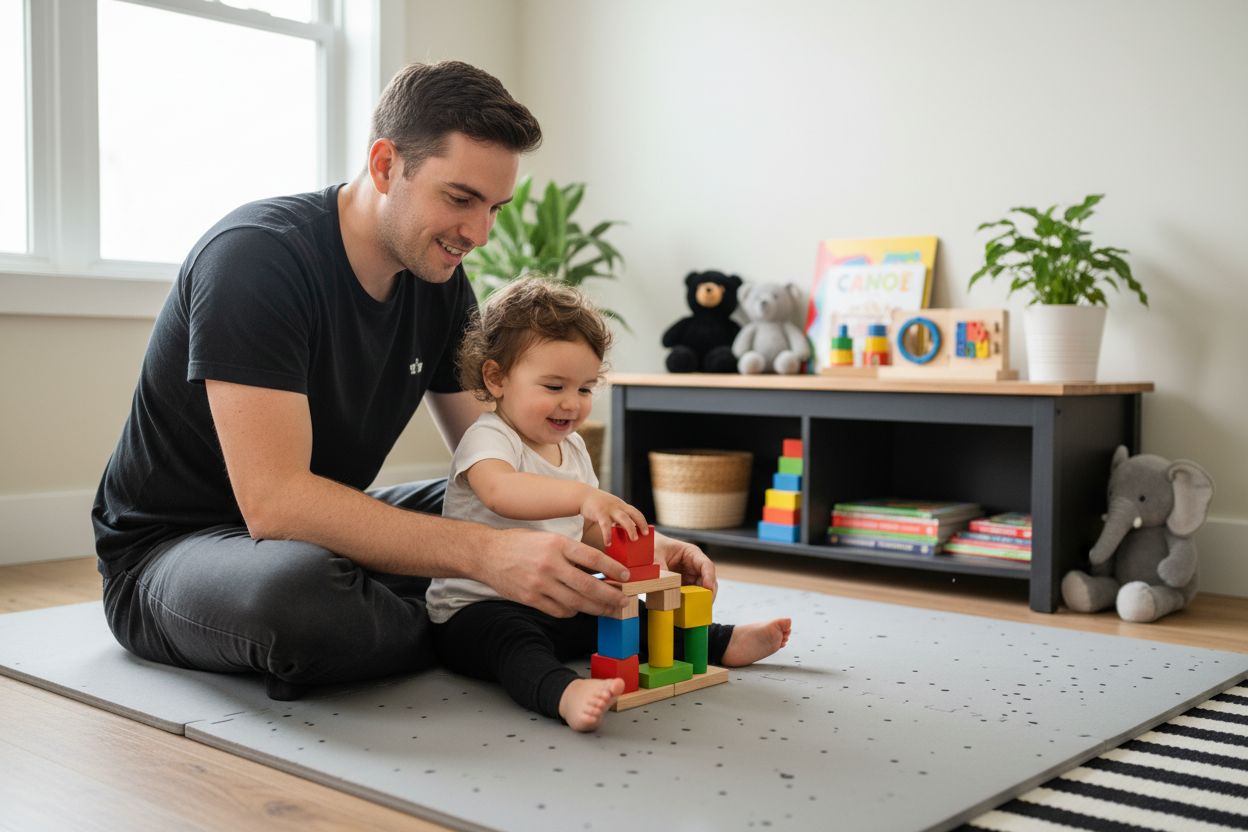
When playing with children under 3 years old, many people think first of entertainment and passing time. Yet surprisingly, at this very age, the texture and size of play materials have a huge impact on development. Anyone who believes that any soft toy is sufficient overlooks how fundamental targeted material selection is for motor skills and senses.
Table of Contents
- Step 1: Choose Suitable Play Materials
- Step 2: Prepare the Play Area
- Step 3: Introduce Simple Games
- Step 4: Integrate Learning Content Playfully
- Step 5: Check Children's Reactions
Quick Overview
| Most Important Point | Explanation |
|---|---|
| 1. Selection of Safe Play Materials | Choose soft, rounded toys to prevent injuries. Pay attention to materials without small parts. |
| 2. Ensure Safety in the Play Area | Minimize hazards and create a comfortable environment for your child. Check furniture and lighting. |
| 3. Address Children's Interests | Introduce games based on the child's interests to promote learning engagement. Observe reactions carefully. |
| 4. Integrate Playful Learning | Use everyday objects for learning games and explain actions verbally to promote language and thinking. |
| 5. Pay Attention to Nonverbal Communication | Watch the child's body language and reactions to better understand their needs and interests. |
Step 1: Choose Suitable Play Materials
When it comes to playing with children under 3, the right play materials are crucial for a positive developmental experience. When selecting toys, parents and caregivers should pay attention not only to safety but also to developmental benefits.
The first step begins with careful material selection that considers the child's developmental stage. Toddlers under three years explore their world primarily through grasping, feeling, and tasting. Therefore, soft, rounded materials are particularly suitable if they have no sharp edges or small parts. Wooden toys with rounded corners, stuffed animals with secure stitching, and sturdy plastic toys are excellent options.
Particularly important is the size and texture of play materials. They should be large enough to prevent choking hazards but small enough to be held by small hands. Materials with different textures stimulate sensory perception. A toy with various surfaces such as velvety, smooth, or slightly textured can wonderfully support the child's tactile development.
Educational games can playfully promote your child's development, so material selection serves more than just an entertainment function. Make sure to choose toys that address different developmental areas: gross and fine motor skills, cognitive perception, and social-emotional competencies.
Beyond safety and developmental support, parents should also pay attention to the quality and durability of materials. Sturdy toys that withstand multiple washes and intensive use are a smart investment. Avoid toys with loose parts or fragile components that could break quickly.
A final review of play materials should include the following criteria:
- No sharp edges or protruding parts
- Age-appropriate size and complexity
- Various sensory stimuli
- Robust construction
- No small parts that could be swallowed
With these aspects in place, parents can create a safe and developmentally supportive play environment for their youngest children.
The following table provides a compact overview of key criteria for selecting suitable play materials for children under 3 years old.
| Criterion | Description | Example Materials |
|---|---|---|
| Safety | No sharp edges, no small parts | Wooden toys with rounded corners |
| Age-Appropriate Size | Large enough to grasp, not swallowable | Stuffed animals, large plastic building blocks |
| Varied Sensory Stimuli | Different textures and surfaces | Smooth, velvety, or textured toys |
| Robust Construction | Durable, washable, without loose parts | High-quality stuffed dolls, stable cubes |
| Developmentally Supportive | Promotes motor skills, perception, and social behavior | Grasping toys, stacking games, rattles |
Step 2: Prepare the Play Area
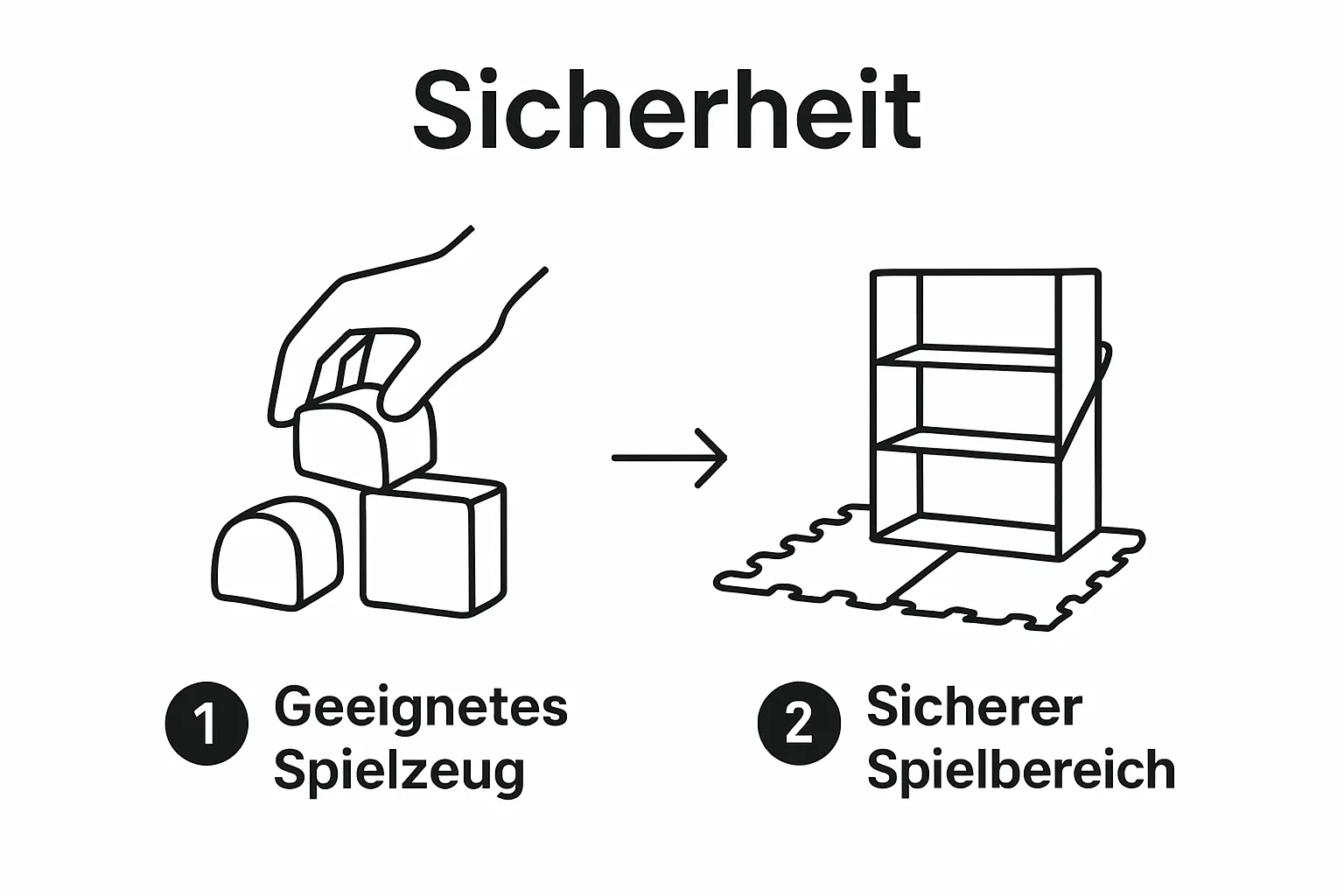
After careful selection of appropriate play materials, preparing the play area is the crucial next step when playing with children under 3. A well-designed play space is more than just a safe environment – it's a developmental space that encourages curiosity, spirit of discovery, and learning.
The ideal play area should be manageable and child-safe. Choose a room or designated area that offers enough space for movement but is also manageable enough to keep the child in view. Floor surfaces with soft bases such as carpets or play mats provide a comfortable and safe play environment. These not only reduce the risk of injury from falls but also offer a pleasant surface for crawling and movement games.
Creative learning methods can playfully support child development, which is why room design means more than just safety. Make sure to minimize potential hazards. Sharp edges on furniture should be secured with edge guards. Electrical outlets must be covered, loose cables hidden, and unstable furniture pieces secured. A 360-degree view is crucial to identify risks early.
Lighting plays an important role in play room design. Natural daylight is optimal because it not only brightens the mood but also supports the child's visual development. Avoid direct sunlight and provide soft, glare-free lighting. Additionally, multiple light sources should be available to create a pleasant atmosphere.
Organization is the key to a functional play area. Use low, child-friendly shelves or boxes to place toys within reach and in an organized manner. This not only promotes independence but also supports the development of orderliness and motor skills.
A final checklist for the perfect play area includes:
- Adequate freedom of movement
- Soft, safe flooring
- Hazards eliminated
- Good lighting
- Child-friendly storage
With these preparations, you create an ideal environment for play, learning, and development of your toddler.
Step 3: Introduce Simple Games
When playing with children under 3 years old, it's not about complicated rules but rather about simple, intuitive interactions that combine joy and development. This step focuses on introducing games that appeal to the natural curiosity and learning readiness of toddlers.
The basic rule is: Follow the child's interest. Observe carefully which toys or activities catch their attention. Short, dynamic play sessions of 5-10 minutes are ideal, as toddlers switch attention quickly. Repetition is the key to learning – a seemingly boring game can be endlessly fascinating for a child.
Playful learning can wonderfully support childhood developmental stages, which is why toy selection is so crucial. Start with games that enable simple sensory experiences. For example, hiding and finding objects under a cloth trains the understanding of object permanence – an important cognitive developmental step.
Rattle and grasping games are excellent for motor development. Encourage the child to grasp, shake, and explore objects. Vary the toys to promote different grasping movements and coordination skills. A stacking game with soft cubes or rings can provide hours of joy while developing fine motor skills.
Communicative games such as imitation and facial expressions are particularly valuable. Make faces, make sounds, or play peek-a-boo. These interactions not only promote social-emotional development but also strengthen the bond between parent and child. Make sure to always respond positively and encouragingly, regardless of the game's outcome.
A checklist for successful games with toddlers includes:
- Short play duration
- Child-oriented activities
- Sense-based experiences
- Positive interaction
- Room for repetition
It's important to remain patient and observe the child's reactions carefully. Not every game will work immediately, and that's completely normal. The art is to stay flexible and have fun.
The following table summarizes the most important types of games for children under 3 years old and highlights their beneficial aspects.
| Type of Game | Developmental Area | Short Description |
|---|---|---|
| Sense-Based Games | Sensory, Cognition | Exploring textures, sounds, and shapes |
| Grasping and Rattle Games | Gross and Fine Motor Skills | Grasping, shaking, targeted movement |
| Imitation Games | Social-Emotional Competence | Making faces, sounds, imitating simple gestures |
| Hiding Games | Cognitive Development | Object permanence, attention, simple searching |
| Stacking and Building Blocks | Logic, Motor Skills | Stacking, sorting, first building experiences |
Step 4: Integrate Learning Content Playfully
Learning in the first three years of life does not happen through front-of-class instruction but through playful discoveries and sensory experiences. This step shows how parents can incorporate learning content into play situations so that children develop new skills with motivation and enthusiasm.
The key lies in the child's natural curiosity. Observe carefully which topics and objects fascinate your child. A toddler who shows interest in shapes, colors, or sounds can be specifically encouraged through targeted play offers. For example, a child who loves bells or rattles can playfully train acoustic discrimination skills.
Educational games can playfully support learning processes, which is why creative approaches are so important. Use everyday objects like kitchen spoons to tap different rhythms, plastic bowls to sort by size, or colorful cloths to hide and discover. These simple materials offer countless learning opportunities.
Language is a central learning area in this age group. Comment on every action with simple, clear words. When stacking building blocks, you might say: "Red goes on top, blue goes on the bottom." Or when getting dressed: "Now we're putting on the red sweater." This repetitive description helps the child understand language and concepts.
Mathematical basics can also be conveyed playfully. Counting games with fingers, sorting objects by color or shape, or simple puzzles train logical thinking. It's important to focus on fun and discovery, not perfection.
A checklist for playful learning includes:
- Follow the child's attention
- Use everyday objects creatively
- Comment on actions
- Vary play materials
- Stay patient and positive
Remember that every child learns individually. What works with one child doesn't have to work with another. Be flexible, observe carefully, and adjust your play approaches accordingly. The most important thing is to spark joy and interest – then the learning process opens up by itself.
Step 5: Check Children's Reactions
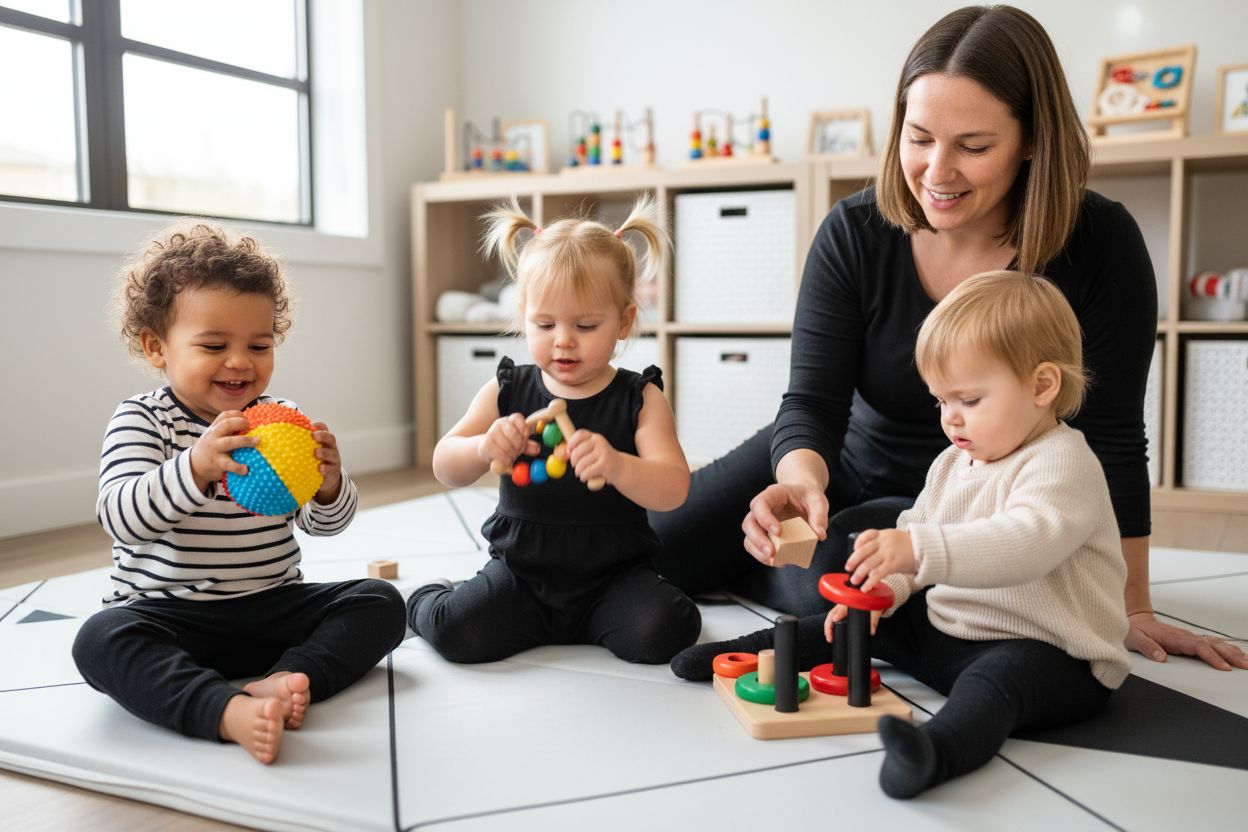
Observing and understanding the reactions of children under 3 years old is a crucial component of playful learning. This step goes beyond simple observation and requires a sensitive, attentive approach to your toddler's nonverbal communication.
Every reaction is an important source of information. Body language and facial expression say more than words. A child who turns away or becomes restless may be signaling overwhelm. Directed attention, bright eyes, or sustained smiling indicate interest and enjoyment of the activity. Learn to interpret these subtle signals and adjust your play activities accordingly.
Creative learning activities can playfully support developmental processes, which is why observation is so important. Document your child's reactions regularly. A simple notebook or collection of photos and videos can help you track developmental progress and identify patterns.
Pay special attention to requests for repetition. When a child wants to repeat an activity multiple times, this indicates deep interest and learning readiness. These moments are gold – they show exactly where the child's learning motivation lies.