 edory
edory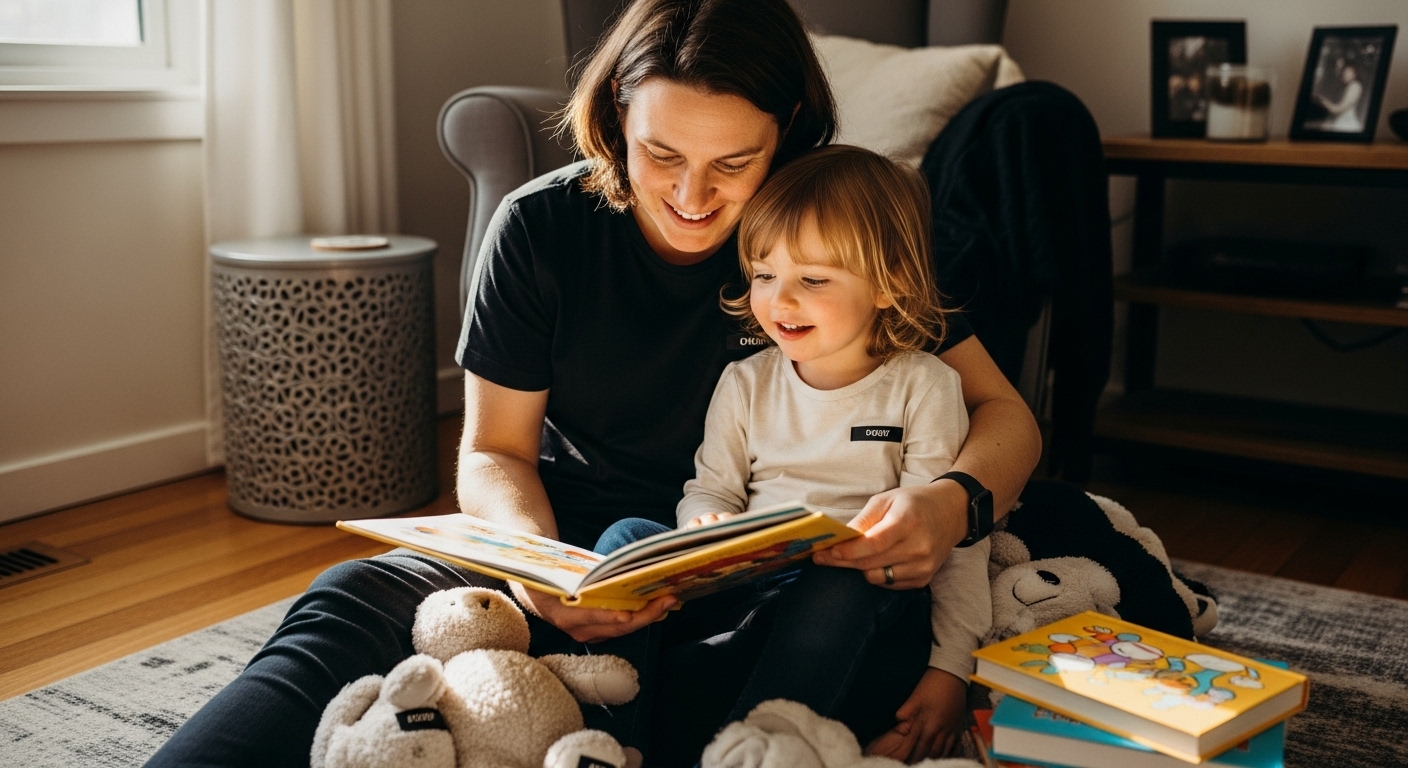
Stories fascinate children from the youngest age and have effects far beyond simple reading aloud. And now it gets exciting. Studies show that interactive storytelling measurably improves language development, attention, and social intelligence in toddlers. The biggest surprise is how simple shared storytelling can trigger complex learning processes and emotional abilities.
Table of Contents
- What is Storytelling for Toddlers and Why is it Important?
- The Role of Stories in Early Child Development
- How Storytelling Promotes Imagination and Creativity
- The Connection Between Storytelling and Language Development
- Practical Applications of Storytelling in Everyday Life
Quick Overview
| Takeaway | Explanation |
|---|---|
| Storytelling promotes language development. | Through stories, children expand their vocabulary and improve language comprehension in an engaging context. |
| Interactive stories improve social skills. | Children learn important social competencies such as listening and empathy through active participation. |
| Stories promote creativity and imagination. | Storytelling stimulates imagination and encourages children to develop creative problem-solving approaches. |
| Emotional intelligence is strengthened through stories. | Children learn to recognize different feelings and interact empathetically with characters. |
| Use stories as a learning tool in everyday life. | Parents can use storytelling to convey complex topics playfully and strengthen emotional bonds. |
What is Storytelling for Toddlers and Why is it Important?
Storytelling for toddlers is a powerful educational method that is much more than just telling a story. It is an interactive process in which adults use stories to convey complex concepts, emotions, and life experiences to children.
The Importance of Storytelling for Child Development
Storytelling plays a crucial role in the early development of children. According to UNICEF, storytelling not only promotes language development but also supports the cognitive and emotional maturation of toddlers.
Children learn through stories:
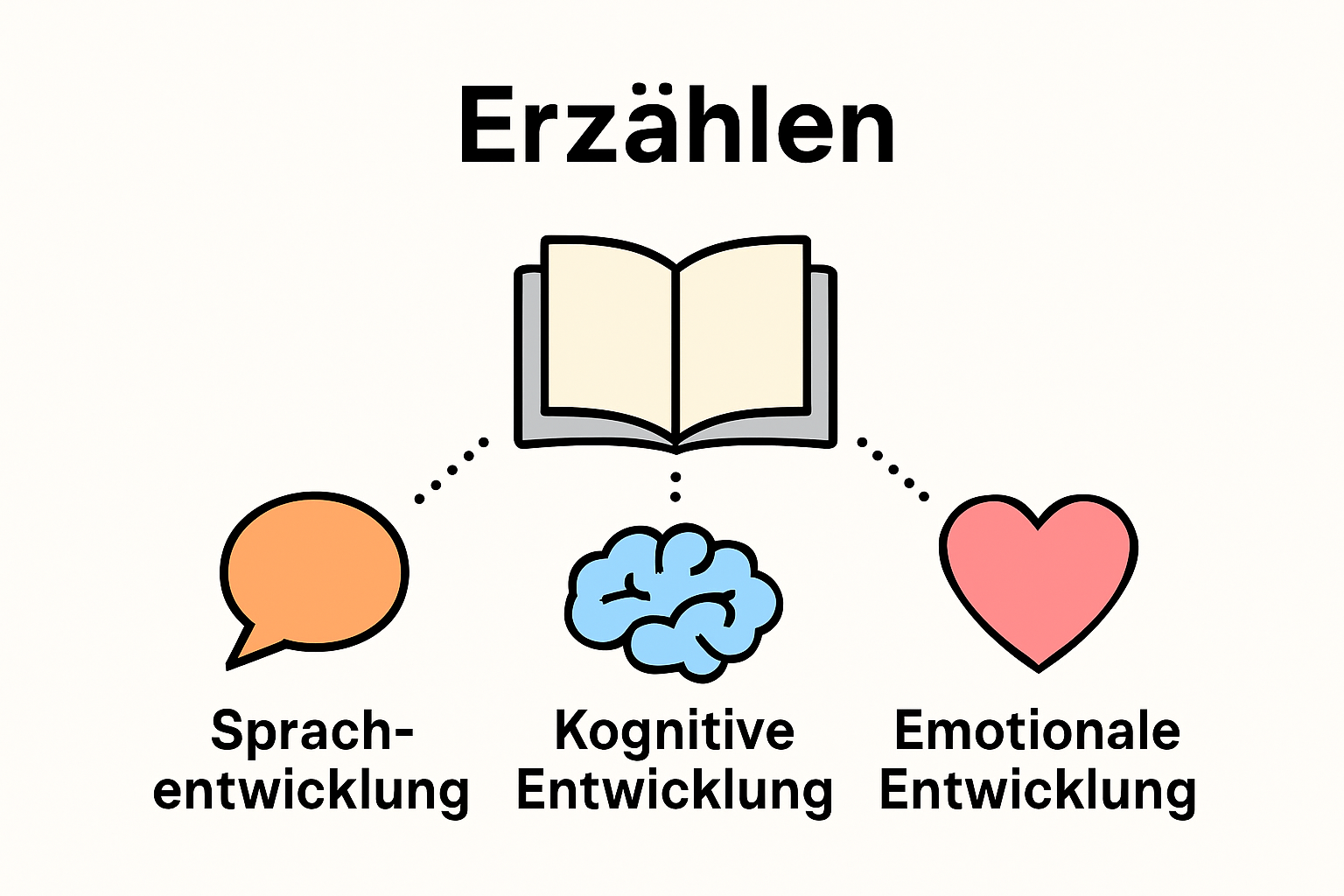
- New words and language structures
- Emotional intelligence and empathy
- Basic narrative structures
Storytelling as an Interactive Learning Experience
Modern storytelling for toddlers goes far beyond traditional reading aloud. It is a dynamic, engagement-oriented method that actively involves children in the storytelling process. According to Edutopia, interactive storytelling improves children's attention, listening skills, and social development.
Through sharing stories together, children develop not only language skills but also important social competencies such as listening, communicating, and understanding perspectives.
During storytelling, parents and caregivers can increase interaction by asking questions, making sounds, or encouraging children to co-tell the story. This active participation makes storytelling a multidimensional learning experience that promotes creativity, imagination, and critical thinking from an early age.
The Role of Stories in Early Child Development
Stories are much more than entertaining narratives. They are a fundamental tool of child development that promotes cognitive, language, and emotional abilities in unique ways. Our guide to storytelling provides further insights into this fascinating learning method.
Cognitive Development through Narrative Structures
Through stories, children learn complex thinking processes and logical connections. Scientific research shows that structured storytelling is crucial in supporting the development of imagination, problem-solving skills, and cognitive flexibility.
Children develop important cognitive skills while listening:
- Understanding cause-and-effect relationships
- Building mental imagination
- Developing analytical thinking
Language and Socio-Emotional Learning Processes
Stories are a natural catalyst for language acquisition and emotional intelligence. Researchers have shown that children expand their vocabulary through regular storytelling, understand grammatical structures, and grasp social nuances.
The emotional learning aspects are particularly important: by empathizing with characters, children develop empathy, learn to recognize different emotional states, and understand social interaction patterns. The narrative structure helps them process and interpret complex emotional experiences.
The power of storytelling lies not only in conveying knowledge but in the holistic development of children's competencies.
The following table provides a compact overview of the key ways storytelling promotes cognitive, language, and socio-emotional development in toddlers.
| Area of Development | Promotion through Storytelling |
|---|---|
| Cognitive Development | Promotion of logical thinking, understanding of cause and effect |
| Language Development | Expansion of vocabulary, acquisition of grammatical structures |
| Socio-Emotional Competence | Development of empathy, recognition and processing of feelings |
| Creativity and Imagination | Stimulation of imagination, creation of own stories |
| Communication Skills | Improvement of listening skills, storytelling ability |
How Storytelling Promotes Imagination and Creativity
Storytelling is a powerful tool for promoting imagination and creativity in children. It allows them to think outside the box and create mental worlds that inspire their imagination. Our tips for creative stories show how diverse this process can be.
Mental Imaginary Worlds and Imagination
Psychological research confirms that storytelling stimulates children's imagination in a unique way. By listening to and experiencing stories, children learn to construct mental images and understand abstract concepts.
The following aspects play a crucial role in developing imagination:
- Visualization of abstract narrative moments
- Creation of own mental landscapes
- Transformation from listeners to active protagonists
Creativity as a Dynamic Learning Process
Storytelling transforms creativity from a static concept into a dynamic learning process. Children are encouraged to think beyond conventional boundaries and develop original problem-solving approaches. They learn to reinterpret stories, imagine alternative plot lines, and create their own narrative structures.
This creative process not only promotes imagination but also develops important cognitive skills such as divergent thinking, problem-solving competency, and emotional intelligence. Every story becomes a playground for imagination where children playfully expand their mental boundaries.
Through repeatedly immersing themselves in narrative worlds, children develop an almost limitless creativity. They learn not just to consume stories but to actively co-create them – a skill that extends far beyond the moment of storytelling.
The Connection Between Storytelling and Language Development
Storytelling is a powerful instrument for children's language development that goes far beyond simple listening. It creates a vivid bridge between spoken language and children's perception. Discover fascinating stories from around the world that support this development.
Vocabulary and Language Comprehension
Scientific research shows that interactive storytelling uniquely expands children's vocabulary. Children learn new words not in isolation but in the rich context of a story, which significantly improves their language comprehension.
The following processes are activated during language acquisition through storytelling:
- Acquisition of new vocabulary through context-based learning
- Understanding of more complex sentence structures
- Development of intuitive language sense
Grammatical Structures and Communication Skills
Stories are like a natural language laboratory for children. They learn grammatical structures not through dry rules but through vivid storytelling. Every story offers children the opportunity to grasp sentence structure, tense forms, and linguistic nuances playfully.
The narrative structure helps children understand complex language patterns. They learn how thoughts and emotions are conveyed through language and simultaneously develop their own storytelling abilities. This promotes not only their language competency but also their communication skills in social contexts.
Through repeated listening and active co-storytelling, children transform stories into personal language experiences. They begin to see language not as an abstract system but as a living, emotional means of communication – a skill that goes far beyond pure language learning.
Practical Applications of Storytelling in Everyday Life
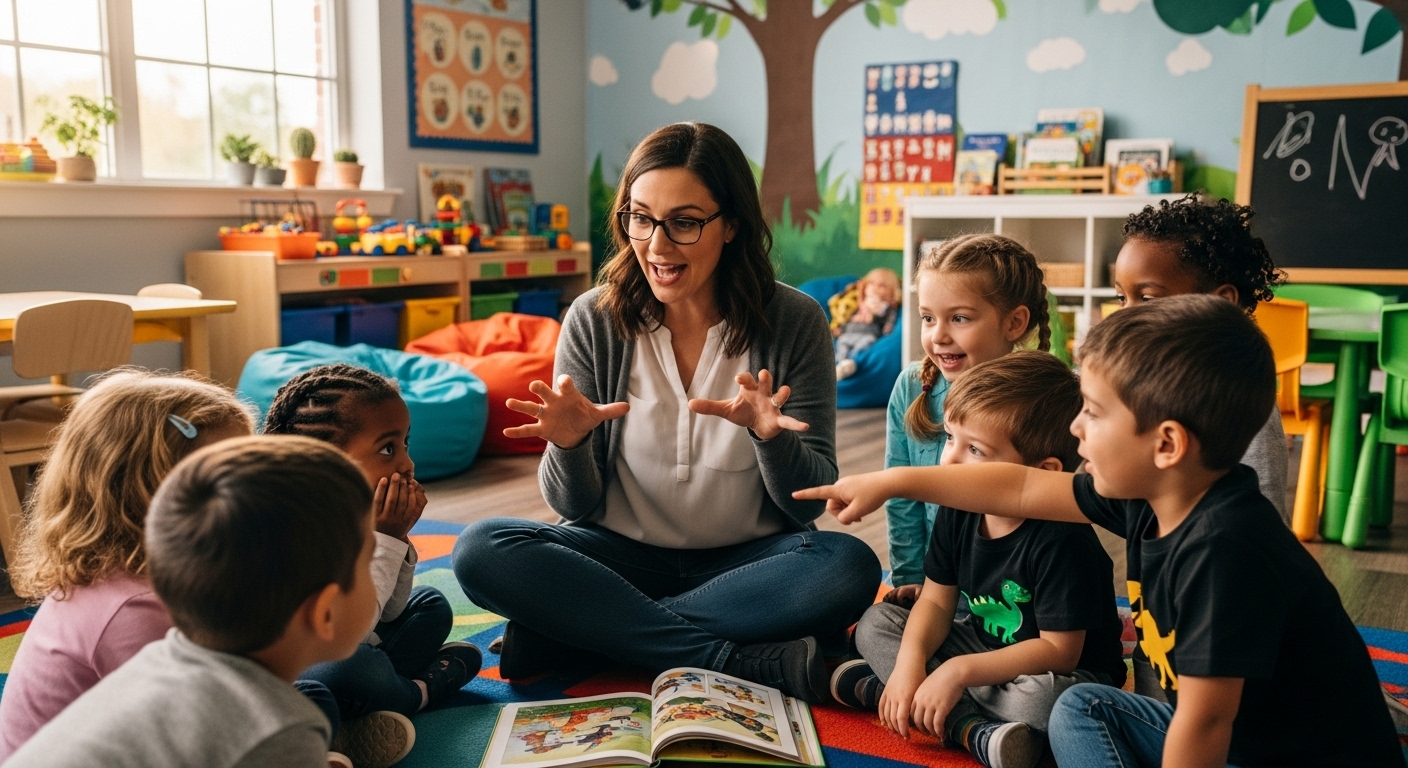
Storytelling is not limited to formal educational situations but can be integrated into various everyday scenarios. Learn more about using stories to address children's fears to understand its diverse possibilities.
Storytelling in Family Situations
Research on interactive storytelling frameworks shows that stories are a powerful tool for playfully engaging children in communication processes. Parents can use storytelling to explain complex situations, convey behaviors, or develop emotional competencies.
Practical applications in family everyday life include:
- Explanation of behavioral rules through narrative contexts
- Processing difficult emotions and experiences
- Strengthening the bond between parents and children
Storytelling as a Learning and Educational Tool
Stories offer more than just entertainment. They are a dynamic tool for knowledge transfer and character building. Through targeted