 edory
edory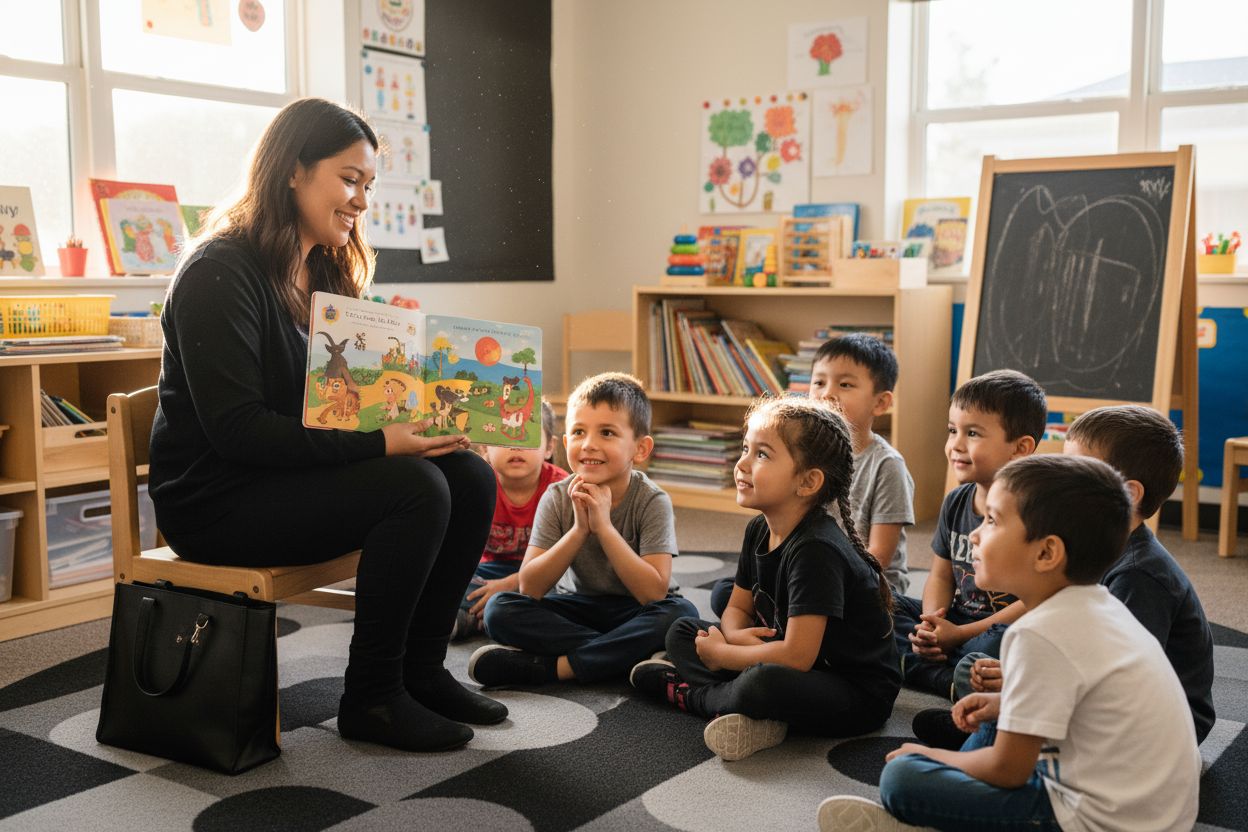
Many adults underestimate how formative stories can be for children. Suddenly it becomes clear that children build up to 30 percent more emotional intelligence through well-told storytelling than through pure fact transmission. And the real magic doesn't happen in the fairy tale book, but in everyday life, when simple narratives bring families closer together or make difficult topics understandable.
Table of Contents
- What Is Storytelling And Why Is It Important?
- How Storytelling Influences Children's Development
- The Connection Between Stories And Social Competence
- Practical Applications Of Storytelling In Everyday Life
- The Role Of Emotions And Creativity In Storytelling
Quick Summary
| Takeaway | Explanation |
|---|---|
| Storytelling promotes emotional intelligence | Stories help children recognize and understand their own and others' feelings. |
| Cognitive abilities are strengthened | Through stories, children expand their vocabulary and improve their language structure. |
| Social competencies through perspective-taking | Children learn empathy and understanding for different viewpoints and social interactions. |
| Creativity is stimulated | Storytelling promotes imaginative thinking processes and enables children to develop new perspectives. |
| Easy to integrate into everyday life | Stories can be naturally incorporated into family life to support learning. |
What is Storytelling and Why Is It Important?
Storytelling is an ancient form of communication that uses stories to convey knowledge, emotions, and experiences. It is not just about telling stories, but about a complex interaction between the storyteller and the listener that makes information vivid and meaningful.
The Basics of Storytelling
Storytelling is much more than simply passing on information. According to Encyclopaedia Britannica, it is an interactive art form that uses words and actions to reveal the elements and images of a story while stimulating the listener's imagination.
Storytelling works on several levels:
- Emotional connection: Stories appeal to feelings and create a deeper bond than mere facts
- Cognitive processing: Complex information becomes easier to understand through narrative structures
- Cultural transmission: Values, traditions, and knowledge are transmitted across generations
Importance for Children and Education
For children, storytelling is especially valuable. It helps them understand the world, develop empathy, and improve their language skills. Through stories, children not only learn new concepts but also develop a deeper understanding of social interactions and complex ideas.
If you want to learn more about the importance of storytelling in family life, we recommend our comprehensive guide. Storytelling is more than a form of entertainment – it is a powerful educational tool that helps children interpret and understand the world around them.
The power of storytelling lies in its ability to not only convey information, but to make it vivid, memorable, and meaningful.
How Storytelling Influences Children's Development
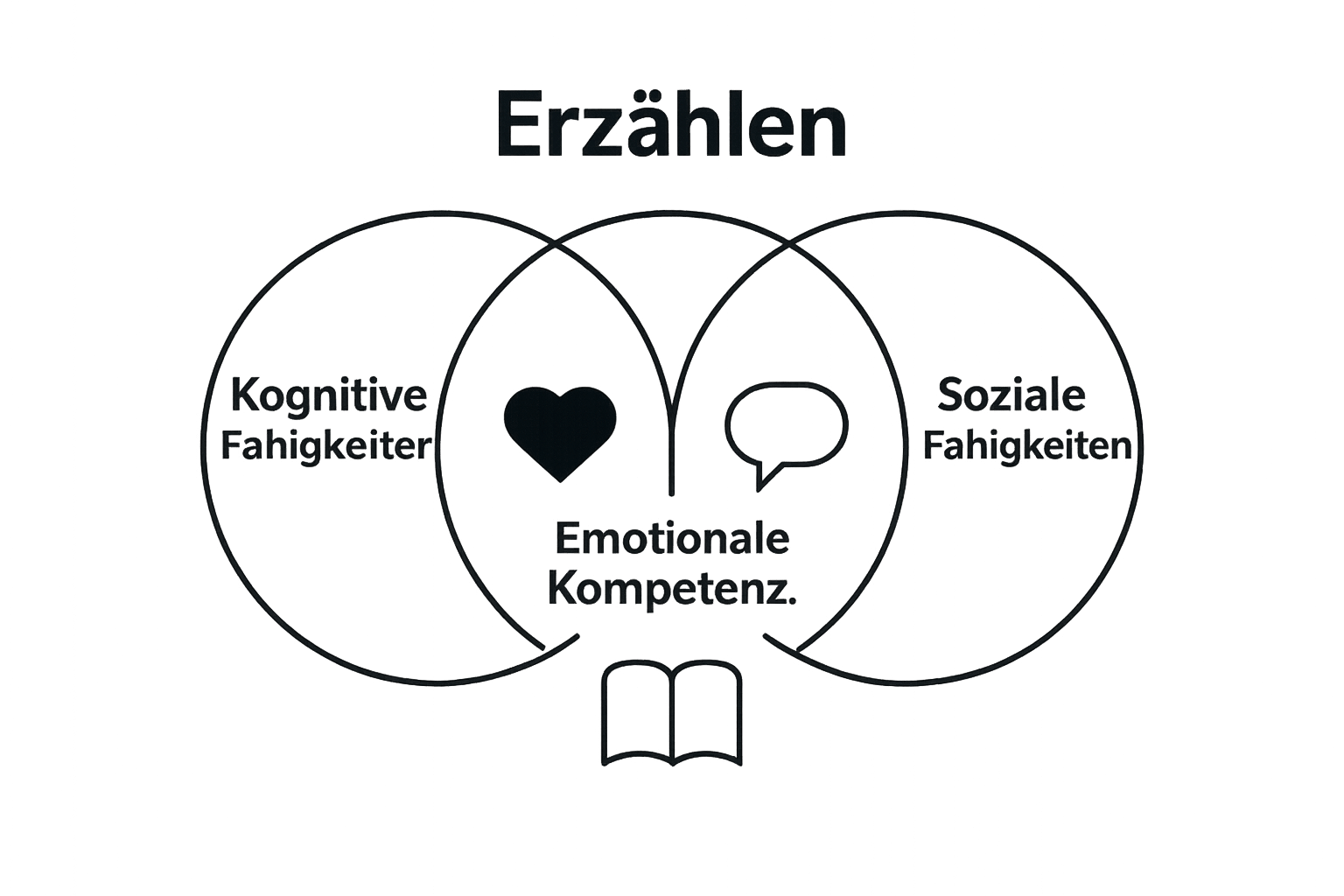
Storytelling is more than just an entertaining activity – it is a powerful tool for promoting child development. Through deliberate storytelling, various cognitive, emotional, and social abilities in children are systematically supported and fostered.
Cognitive Development Through Storytelling
According to a study by the National Institutes of Health, storytelling plays a crucial role in children's cognitive development. It not only supports language acquisition but also helps develop complex mental structures.
The main cognitive aspects include:
- Language competency: Expansion of vocabulary and improvement of language structures
- Memory performance: Strengthening of short and long-term memory through narrative structures
- Logical thinking: Development of cause and effect understanding through storytelling
Emotional and Social Education
Stories are an excellent medium for teaching children emotional intelligence and social competencies. By experiencing different characters and their emotional worlds, children learn empathy, perspective-taking, and emotional differentiation.
Particularly important emotional learning aspects are:
- Emotional self-awareness: Recognizing and naming one's own feelings
- Conflict understanding: Learning constructive problem-solving strategies
- Social interaction: Understanding complex interpersonal relationships
Creativity and Imagination
Storytelling stimulates children's imagination in a unique way. By immersing themselves in imaginary worlds, children develop creative thinking processes and learn to think outside the box. They practice abstract thinking and learn to view situations from different perspectives.
The following table provides a compact overview of the three central areas of impact of storytelling for children and their specific educational contributions.
| Area of Impact | Description | Educational Contribution |
|---|---|---|
| Cognitive Development | Promotion of language competency, memory, and logical thinking through narrative structure of stories | Better understanding, expanded vocabulary, enhanced thinking |
| Emotional/Social Education | Development of empathy, perspective-taking, and conflict competency through experiencing characters | Increased emotional intelligence, social understanding |
| Creativity and Imagination | Stimulation of imagination, creative thinking processes, and mental flexibility through imaginative stories | Promotion of problem-solving, ideation, and perspective-taking |

Storytelling is therefore far more than a form of entertainment – it is a holistic educational tool that supports and promotes children's overall development.
The Connection Between Stories and Social Competence
Stories are more than just entertaining narratives – they are a crucial tool for developing social competencies in children. They enable young people to understand complex interpersonal dynamics and learn social skills in a natural and playful way.
Empathy and Perspective-Taking
According to a study by the National Institutes of Health, narrative structures play a crucial role in developing social competencies. By experiencing different character perspectives, children learn to put themselves in others' shoes and understand their emotions and motivations.
The key aspects of perspective-taking include:
- Emotional understanding: Recognizing and empathizing with different emotional states
- Mental flexibility: Ability to view situations from different angles
- Interpersonal sensitivity: Development of understanding for different behaviors
Conflict Resolution and Communication
Stories provide a safe space to explore social conflicts and their potential solutions. Children learn constructive communication strategies and non-violent conflict resolution through narrative examples.
Key elements of conflict resolution through storytelling:
- Communication competency: Learning effective conversation strategies
- Emotional regulation: Managing frustration and disappointment
- Negotiation skills: Development of compromise and willingness to cooperate
Social Norms and Values
Narrative learning enables children to understand social norms and moral values. Stories subtly convey social behavior rules and ethical principles that are important for harmonious coexistence.
Storytelling thus proves to be an extremely effective educational tool for promoting social competencies, helping children understand and master the complex world of interpersonal relationships.
Practical Applications of Storytelling in Everyday Life
Storytelling is not a complicated science, but a natural and accessible method to educate, entertain, and emotionally support children. Integrating stories into the daily family routine can happen playfully and effortlessly.
Storytelling in Everyday Situations
Parents and caregivers can integrate storytelling into various areas of life. It's not about constructing complicated narratives, but weaving stories organically into family life.
Possible areas of application include:
- Conflict resolution: Stories as explanatory models for difficult situations
- Bedtime routines: Calming narratives as part of the evening routine
- Behavior modification: Narratives to convey values and behavioral rules
Techniques for Effective Storytelling
For parents of toddlers, we offer detailed insights into age-appropriate storytelling. The art of storytelling requires some basic techniques:
- Interactive storytelling: Involving children in the story and encouraging them to think along
- Emotional resonance: Conveying feelings and moods in a lively manner
- Body language and voice modulation: Dynamic presentation of the story
Digital and Analog Storytelling Formats
Modern parents today have diverse options for practicing storytelling. Whether classic reading aloud, digital fairy tales, or interactive narratives – the range is wide.
This table compares classic and digital storytelling formats and shows their respective characteristics and educational benefits for everyday use.
| Format | Characteristics | Educational Benefits |
|---|