 edory
edory
Over 80 percent of preschool children demonstrably benefit from stories that deliberately promote language and empathy. In Germany, educational narratives are an important part of creative development in early childhood. Choosing age-appropriate storytelling creates not only shared rituals but also actively supports imagination and understanding of social values. Parents learn here how personalized stories can strengthen their children's language development and emotional intelligence.
Table of Contents
- What Are Stories and Narratives?
- Types of Children's Stories and Their Special Features
- How Stories Stimulate Language Development and Imagination
- Emotional and Social Impact of Narratives
- Risks, Quality Features, and Parental Responsibility
Key Insights
| Point | Details |
|---|---|
| Importance of Stories | Stories are powerful communication tools that convey emotions and values and support children's development. |
| Types of Children's Stories | Different story forms such as picture books or detective stories promote specific learning goals and interests. |
| Language and Creative Development | Stories expand vocabulary and promote critical thinking and creativity in children. |
| Parental Responsibility | Parents should pay attention to age-appropriateness, positive values, and linguistic clarity when selecting stories. |
What Are Stories and Narratives?
Stories and narratives are more than simple communications of facts - they are powerful communication instruments that convey emotions, values, and meanings. A narrative transports content and helps us categorize experiences into familiar categories.
A narrative is a meaning-making storytelling structure that goes far beyond a simple description of events. It is a complex form of representation that conveys social relationships, cultural identities, and emotional experiences. Narratives shape the worldview of groups and influence how people understand social processes.
Stories play a particularly important role for children. They not only help with language acquisition but also support cognitive and socio-emotional development. Narratives allow children to understand complex situations, develop empathy, and expand their own imagination. They are like bridges between the real and imagined world that enable learning and understanding in a deeply human and accessible way.
Pro Tip: When telling stories to children, choose narratives that convey emotions and values while being engaging and age-appropriate.
Types of Children's Stories and Their Special Features
Children's and young adult literature offers an impressive variety of story forms that are specifically tailored to different developmental stages and interests of children. These stories range from adventure tales to fairy tales to detective stories, each pursuing their own educational and entertainment goals.
Particularly interesting are the different text types such as picture books, read-aloud books, and narrative formats. These differ significantly in language, length, and degree of illustration. Picture books for toddlers are short and heavily illustrated, usually written in the present tense to promote children's understanding. Read-aloud books, on the other hand, offer complete stories with lively language and lots of direct speech, designed specifically for shared reading times.
The main categories of children's stories typically include:
- Adventure stories with child protagonists
- Fairy tales and folklore
- Historical narratives
- Detective stories
- Didactic works for teaching values and knowledge
Each of these categories has specific features that appeal to, entertain, and educate children in different ways.
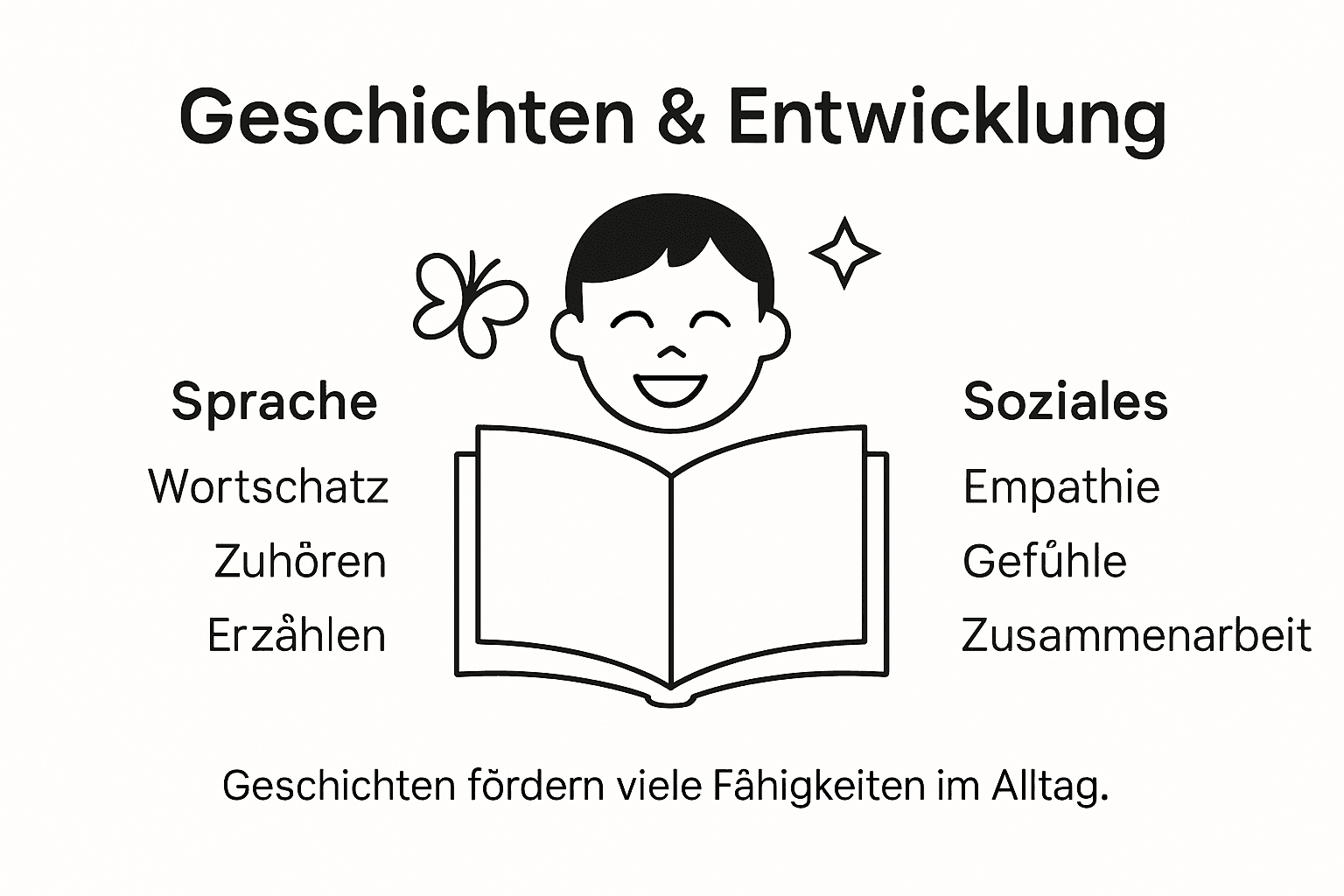
Below you will find an overview of different types of children's stories and their educational impact:
| Story Type | Language Level & Length | Educational Benefits |
|---|---|---|
| Picture Book | Simple, short, many pictures | Promotes early childhood language development |
| Read-Aloud Book | Longer, lively language | Strengthens listening and dialogue skills |
| Detective Story | Tricky, moderately long | Promotes logical thinking and problem-solving |
| Adventure Story | Medium to long, exciting | Increases imagination and self-confidence |
| Fairy Tale | Simple to complex, symbolic | Conveys values and moral guidance |
Pro Tip: Choose stories that not only entertain but also age-appropriately convey knowledge and values while stimulating the child's imagination.
How Stories Stimulate Language Development and Imagination
Storytelling is a key to language development that accomplishes far more than just teaching individual words. Stories are powerful tools that support child development on multiple levels: they expand vocabulary, strengthen text comprehension, and improve concentration.

Interactive storytelling plays a particularly important role. Reading aloud not only stimulates language but also promotes imagination, creativity, and emotional intelligence. Through active listening, children develop a deeper understanding of language, learn new words in context, and begin to understand more complex linguistic structures.
The development of children's imagination through stories can be divided into several aspects:
- Expansion of vocabulary
- Strengthening of imagination
- Promotion of critical thinking
- Development of empathy and emotional understanding
- Increased creativity
Pro Tip: Choose stories that actively involve your child and encourage them to think along, and occasionally interrupt reading to ask questions and stimulate imagination.
Emotional and Social Impact of Narratives
Educationally valuable narratives play a crucial role in children's emotional development by offering far more than just entertainment. They function as powerful tools to promote empathy, social competence, and emotional intelligence.
The social dimension of narratives encompasses various central aspects: Stories help children understand and process emotional experiences and develop social skills. They enable children to explore complex emotional worlds, practice perspective-taking, and develop a deeper understanding of interpersonal relationships.
The most important levels of narrative impact include:
- Development of empathy skills
- Promotion of emotional self-regulation
- Strengthening of community feeling
- Support of cultural identity formation
- Communication of social values and norms
Pro Tip: Choose stories that depict different emotions and social situations and enable your child to identify with various characters and life situations.
Risks, Quality Features, and Parental Responsibility
Parental responsibility in selecting children's stories encompasses much more than simply providing reading material. It is about careful support that ensures stories promote rather than harm development.
Quality features of child-appropriate stories include several crucial aspects: Consideration of individual developmental stages and avoidance of overstimulation are central criteria. Age-appropriate topics, appropriate language, and promotion of positive values are other important features.
The following table shows key quality criteria for selecting child-appropriate stories at a glance:
| Quality Feature | Importance for the Child | Practical Tip for Parents |
|---|---|---|
| Age-Appropriateness | Prevents overstimulation | Recommended: Follow age recommendations |
| Positive Values | Supports social development | Choose stories with role models |
| Linguistic Clarity | Promotes language comprehension | Clear, child-appropriate formulations |
| Appealing Illustrations | Promotes comprehension and interest | Pay attention to detailed images |
The main risks of inappropriate stories include:
- Emotional overstimulation
- Conveying discriminatory content
- Distortion of age-appropriate perceptions
- Reinforcement of fears
- Inappropriate confrontation with complex topics
Pro Tip: Conduct regular, thoughtful reviews of stories and discuss the content with your child to understand their reactions and comprehension level.
Using Stories Strategically for Child Development
Stories are powerful tools to promote language development, imagination, and emotional intelligence in children. This knowledge is central when selecting child-appropriate narratives that not only entertain but also convey values and strengthen understanding of social relationships. Parents face the challenge of finding age-appropriate, educationally valuable content that sustainably supports their child's personality and creativity.
This is where Edory AI comes in. Our innovative platform enables parents to generate daily individual and age-appropriate stories that cater exactly to their child's interests and needs. By combining educational content with imaginative fairy tale elements, we playfully promote language skills and social competence. Discover a diverse selection of texts in our Uncategorized – Edory AI – Educational Children's Stories category that address exactly where your child needs it. Take the opportunity now to inspire your child with customized stories and actively support their development. Visit Edory AI and start today with personalized stories for better development tomorrow.
Frequently Asked Questions
How do stories influence children's language development?
Stories expand children's vocabulary, strengthen their text comprehension, and improve concentration. They also promote interaction with language through active participation and listening.
What types of children's stories are particularly beneficial?
Adventure stories, fairy tales, and didactic works are particularly effective because they convey emotions and values while stimulating imagination.
What quality features should children's stories have?
Children's stories should be age-appropriate, linguistically clear, and rich in positive values. Appealing illustrations support children's comprehension and interest.
How can I improve my selection of stories for my child?
Pay attention to age-appropriate topics and avoid overstimulation. Talk with your child about the stories to promote their reactions and comprehension.