 edory
edory
Fairy tales have been a constant part of childhood for centuries and appear in almost every child's room. Surprisingly, according to scientific studies, children who listen to fairy tales develop up to 30 percent more emotional and social competencies than their peers without these stories. What many don't expect: fairy tales are much more than mere entertainment. They create important foundations for personality development, creative thinking, and cultural identity.
Table of Contents
- The Importance of Fairy Tales for Child Development
- How Fairy Tales Convey Values and Morals
- The Role of Fairy Tales in Language Development and Creativity
- Fairy Tales as a Tool for Problem-Solving and Critical Thinking
- Strengthening Cultural Identity and Tradition Through Fairy Tales
Quick Summary
| Takeaway | Explanation |
|---|---|
| Fairy tales promote emotional intelligence | They help children understand and process complex emotions. Characters demonstrate coping strategies in safe environments. |
| Fairy tales support cognitive abilities | Children develop logical thinking and language skills through complex narrative structures and expanded vocabulary. |
| Fairy tales convey moral values | They illustrate ethical concepts through symbolic stories that help children distinguish between good and bad decisions. |
| Promoting creativity through imaginative worlds | Fairy tales encourage children to develop their own stories and use their imagination. |
| Fairy tales strengthen cultural identity | They convey traditional knowledge and help children understand and appreciate their cultural roots. |
The Importance of Fairy Tales for Child Development
Fairy tales are much more than just entertaining stories. They play a crucial role in the emotional, cognitive, and social development of children. These traditional narratives offer more than entertainment - they are a powerful tool for personality formation.
The following table provides a comparison of key developmental aspects of fairy tales as described in the article.
| Development Area | Fairy Tale Influence |
|---|---|
| Emotional Intelligence | Promoting empathy and understanding and processing complex emotions |
| Cognitive Abilities | Development of logical thinking, recognition of connections, and problem-solving skills |
| Language Development | Vocabulary expansion, promoting text comprehension and narrative structures |
| Moral Values | Communication of ethical principles, distinction between good and evil |
| Creativity and Imagination | Stimulating imagination, developing own stories and creative approaches to solutions |
| Cultural Identity | Conveying traditions, cultural knowledge, and historical identity |
Psychological Development Through Fairy Tales
In fairy tales, children encounter complex emotional situations in a safe, controlled environment. The stories help them understand and process various emotions. Characters like brave princesses or clever peasant children show children coping strategies for challenges. According to interdisciplinary research, fairy tales enable children to explore archetypal themes such as hope, fear, and the struggle between good and evil.
These stories provide important psychological learning spaces:
- Development of empathy through character experiences
- Processing complex emotions in a safe environment
- Learning moral concepts through narrative examples
Cognitive and Language Development
Fairy tales are not only emotionally significant but also an excellent instrument for cognitive development. Through complex narrative structures, children are challenged to understand story lines, recognize cause-and-effect relationships, and develop logical thinking. Learn more about modern fairy tale storytelling and how it can help children expand their language and cognitive abilities.
Furthermore, fairy tales expand vocabulary and promote text comprehension. Children learn new terms, abstract concepts, and complex narrative structures. This supports not only their language development but also their ability to understand and interpret stories.
How Fairy Tales Convey Values and Morals
Fairy tales are more than just imaginative stories. They serve as moral teachers, conveying complex ethical concepts in a way that children can understand and internalize. Through symbolic narratives and archetypal characters, fairy tales help children grasp fundamental moral principles.
The Narrative Power of Moral Lessons
Traditions and stories transport values in a subtle and effective way. According to scientific research, fairy tales offer clear distinctions between good and evil that help children understand social norms and moral values. Characters in fairy tales face challenges, make ethical decisions, and experience the consequences of their actions.
This table summarizes typical core moral messages that fairy tales convey according to the article.
| Moral Value | Description |
|---|---|
| Honesty | Truthfulness is rewarded, lies lead to disadvantages |
| Compassion | Helpfulness and compassion are shown as desirable virtues |
| Courage | Brave actions lead to success and overcoming obstacles |
| Patience | Perseverance is rewarded, results take time |
| Integrity | Strength of character and principled commitment are important for personal development |
| Keeping Promises | Honoring promises and given words has great value |
| Consequences | Unethical behavior leads to direct negative consequences |
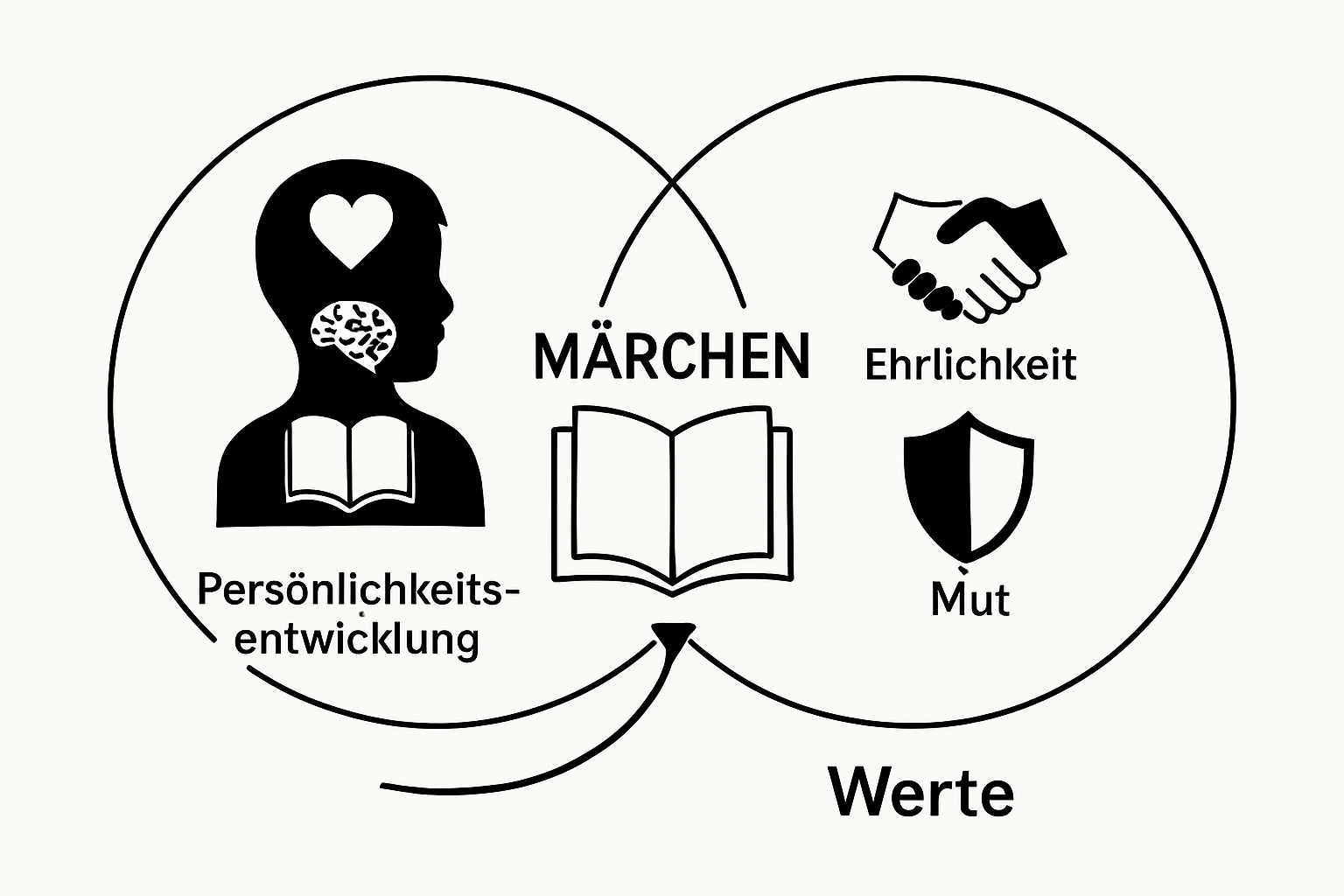
Child-relevant core moral messages in fairy tales include:
- Importance of honesty and integrity
- Significance of compassion and helpfulness
- Consequences of unethical behavior
- Value of courage and persistence
Value Transmission Through Symbolic Stories
Fairy tales use symbolic language and universal archetypes to convey complex moral concepts. Discover more about conveying values to children and how narrative structures promote ethical development. A fairy tale such as "Cinderella" teaches principles like patience, kindness, and hope, while "The Frog Prince" addresses themes of keeping promises and inner beauty.
Through these symbolic narratives, children learn abstract moral concepts in an accessible and emotional way. The narrative structures enable them to understand ethical dilemmas, develop empathy, and practice moral decision-making.
The Role of Fairy Tales in Language Development and Creativity
Fairy tales are far more than magical entertainment. They are powerful instruments for language development and the development of children's creativity. Through their rich narrative structures and imaginative worlds, they offer children unique opportunities to develop language and creative abilities.
Language Development Through Narrative Structures
Fairy tales present children with complex language patterns and structures that go beyond everyday communication. Research shows that these stories not only promote literacy but also stimulate imagination and problem-solving abilities. The rich language of fairy tales - with poetic descriptions, unexpected twists, and metaphorical expressions - expands children's vocabulary in a playful way.
Language development areas through fairy tales:
- Expansion of active and passive vocabulary
- Understanding more complex grammatical structures
- Training in narrative comprehension
- Promoting listening and communication skills
Creativity and Imagination
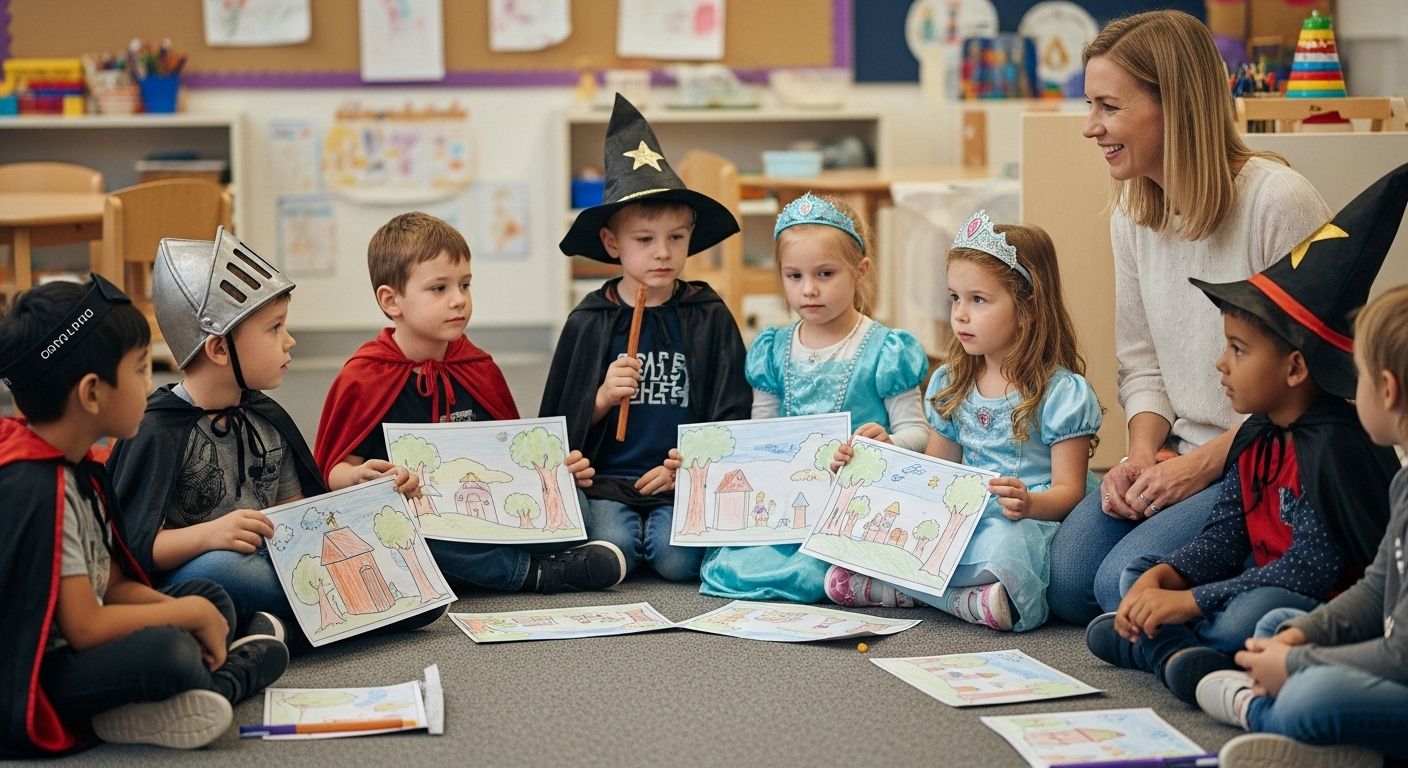
Fairy tales are catalysts for children's creativity. They open imaginary worlds for children that go far beyond the boundaries of reality. Discover exciting stories from around the world that inspire children to think creatively. Through magical characters, unexpected twists, and fantastic landscapes, children are encouraged to think beyond conventional boundaries and develop their own creative stories.
The open and symbolic narratives of fairy tales invite children to develop their own interpretations, construct imaginary worlds, and envision innovative solutions. They provide a safe space for creative exploration and intellectual discovery.
Fairy Tales as a Tool for Problem-Solving and Critical Thinking
Fairy tales are not just entertaining stories, but complex narrative structures that help children develop critical thinking and problem-solving skills. They offer a unique platform for exploring complex challenges and learning innovative problem-solving strategies.
Development of Analytical Thinking Skills
In fairy tales, protagonists are often confronted with seemingly unsolvable challenges that require creative and strategic solutions. Scientific research shows that such narrative structures encourage children to view problems from different perspectives and develop unconventional solution paths.
Key aspects of critical thinking in fairy tales:
- Analyzing complex situations
- Recognizing action alternatives
- Evaluating the consequences of different decisions
- Developing flexible problem-solving strategies
Strategic Thinking and Decision-Making
Every fairy tale is essentially a case study of human behavior and decision-making. Discover modern fairy tale storytelling that challenges children to think strategically. Characters must often use cunning and intelligence to overcome obstacles, which implicitly teaches children to think logically, assess risks, and plan ahead.
Through these narrative experiences, children learn to analyze challenges systematically, form hypotheses, and develop creative solutions. Fairy tales subtly convey that problems are not insur