 edory
edory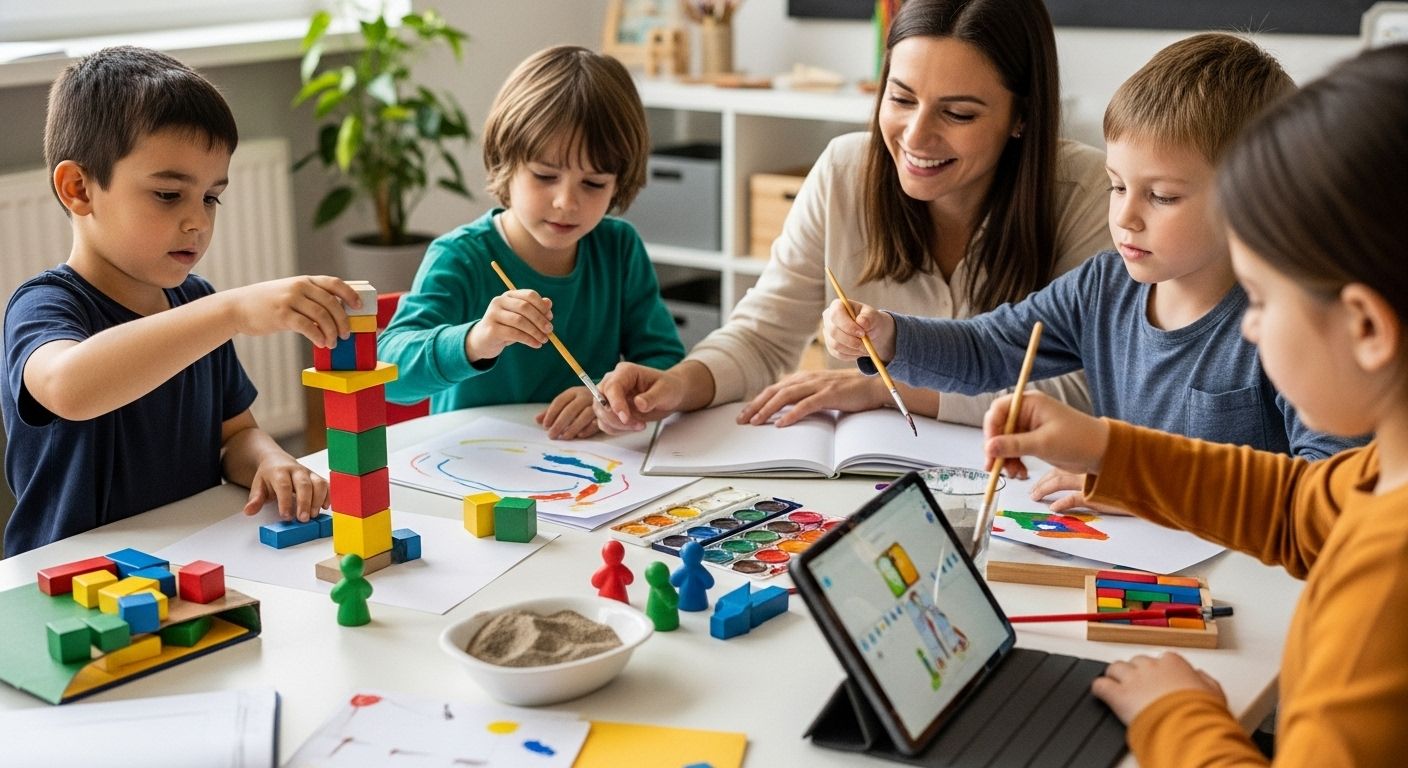
Playful learning sounds like fun and delivers amazing results at the same time. Research shows that learning sessions of just 20 to 45 minutes per day can promote remarkable progress in children. Many rely on rigid routines and complicated curricula. But it is precisely the combination of creative variety, appropriate material selection, and individual adaptation that ensures children learn with joy and naturally along the way.
Table of Contents
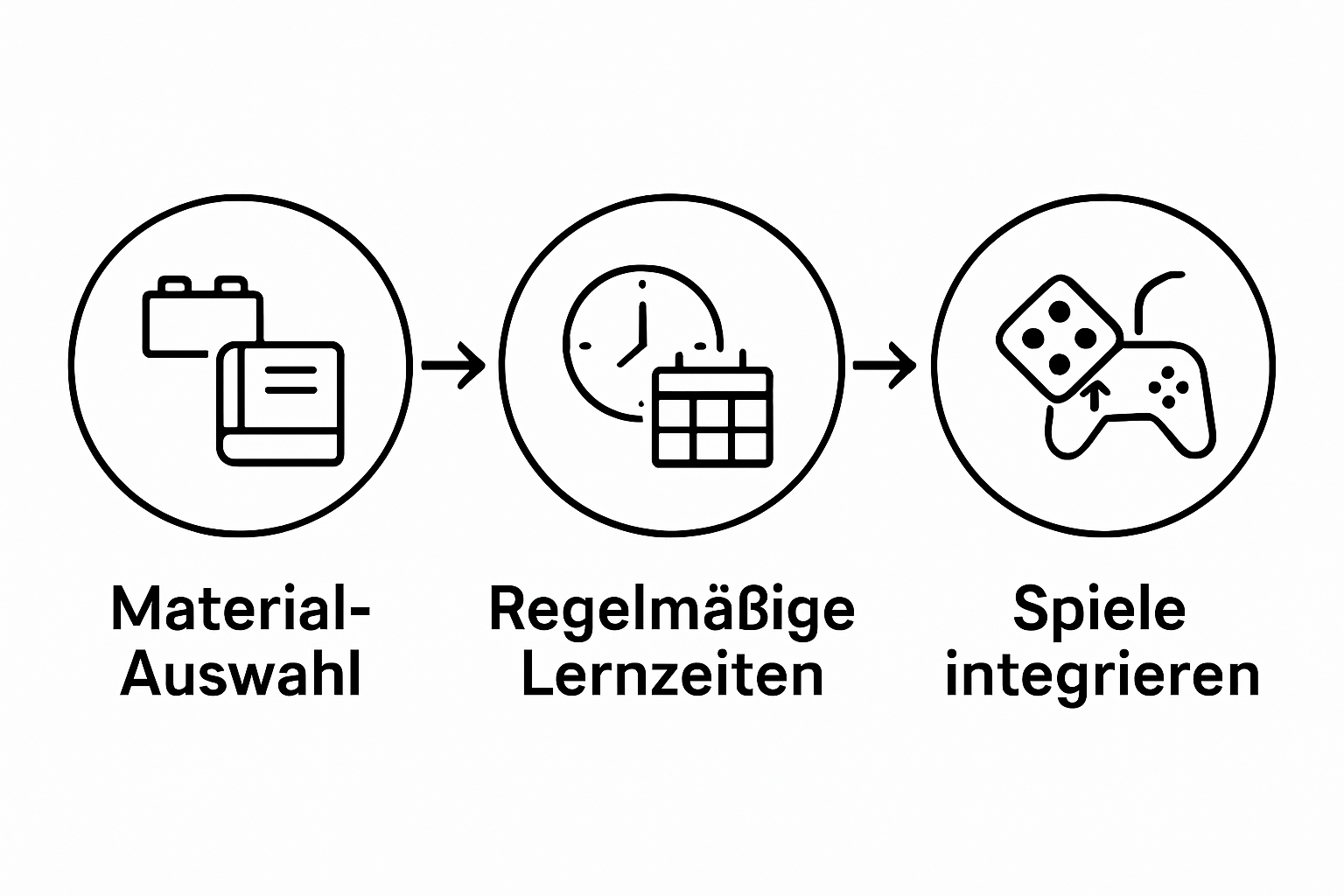
- Step 1: Choose appropriate learning materials
- Step 2: Plan regular learning times
- Step 3: Integrate games into the learning process
- Step 4: Observe the children's learning progress
- Step 5: Adapt activities to meet needs
Quick Summary
| Key Message | Explanation |
|---|---|
| 1. Choose age-appropriate materials | When selecting learning materials, pay attention to the child's development and adapt the challenge accordingly. |
| 2. Integrate regular learning times | Structured times help to effectively incorporate playful learning into the daily routine. |
| 3. Games promote active learning | Use games to encourage active participation and problem-solving, making the learning process more exciting. |
| 4. Observe learning progress | Document developments and special features to provide targeted support. |
| 5. Adapt activities individually | Consider your child's interests and strengths to avoid overload and spark enthusiasm. |
Step 1: Choose appropriate learning materials
Playful learning begins with the careful selection of learning materials that entertain and educate children simultaneously. This first decision is crucial for a successful learning journey. The right materials spark curiosity, foster creativity, and turn the educational process into an exciting adventure.
When selecting materials, parents and educators should consider several important aspects. Age-appropriateness is the top priority. Toys and learning resources must match the child's cognitive and motor development stage. A three-year-old needs different materials than a six-year-old. Make sure the materials are not too easy or too complex, but offer just the right level of challenge.
According to research findings from developmental psychology, learning materials should meet the following criteria:
- Open-ended design possibilities
- Safety and child-friendly processing
- Engaging multiple senses
- Room for creativity and initiative
Another important dimension is the variety of materials. Combine different types of learning: construction toys like building blocks, creative materials like paints and paper, digital learning games, and natural materials like stones, sand, or wood. This variety enables holistic learning and appeals to different interests and learning styles.
When selecting materials, it is recommended to consult our guide to creative learning. Observe your child to see which materials particularly fascinate them. The best learning materials spark enthusiasm and motivation.
It is also important to prioritize quality over quantity. A few high-quality materials are better than an abundance of mediocre resources. Invest in robust, durable products that can accompany your child through different developmental phases.
At the end of the selection process, you should have materials that motivate your child, spark their curiosity, and challenge them playfully. Success is evident when your child interacts with the materials independently and with joy.
Below you will find an overview of commonly used learning materials, their learning objectives, and the key features for optimal selection.
| Learning Material | Learning Objective | Important Features |
|---|---|---|
| Building Blocks | Creativity, Motor Skills | Robust, versatile, combinable |
| Paints & Paper | Expression, Fine Motor Skills | Non-toxic, age-appropriate, easy to handle |
| Digital Learning Games | Media Literacy, Problem-Solving | Age-appropriate, limited screen time |
| Natural Materials | Spirit of Discovery, Sensory | Safe, different textures |
| Board and Dice Games | Mathematical Understanding | Simple rules, adaptable |
| Experiment Kits | Scientific Thinking | Complete, clear instructions |
| Role-Play Accessories | Language Development, Social Learning | Diverse, imagination-stimulating |
Step 2: Plan regular learning times
Regular learning times are the key to successful playful learning. A structured yet flexible approach allows children to acquire knowledge playfully and naturally. The schedule should not be understood as a rigid routine, but as a dynamic framework that promotes both fun and development equally.
Starting with time selection, it is advisable to integrate learning phases into natural daily routines. Children have different energy levels and attention spans. Morning hours are often suited for concentrated activities, while late afternoon hours support more creative and playful approaches. Flexibility is essential - a rigid schedule can undermine learning motivation.
According to research findings from the University of Plymouth, learning times should vary between 20 and 45 minutes, depending on the child's age and individual attention span. A typical structure could look like this:
- 10 minutes introduction and motivation
- 20 minutes active learning phase
- 10 minutes reflection and playful deepening
Parents should also plan breaks and movement phases. Children do not learn linearly; they need moments of rest and free play. These breaks are not wasted time but important phases of processing and regeneration.
Our guide to creative learning offers additional tips for effective time management. It is important to evaluate and adjust the schedule daily. What works today may be different tomorrow. Observe your child's reactions and be ready to modify your approach.
The ultimate confirmation of well-planned learning times is the child's enthusiasm. If they learn with motivation and happiness, without feeling pressure, you have found the right timeframe. Playful learning means embedding education in natural, joyful moments.
Step 3: Integrate games into the learning process
Games are the key to children's learning - they bring education to life, make it interactive, and most importantly, entertaining. Integrating games into the learning process transforms dry knowledge transfer into an exciting adventure where children not only learn but also experience joy.
Game-based learning means more than just distraction. It is about designing learning content so that children actively participate, solve problems, and expand their abilities playfully. The balance between entertainment and targeted education is important here.
According to research findings on game-based learning, well-designed games can promote competencies such as problem-solving, strategic thinking, and creativity. Start with games that directly connect to learning goals.
For different learning areas, there are suitable game approaches:
- Mathematics: Dice games, board games with math tasks
- Languages: Memory with vocabulary, role-plays
- Natural Sciences: Experiment kits, exploration games
- Social Competencies: Cooperative group games
Digital learning games offer additional possibilities. Our guide to digital learning media shows how interactive apps and computer games can deliberately convey educational content. Pay attention to age-appropriateness and limited screen time.
Several aspects are crucial when selecting games. The game should be challenging but not overwhelming. It must provide success experiences while motivating continued learning. Avoid games that promise rewards without genuine learning progress.
Parental involvement is crucial. Play together, ask questions, reflect on results.
The following table gives you a quick overview of the key learning areas and suitable game approaches presented in the article.
| Learning Area | Suitable Game Types | Example |
|---|---|---|
| Mathematics | Dice games, Board games | Board games with math tasks |
| Language | Memory, Role-plays | Memory with vocabulary, creative role-plays |
| Natural Science | Exploration games, Experiments | Experiment kits, practical exploration tasks |
| Social Competencies | Cooperative group games | Team games and cooperation tasks |
| Creativity | Construction & craft games | Building blocks, painting and craft materials |
Success becomes apparent when your child develops enthusiasm, understands game rules, and applies skills learned playfully in other contexts. Playful learning is more than a method - it is an attitude that views education as an exciting adventure.
Step 4: Observe the children's learning progress
Children's learning progress is a dynamic, individual process that requires careful and compassionate observation. The goal of this step is not only to document progress but also to understand the child's learning journey holistically and provide targeted support.
Systematic observation means more than occasional notes. It involves regularly and structurally capturing the child's development in various learning areas. Keep a learning journal in which you record progress, challenges, and special moments. This document becomes a valuable guide for individual learning support.
According to research findings on children's learning development, the following observation areas are particularly significant:
- Cognitive development
- Socio-emotional progress
- Motor skills
- Language development
- Creativity and problem-solving competency
Concrete observation methods help capture learning progress precisely. Focus on methods such as learning discussions, portfolio documentation, and targeted task observation. Make sure to document not only results but also learning processes and strategies.
Our guide to elementary school preparation provides additional insights into effective observation techniques. The key is finding a balance between objective observation and compassionate support. Avoid comparative evaluations and focus on individual developmental steps.
Digital tools can support observation. Use apps or digital notebooks that allow you to quickly and structurally document learning moments. Pay attention to data protection and your child's privacy.
The key lies in consistency and reflection. Take time to discuss the documentation with your child. Show interest in their thoughts, feelings, and perspectives. These conversations not only strengthen understanding of learning progress but also the relationship between parent and child.
Success is evident when the child develops joy in learning, confidently faces challenges, and recognizes their individual progress. Appreciative, supportive observation is the key to sustainable, motivating learning.
Step 5: Adapt activities to meet needs
Every child is unique - with individual interests, learning styles, and developmental speeds. The key to successful playful learning lies in the ability to adapt activities flexibly and individually. This step is crucial to avoid overwhelm while sparking genuine learning enthusiasm.
Individual learning profiles form the basis for targeted adaptations. Observe carefully which topics fascinate your child, which learning methods work best, and where their particular strengths lie. A visual learner needs different approaches than a kinesthetic learner. A mathematically gifted child might need more complex challenges, while a linguistically oriented child may prefer other types of input.
According to scientific findings on individualized education, parents should consider the following adaptation dimensions:
- Content complexity
- Learning speed
- Focus of interests
- Emotional needs
- Individual learning styles
Flexible learning strategies require creativity and empathy. If an activity does not work, it does