 edory
edory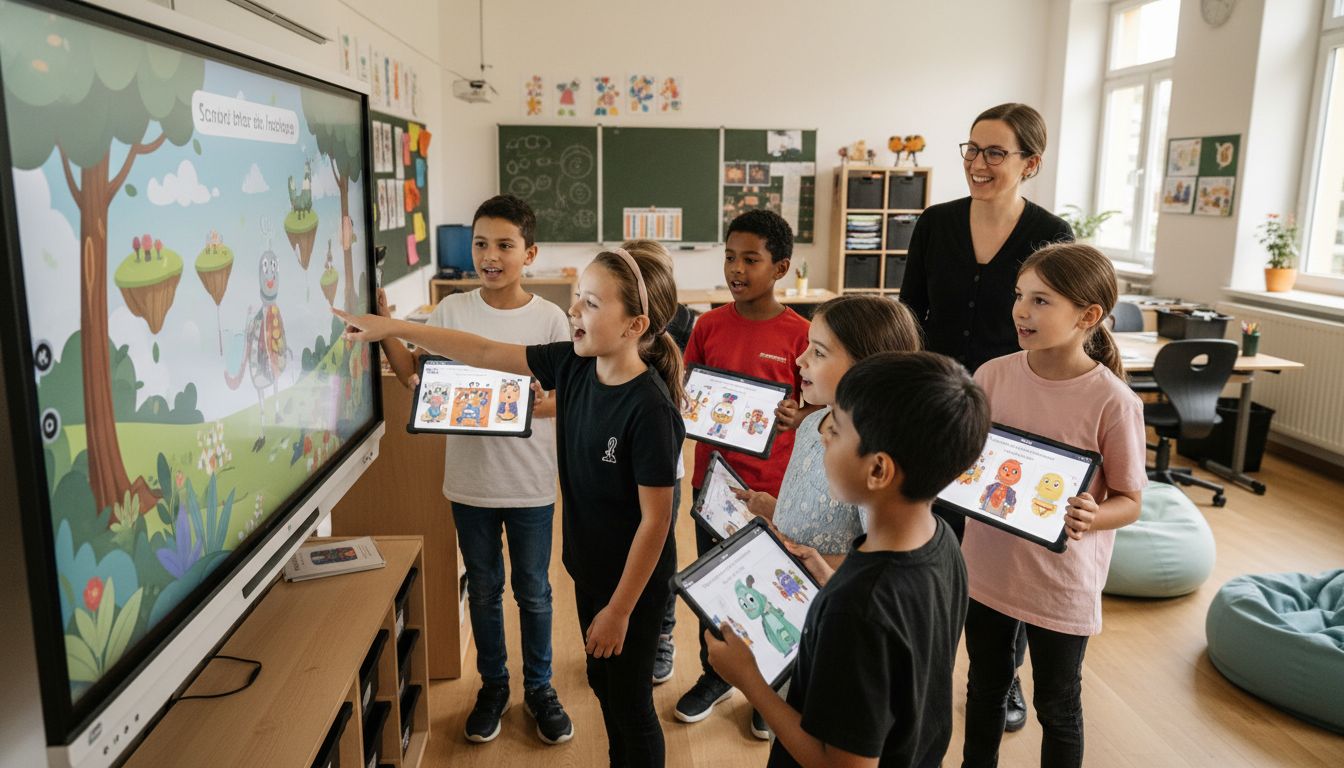
More than 70 percent of children between six and ten already use digital media in their daily lives. Artificial intelligence is now changing how stories are created and experienced. Children can create their own characters and design adventures according to their wishes. This creates narratives that directly incorporate individual interests, language levels, and learning experiences.
Table of Contents
- What does AI mean for children's stories?
- Benefits of AI-generated stories
- Personalization for age groups and interests
- Educational potential through AI-based stories
- Security and data protection issues in children's apps
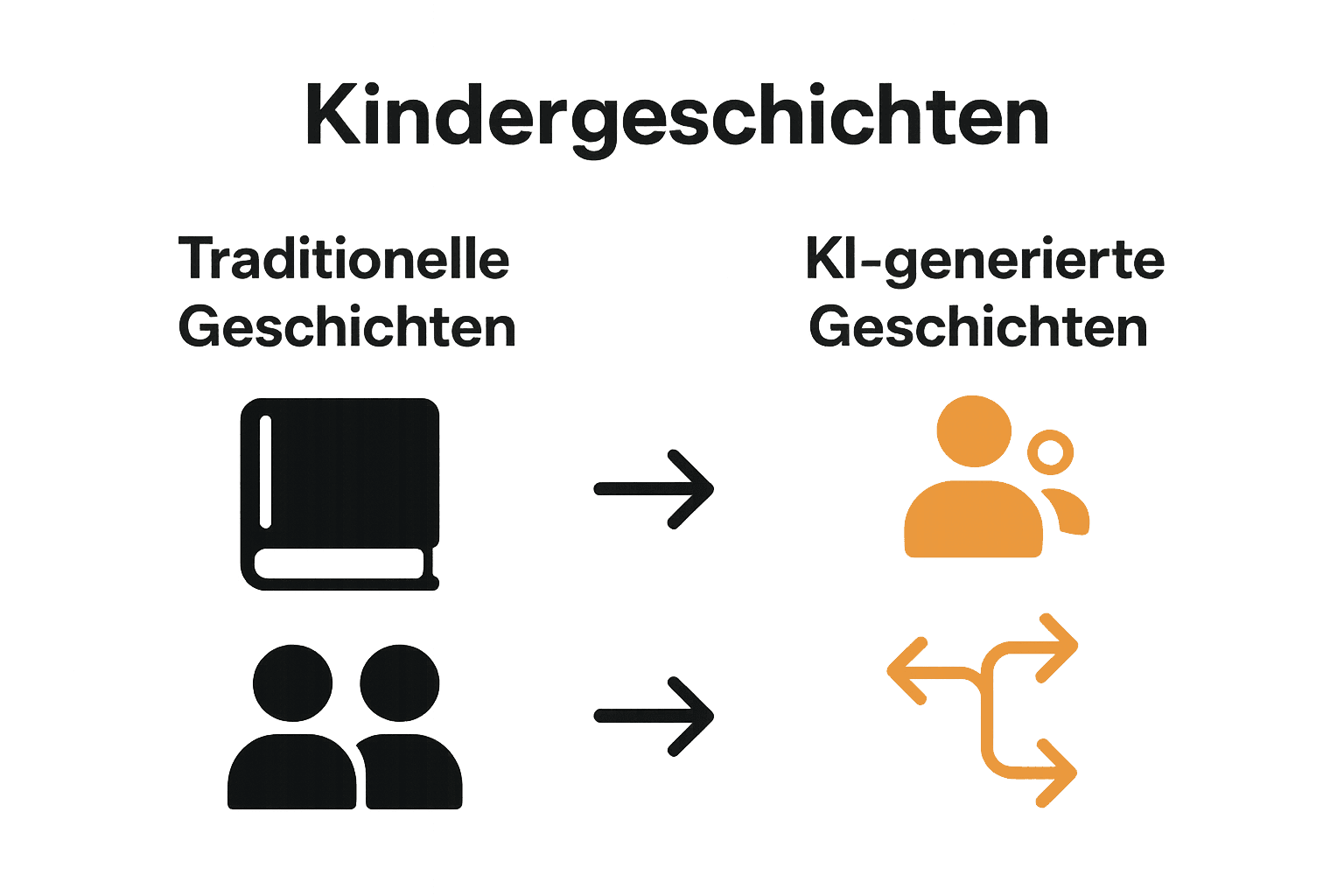
- Comparison: Traditional vs. AI stories
Key Takeaways
| Point | Details |
|---|---|
| Interactive Stories | AI enables children to dynamically co-create stories, promoting personal development and creativity. |
| Personalization | Stories are individually tailored to children's age and interests, making learning content more effective. |
| Educational Potential | AI-supported narratives support linguistic and creative development through interactive learning environments. |
| Security Aspects | When using AI in children's apps, data protection and security are essential to create trustworthy learning environments. |
What does AI mean for children's stories?
Artificial intelligence (AI) is revolutionizing the way children experience and create stories. According to research from arxiv.org, AI enables children to interactively co-create story worlds by dynamically generating dialogues and narrative structures.
What makes AI-supported stories special is their flexibility. As studies from arxiv.org show, systems like StoryBuddy support parents and children with storytelling by creating personalized narrative experiences. The AI adapts to the individual needs and interests of the child.
The benefits of AI for children's stories are diverse:
- Personalized stories based on age and interests
- Interactive narrative elements that actively engage children
- Promotion of creativity and language development
- Adaptable difficulty levels
Through AI, children's stories become a dynamic, lively experience that seamlessly combines education and entertainment.
Benefits of AI-generated stories
AI-generated stories offer parents and children a revolutionary way to create creative narratives. According to research from arxiv.org, these stories can serve as a flexible starting point for creative processes where users can individually adapt and shape the narratives.
Particularly exciting is the support for character development. arxiv.org shows that AI systems can help authors define and refine fictional characters through interactive conversations. This enables deeper and more nuanced character development.
The main benefits of AI-generated stories include:
- High personalization options
- Promotion of children's creativity
- Adaptation to individual learning levels
- Quick generation of new narratives
- Support for language development
Through AI, children's stories become a dynamic tool that uniquely combines education, entertainment, and creativity.
Personalization for age groups and interests
AI-supported story systems are revolutionizing children's literature through tailor-made narrative experiences. As arxiv.org shows, systems like StoryBuddy enable flexible adaptation to the individual needs and interests of children.
Personalization goes far beyond simple age adaptations. arxiv.org confirms that interactive AI systems actually give children the opportunity to create their own narrative worlds through dialogues that are precisely tailored to their developmental stage.
For parents, this concretely means:
- Stories that consider the child's current language level
- Topics that reflect the child's interests
- Adjustable difficulty levels of the narratives
- Characters that represent the child's world
- Learning goals that are gently integrated into the stories
Through this intelligent personalization, children's stories become a dynamic, interactive educational experience that meets children where they are.
Educational potential through AI-based stories
AI-based stories open up entirely new dimensions of learning and creative development for children. According to research from arxiv.org, interactive narratives enable children to create their own narrative worlds through language play and dialogue while playfully developing language skills.
Systems like StoryBuddy demonstrate the enormous educational potential of this technology. arxiv.org shows that such AI-supported platforms not only promote interactive storytelling between parents and children but also support central cognitive abilities such as creative thinking and language development.
Educational opportunities include:
- Playful language promotion
- Development of narrative competencies
- Strengthening creative thinking
- Improvement of text comprehension
- Motivating learning environments
Through this intelligent fusion of technology and pedagogy, children's stories become a dynamic tool for personality and intellectual development.
Security and data protection issues in children's apps
In children's apps, security and data protection play a central role. According to findings from lehren-und-lernen-mit-ki.uni-graz.at, it is crucial to make the use of AI technologies transparent and to clearly define responsibility for generated content.
The challenge lies in the responsible handling of sensitive children's data. As uni-hildesheim.de emphasizes, this requires critical awareness of data origin and quality.
Parents should pay attention to the following aspects in children's apps:
- Transparent privacy policies
- No sharing of personal children's information
- Age-appropriate security settings
- Parental control and configuration options
- Encrypted data transmission
Only through the highest security standards can digital learning experiences for children truly be trustworthy and valuable.
Comparison: Traditional vs. AI stories
The difference between traditional and AI-generated stories is becoming increasingly exciting. arxiv.org shows that users frequently adapt AI-generated stories individually, indicating a new dynamic in storytelling.
Particularly interesting is the change in the creative process. arxiv.org confirms that AI tools support authors in character development and open up completely new possibilities for narrative design.
Key differences at a glance:
- Traditional stories: Static, predetermined plot
- AI stories: Dynamic, individually customizable
- Traditional stories: Linear narrative
- AI stories: Interactive and personalizable
- Traditional stories: Single interpretation
- AI stories: Multiple development possibilities
While traditional stories retain their magic, AI-based narratives offer a new, exciting dimension of storytelling.
Here is a comparison of the key features of traditional and AI-generated children's stories:
| Feature | Traditional Stories | AI-generated Stories |
|---|---|---|
| Structure | Static Linear |
Dynamic Interactive |
| Plot | Predetermined | Adaptable to interests |
| Character Development | Pre-made | Co-creation possible |
| Interpretation | Single | Multiple versions |
| Personalization | Limited | Highly individual |
| Learning Potential | Classical | Flexible & playful |
Discover the future of storytelling with Edory.ai
The article clearly shows the growing importance of AI in children's stories and the challenges of creating personalized, interactive, and safe narratives for children. Many parents want exactly that: stories tailored to their child's interests and age while promoting creativity and language development. Edory.ai addresses these needs and offers an innovative solution where AI automatically generates exciting and individually tailored stories. This makes reading aloud not only easier but also more varied and exciting for every child.

Want to experience this new way of learning and storytelling? Then check out the possibilities on our website. Visit the page with our impressive children's stories and learn more about our mission at Edory.ai. Don't miss the chance to delight your children with fresh, age-appropriate narratives every day and support their development playfully. Start now into a new world full of fantasy and education
Frequently asked questions
What are the main benefits of AI for children's stories?
AI for children's stories offers many benefits, such as personalized narratives, interactive elements that actively engage children, promotion of creativity and language development, and adaptation to individual learning levels.
How can parents ensure that AI-supported stories are suitable for their child?
Parents should pay attention to transparent privacy policies, ensure that no personal information is shared, and check the security settings of the apps.
How do traditional stories differ from AI-generated stories?
Traditional stories are static and linear, while AI-generated stories are dynamic, interactive, and adaptable to children's individual interests.
How does AI support language development in children?
AI-based stories promote language development through playful storytelling and dialogues that enable children to create their own narrative worlds and develop their language skills.