 edory
edory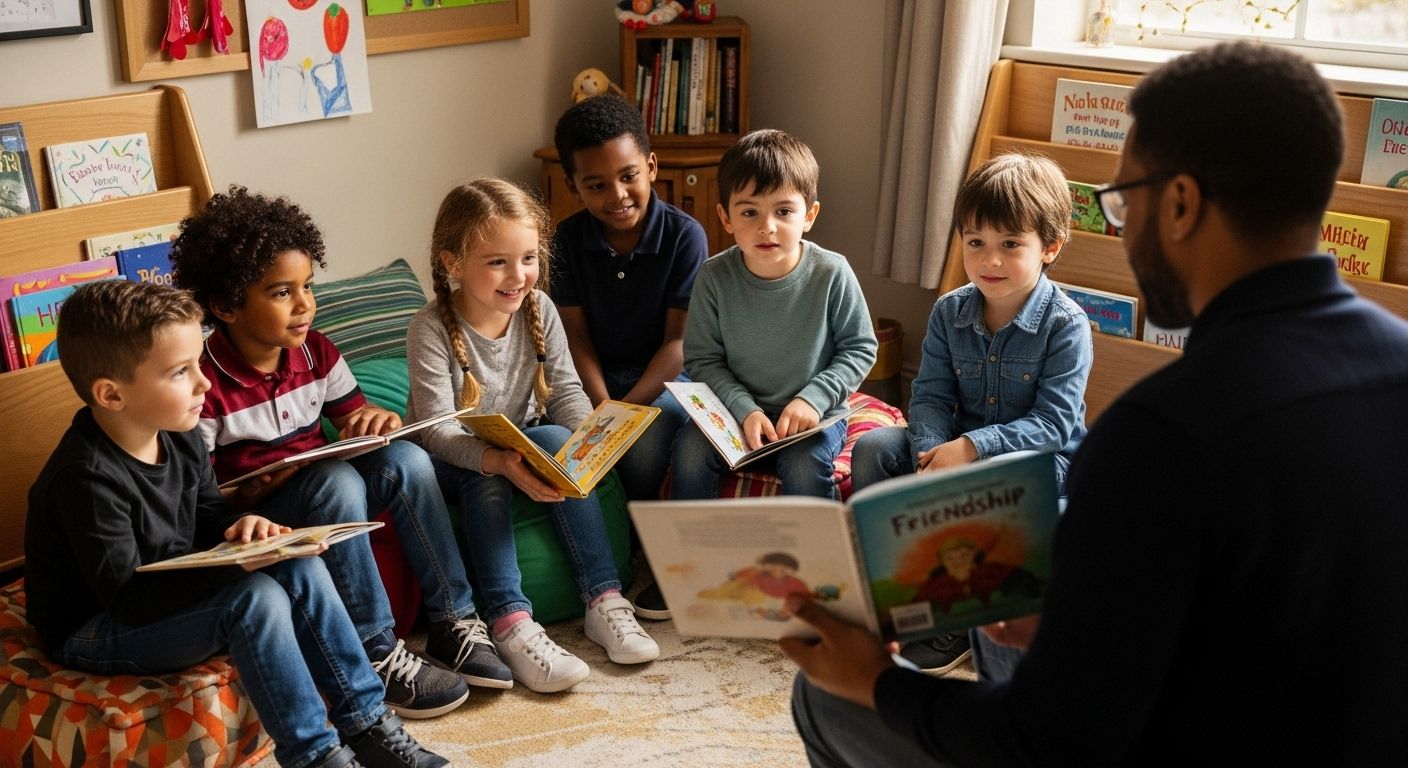
Friendship in childhood can shape an entire life. Studies show that children with good friendships often develop stronger emotional intelligence. Yet many think that as a child, play and fun are all that matters. In reality, first friendships are the foundation for confidence, understanding, and genuine joy in life.
Table of Contents
- The Importance of Friendship in Childhood
- Popular Books About Friendship
- Storytelling as a Learning Method
- Promoting Friendship and Social Skills
- Discussing Friendship with Children
- Creative Activities About Friendships
- Tips for Dealing with Conflicts
Brief Summary
| Important Learning Content | Explanation |
|---|---|
| Friendships foster emotional intelligence | True friendships help children learn empathy, communication, and conflict resolution, supporting their social development. |
| Use books as learning tools | Children's books convey complex social concepts in an illustrated way and help develop empathy. |
| Tell stories interactively | By actively involving children in storytelling, parents promote creativity and understanding of social dynamics. |
| Role-playing for social skills | Role-playing provides children with the opportunity to practice social interactions and discover different perspectives. |
| Handle conflicts constructively | Children learn to see conflicts as opportunities for personal development through active listening, respect, and compromise. |
1: The Importance of Friendship in Childhood
Friendships are far more than just temporary entertainment for children. They are a crucial building block for personal and social development. True friendships in childhood form the foundation for emotional intelligence and interpersonal competencies.
According to scientific research, early friendships play a central role in child development. They help children learn and practice important social skills:
- Develop empathy and understanding for others
- Improve communication skills
- Learn conflict resolution strategies
- Build confidence and emotional security
Children who have positive friendship experiences learn early how to build relationships, establish trust, and share feelings. These experiences are not only important in childhood but also shape later social behavior and relationship skills.
Friendships provide children with a safe space to experiment, where they can try on different roles, learn boundaries, and understand themselves better. Playing together, laughing, sharing, and overcoming conflicts are important learning processes.
The emotional support from friends also helps children overcome challenges and build confidence. They learn that they are not alone and can receive support. These early experiences of connection and acceptance are fundamental for healthy mental development.
Parents and caregivers can actively support this development by giving children space for friendships, encouraging them to make social connections, and modeling the importance of respect, compassion, and togetherness.
2: Popular Books About Friendship
Children's books are a wonderful way to help children understand the importance of friendship. Stories can convey complex feelings and social dynamics in an understandable and loving way. They help children develop empathy and understand different perspectives.
According to recommendations from the Creative Discovery Museums, there are many excellent books that address friendship in different and inspiring ways:
- "The Almost Terrible Day" by Richard Torrey
- "Can I Play?" by Mo Willems
- "Should I Share My Ice Cream?" by Mo Willems
These books show children in a humorous and sensitive way how friendship works. They address important social topics such as sharing, consideration, and mutual respect.
Picture books are particularly valuable because they convey complex emotions through appealing illustrations and simple stories. They help children understand social situations and develop emotional intelligence.
There are suitable books for children of different age groups. While younger children prefer short, illustrated stories, older children can already understand more complex plots and deeper themes of friendship.
Parents should actively discuss the stories with their children while reading. Questions like "How do you think the character feels right now?" or "What would you do in this situation?" promote understanding and reflection.
Books about friendship are more than just entertainment—they are important learning tools that help children develop social competencies, practice empathy, and understand other people's perspectives.
3: Storytelling as a Learning Method
Storytelling is a powerful method to educate and inspire children. It goes far beyond simple entertainment and becomes a significant educational tool for learning and development.
According to findings from the National Association for the Education of Young Children, storytelling enables children to understand complex concepts and develop social competencies.
The main benefits of storytelling include:
- Promoting language development
- Strengthening emotional understanding
- Developing creativity and imagination
- Building empathy and social skills
Narrative learning methods help children interpret the world around them. Through stories, they learn to understand complex feelings, take different perspectives, and evaluate social situations.
When telling stories, parents and educators should pay attention to some essential aspects. The story should be age-appropriate, have a clear structure, and leave room for interaction and discussion.
Interactive storytelling means actively involving children in the story. Questions like "What would you do now?" or "How do you feel about that?" encourage children to think critically and develop their own ideas.
Stories are more than words—they are bridges to understanding. They connect emotions, experiences, and learning in a unique and powerful way. Through carefully selected narratives, children can better grasp complex life situations, feelings, and interpersonal relationships.
For parents and educators, this means not just telling stories but using them as an interactive learning tool that promotes imagination, understanding, and emotional intelligence.
4: Promoting Friendship and Social Skills
Social competencies are the key to successful relationships and personal development. Even in childhood, parents and caregivers can create important foundations for social learning and friendship skills.
The development of social skills is a complex process that requires targeted support and guidance. Children must learn how to build relationships, resolve conflicts, and interact respectfully with one another.
Important strategies for promoting social competencies include:
- Modeling active listening and empathy
- Training communication skills through play
- Strengthening emotional intelligence through conversation
- Developing conflict resolution strategies together
Role-playing is an excellent method to introduce children to social interactions in a playful way. By taking on different perspectives, children learn to understand feelings and communicate respectfully.
Shared activities such as group games, team tasks, or creative projects help children develop cooperation skills. They learn to work together, make compromises, and support others.
It is particularly important to provide children with a safe space where they can gather social experiences. Parents should enable encounters with other children while creating a supportive environment.
Positive feedback and constructive criticism are crucial. When children learn to express their feelings and respect the feelings of others, they lay the groundwork for deep and meaningful friendships.
Through continuous support and loving guidance, parents can empower their children to build strong social bonds and develop emotional intelligence.
5: Discussing Friendship with Children
Open and honest conversations about friendship are crucial for children's emotional development. These dialogues help them understand complex social dynamics and reflect on their own feelings.
Parents should shape conversations about friendship as sensitive and respectful moments. It's not about giving advice, but about listening and exploring experiences together.
Effective conversation approaches include:
- Asking open-ended questions that encourage reflection
- Listening actively without judgment
- Gently sharing your own experiences
- Taking feelings seriously and validating them
Children need a safe space to talk about their social experiences. When parents show understanding and empathy, children feel encouraged to share their thoughts and feelings.
In cases of conflict or difficult friendship situations, it is important to develop solution strategies together. Instead of giving direct instructions, parents can encourage children to develop their own ideas.
Conversations about friendship should be age-appropriate. While younger children understand simple concepts like sharing and fairness, older children can already grasp more complex emotional nuances.
Regular conversations help children develop a healthy understanding of relationships. They learn to communicate respectfully, set boundaries, and consider the feelings of others.
Through patient and empathetic listening, parents can help their children build strong and healthy friendships and develop emotional intelligence.
6: Creative Activities About Friendships
Creative activities are wonderful ways to help children understand the importance of friendship in a playful manner. They offer a relaxed opportunity to develop social competencies and create shared experiences.
The variety of creative projects enables children to explore and understand friendship in different ways. Such activities promote team spirit, communication, and mutual understanding.
Ideas for creative friendship activities:
- Creating joint art projects
- Making friendship bracelets
- Developing role-plays for social situations
- Crafting gifts for each other
- Creating photo collages about friendship
Art projects are particularly valuable for showing children how cooperation and mutual support work. When painting or crafting together, children learn to share ideas, make compromises, and respect one another.
Role-plays help children practice different social situations. They can reenact conflict situations, develop solution strategies, and learn different perspectives.
Friendship bracelets are more than just an accessory. Making and exchanging them symbolizes connection, appreciation, and affection. Children learn patience, perseverance, and the joy of giving.
Joint photo collages or memory albums document special moments and strengthen the sense of community. They show children how precious shared experiences are.
Through creative activities, parents and educators can help children understand friendship as an enriching and meaningful human experience.
7: Tips for Dealing with Conflicts
Conflicts are a natural part of every friendship and offer children important learning opportunities. Handling disagreements correctly can strengthen relationships and develop social competencies.
According to findings from Ohio State University Extension, constructive conflict resolution strategies are crucial for healthy interpersonal relationships.
Important principles for conflict management:
- Take feelings seriously and listen
- Communicate calmly and respectfully
- Search for solutions together
- Show willingness to compromise
- Make apologies sincere
Parents play a key role in learning conflict management. They can help children by demonstrating and practicing solution strategies step by step.
The first step is always to regulate emotions. Children must learn to breathe deeply, calm down, and then communicate objectively. Outbursts of anger or name-calling don't lead to solutions.
An important technique is active listening. Children should learn to understand the other person's perspective before presenting their own arguments. Phrases like "I understand that you…" show empathy and respect.
Compromise is the key to successful friendships. Children must understand that not everyone always has to be right. Often there are solutions where both sides can win.
In case of ongoing conflicts, a neutral mediator can help. This could be a parent, teacher, or older sibling who helps defuse the situation and find a solution together.
Through patient guidance and modeling, children learn to see conflicts as an opportunity to develop their friendships further.
Below you will find a comprehensive summary table that clearly presents the most important topics and insights from the article "7 Children's Stories About Friendship for Little Explorers."
| Topic | Key Insights and Tips |
|---|---|
| Importance of Friendship | Friendships are fundamental to emotional intelligence and social development, strengthening empathy, confidence, and communication. |
| Books About Friendship | Children's books convey social competencies and feelings, promote empathy, and provide conversation topics between parents and children. |
| Storytelling as a Learning Method | Interactive storytelling promotes creativity, understanding of social dynamics, and supports language development and empathy. |
| Promoting Social Skills | Role-playing, shared activities, and parental modeling strengthen group cohesion, respectful interaction, and conflict resolution skills. |
| Discussing Friendship | Open conversations and active listening help children reflect on relationships and understand their own feelings. |
| Creative Activities | Projects like friendship bracelets, art, or role
🦉
📱 Now Available
Ready for the First Adventure?Get Edory AI for free and start today with personalized children's stories your child will love. ⭐⭐⭐⭐⭐ Over 1,000+ happy families · Start for free |