 edory
edory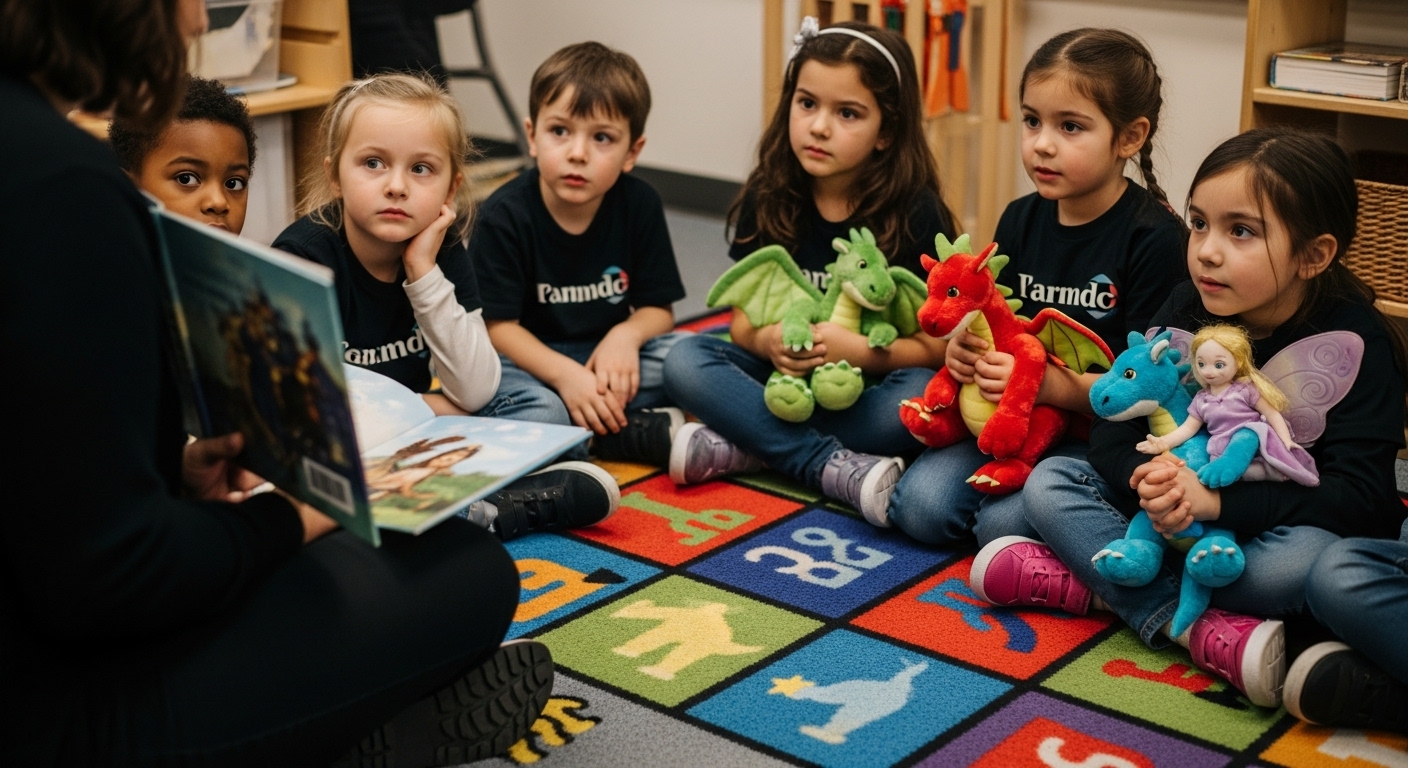
Fantasy stories open up entirely new worlds for children filled with talking dragons, brave heroes, and magical surprises. Yet while many think it's just about dreaming and having fun, there's much more to it. Researchers report that fantasy stories particularly promote children's emotional intelligence and creativity and thus have a lasting impact on real life.
Table of Contents
- What are children's and fantasy stories?
- Why are stories important for children?
- How do fantasy stories promote imagination?
- What are the key concepts of children's and fantasy stories?
- What role do fairy tales and fables play in child development?
Brief Summary
| Takeaway | Explanation |
|---|---|
| Fantasy stories promote creativity | They enable children to think beyond reality and develop new ideas. |
| Stories strengthen emotional intelligence | Children learn to understand complex feelings and develop empathy. |
| Narrative structures support learning processes | Stories are pedagogically valuable and promote language and thinking skills. |
| Fairy tales convey important life values | Moral dilemmas in fairy tales help children develop resilience and problem-solving skills. |
| Cognitive abilities are improved through stories | Listening to and interacting with stories trains memory, concentration, and logical thinking. |
What are children's and fantasy stories?
Fantasy stories are magical narratives that open up a world beyond reality for children. They offer more than just entertainment – they are a powerful tool for developing children's creativity and emotional intelligence. This special form of storytelling enables children to explore imaginary worlds and understand complex feelings in a playful way.
The structure of fantasy stories
Typically, fantasy stories are characterized by several distinctive elements:
- Magical or supernatural events
- Fantastic figures such as dragons, fairies, or talking animals
- A narrative structure that goes beyond the boundaries of everyday reality
These stories differ fundamentally from realistic narratives by enabling children to cross creative boundaries and expand their imagination. For creative stories in kindergarten settings there are special pedagogical approaches.
Psychological meaning of fantasy stories
For children, fantasy stories are more than just entertainment. They help with emotional development, enable processing of complex feelings, and provide a safe space to experiment with different perspectives. By immersing themselves in fantastic worlds, children learn empathy, problem-solving skills, and develop a deeper understanding of human relationships and emotions.
The power of fantasy stories lies in their ability to show children that there are no limits to creativity and imagination.
Below you will find an overview of the most important narrative elements that characterize fantasy stories for children and underscore their importance for emotional and cognitive development.
| Narrative element | Description |
|---|---|
| Magical beings | Contains figures like dragons, fairies, or talking animals that stimulate children's creative thinking. |
| Supernatural events | Enable children to experience a world beyond real possibilities and discover new perspectives. |
| Hero's journey | A structure in which children empathize with the protagonist's personal development and identify with them. |
| Conflicts between good and evil | Promote moral understanding and encourage reflection on values. |
| Magical turning points | Unexpected changes that support flexibility and problem-solving skills. |
| Emotional and ethical lessons | Stories convey empathy, courage, and resilience in a playful way. |
Why are stories important for children?
Stories are far more than a simple form of entertainment. They play a crucial role in children's cognitive, emotional, and social development. According to UNICEF research stories are a powerful tool for conveying complex concepts, values, and human experiences to children.
Language and cognitive development
Listening to and experiencing stories promotes language development in many ways. Children learn new words, understand grammatical structures, and develop a deeper understanding of communication. Our guide to storytelling for parents shows how stories support language skills in a playful way.
Furthermore, stories train important cognitive skills:
- Logical thinking by understanding cause and effect
- Memory and concentration skills
- Creative imagination
Emotional and social competencies
Stories provide children with a safe space to explore and understand complex emotions. They help children develop empathy by presenting different perspectives and life situations. By empathizing with characters, children learn to name feelings, reflect on them, and better interpret social interactions.
The importance of stories goes far beyond mere entertainment. They are a fundamental tool for personality development that helps children understand the world, unfold their creativity, and build emotional intelligence.
How do fantasy stories promote imagination?
Fantasy stories are an invaluable tool for developing children's creativity. According to scientific research they enable children to think beyond the limits of reality and explore alternative worlds.
Mental flexibility and creative thinking
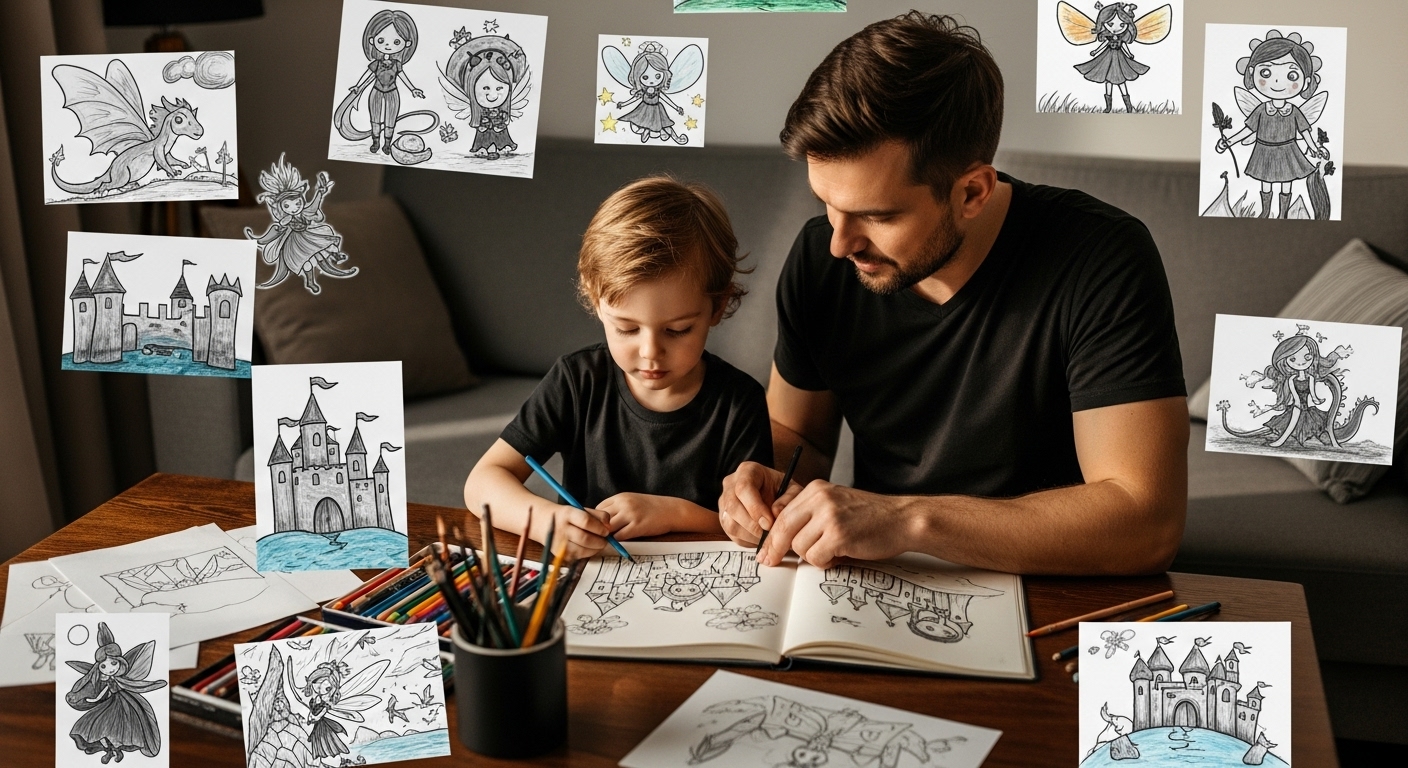
Through fantastic narratives, children learn to develop complex mental constructs. When a child hears a story about a talking dragon or a journey to the moon, it trains the brain to generate unconventional ideas and adopt different perspectives. Our fantasy journeys for reading aloud offer creative impulses for such mental development processes.
The most important cognitive skills promoted through fantasy stories:
- Divergent thinking
- Problem-solving skills
- Mental transformation of concepts
Emotional and cognitive development
Fantasy stories offer more than just mental stimulation. They help children understand and process complex emotional states. By experiencing different characters and situations, children learn to perceive feelings in a differentiated way and develop creative problem-solving strategies.
The power of imagination lies not only in hearing stories, but in the active participation of children's imagination. Every fantastic narrative is an invitation to expand one's own mental horizons and discover new worlds.
What are the key concepts of children's and fantasy stories?
Children's and fantasy stories follow complex narrative structures that are far more than simple entertainment. According to scientific analyses certain key concepts form the foundation of these special narrative forms.
Narrative basic structures
The basic architecture of a fantasy story is based on several essential elements that appeal to children emotionally and cognitively. Central to this are characters who are not only agents of action, but also figures of identification for young listeners. More on the importance of fairy tales for children shows the deeper dimension of such narratives.
The most important narrative elements include:
- Hero's journeys with personal development
- Conflicts between good and evil
- Magical turning points and transformations
Moral and emotional dimensions
Fantasy stories convey more than pure entertainment. They are subtle lessons that communicate complex emotional and ethical concepts. Children learn through these stories empathy, perseverance, and the importance of courage, without it seeming preachy.
The power of these stories lies in their ability to communicate abstract concepts such as friendship, togetherness, and personal growth in a way that is both understandable and fascinating for children.
What role do fairy tales and fables play in child development?
Fairy tales and fables are traditional narrative forms that are far more than simple stories. They serve as important pedagogical instruments that educate and shape children in subtle and entertaining ways. Scientific studies show that these stories have a profound effect on child development.
Psychological and moral dimensions
Fairy tales and fables convey complex life wisdom in a way that children can understand and process. They present moral dilemmas and problem-solving strategies in language accessible to children. Our guide to the difference between fairy tales and fables helps to better understand these narrative forms.
The central developmental psychological functions include:
- Conveying fundamental moral values
- Processing emotional conflicts
- Development of resilience and problem-solving skills
Cognitive and language development
By listening to and experiencing fairy tales and fables, children develop important cognitive skills. They learn to understand complex narrative structures, expand their vocabulary, and train their logical thinking skills. The metaphorical language of these stories enables children to grasp abstract concepts and interpret them creatively.
The true significance of fairy tales and fables lies in their ability to build a bridge for children between fantasy and reality, while simultaneously conveying fundamental life lessons.
Below you will find a tabular comparison of the developmental psychological functions of fairy tales and fables to clearly highlight the different effects on children.
| Function | Description |
|---|---|
| Moral values | Conveying basic values such as honesty, courage, and helpfulness in a child-appropriate manner. |
| Emotional conflict processing | Support in processing fears, losses, and uncertainties in a protected environment. |
| Promoting resilience | Building perseverance and the ability to solve problems independently. |
| Language development | Expansion of vocabulary and improvement of expressive skills through metaphorical language. |
| Cognitive understanding | Communication of complex sequences of events and narrative structure promotes logical thinking. |
|
🦉
📱 Now Available
Ready for the First Adventure?Get Edory AI for free and start today with personalized children's stories your child will love. ⭐⭐⭐⭐⭐ Over 1,000+ happy families · Start for free |