 edory
edory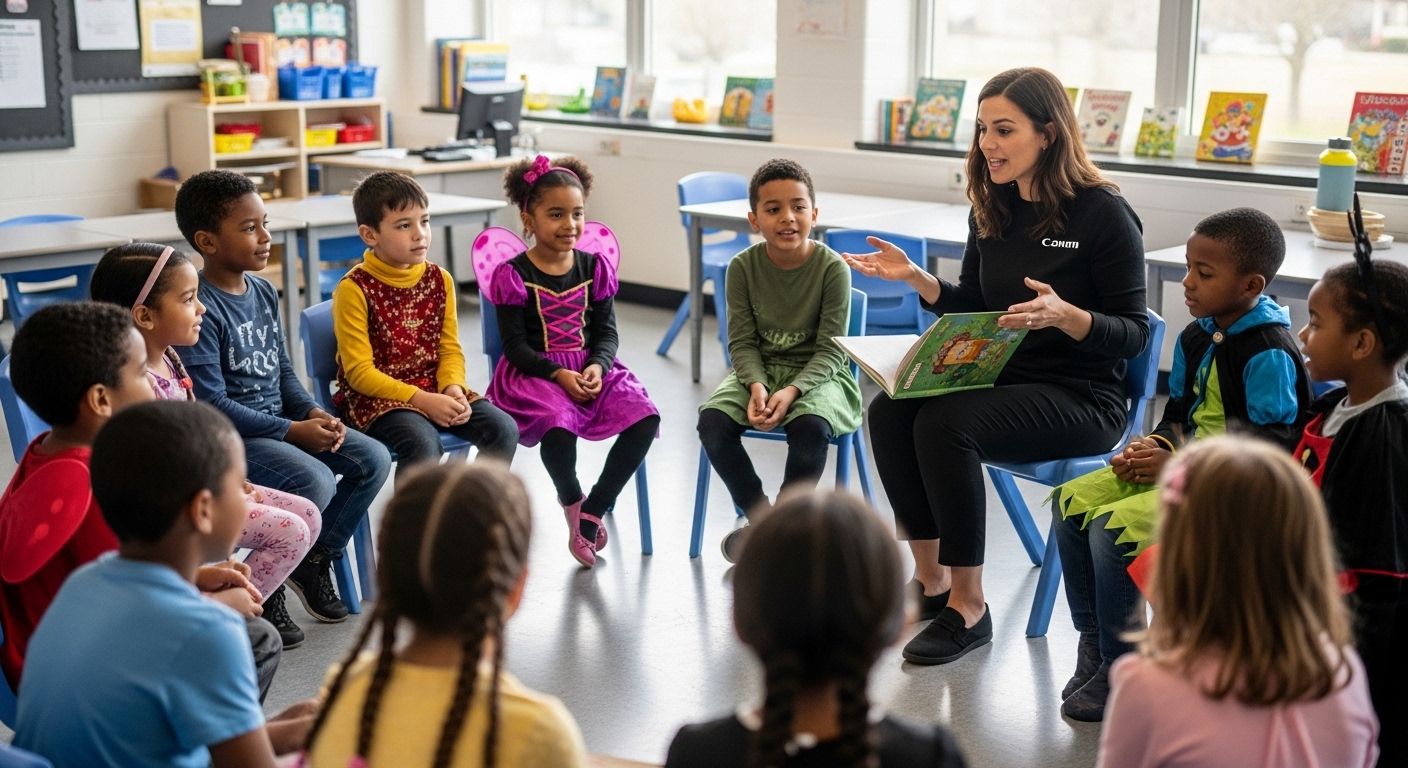
Fairy tales today are far more than old bedtime stories. Digital technologies and new storytelling forms have led to children being able to determine their own plot threads in interactive fairy tales. However, what is surprising is that modern fairy tales not only provide more fun, but above all foster children's creativity and critical thinking like never before.
Table of Contents
- What are fairy tales today? An examination of modern storytelling forms
- The Importance of Fairy Tales for Children Today
- How do modern fairy tales work and what are their influencing factors?
- Key Concepts in Today's Fairy Tale Literature
- The Role of Fairy Tales in Today's Media Landscape
Quick Summary
| Takeaway | Explanation |
|---|---|
| Fairy tales foster emotional intelligence | Children learn to identify and regulate their emotions as they identify with characters. |
| Complex characters replace stereotypes | Modern fairy tales offer figures with individual development possibilities and break up stereotypical role models. |
| Digital media revolutionize fairy tales | Interactive formats allow children to actively immerse themselves in stories and shape them. |
| Fairy tales convey social themes | They reflect current social challenges and promote critical thinking and empathy. |
| Narrative structure is dynamic | Modern fairy tales use flexible plot threads and open interpretive possibilities to stimulate creativity. |
What are fairy tales today? An examination of modern storytelling forms
Fairy tales have evolved from traditional folk tales into dynamic storytelling forms that blend contemporary social themes with children's imagination. They are no longer just static stories with clear good-versus-evil distinctions, but complex narrative experiences that challenge children emotionally and intellectually.
To clearly present the key differences between traditional and modern fairy tales, the following table offers a clear comparison of essential features.
| Feature | Traditional Fairy Tale | Modern Fairy Tale |
|---|---|---|
| Character Portrayal | Often stereotypical roles | Complex, individually developed characters |
| Narrative Structure | Linear, with fixed good-versus-evil schemas | Flexible, often multi-layered narratives |
| Thematic Focus | Classic motifs such as courage, justice | Contemporary themes (diversity, inclusion) |
| Reader Participation | Passive, listening | Active, interaction through digital media |
| Narrative Interpretation | Mostly unambiguous | Ambiguous, open to various interpretations |
| Social Context | Limited reflection of social realities | Active integration of social themes |
| Didactic Function | Conveying simple moral lessons | Promoting empathy and critical thinking |
The Transformation of Fairy Tale Storytelling
Today we understand fairy tales as flexible story forms that go far beyond classical structures. They integrate modern themes such as diversity, inclusion, and personal development.
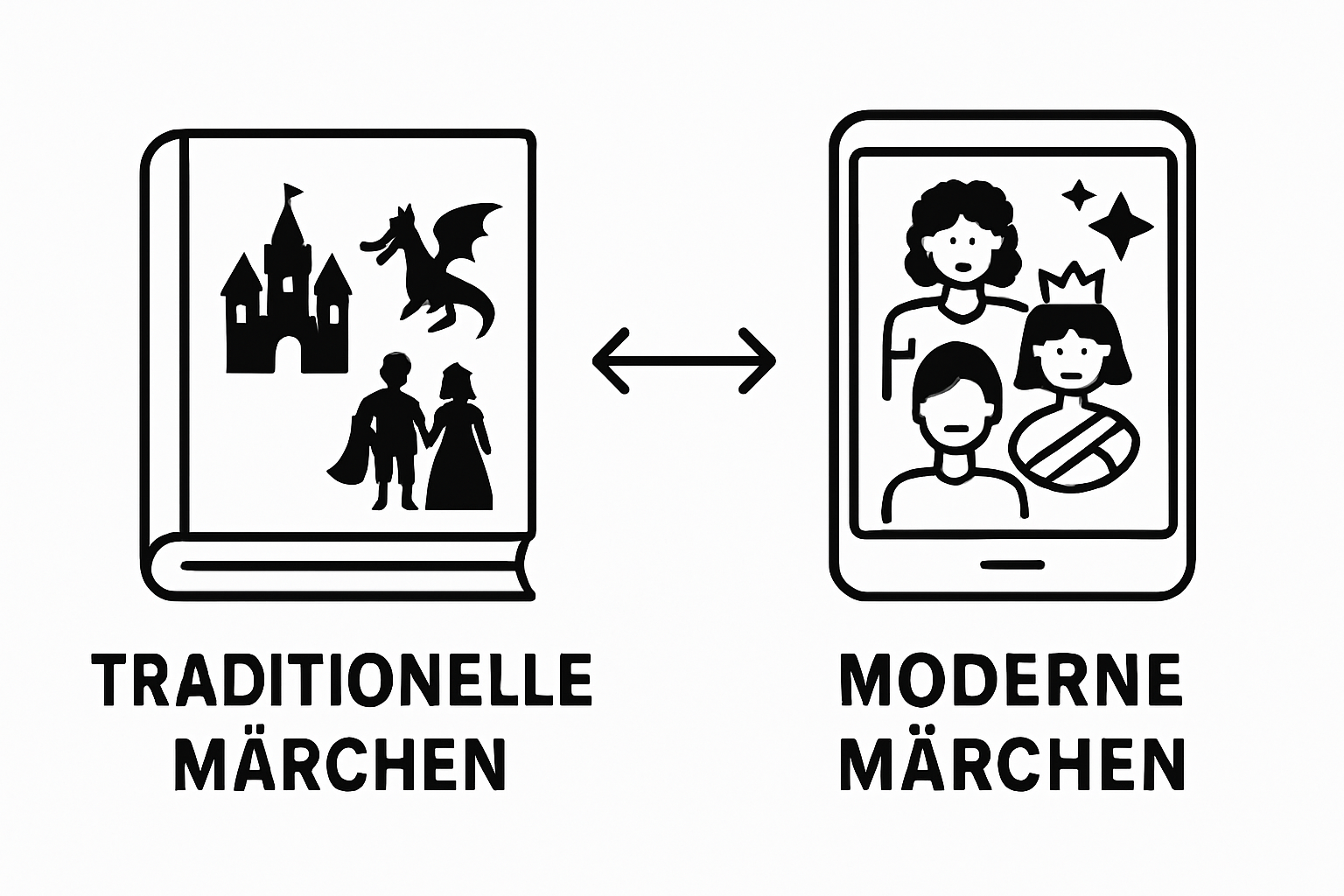 Modern fairy tales reflect social changes and encourage children to think critically and understand different perspectives.
The characteristics of modern fairy tales include:
- More complex characters with individual development arcs
- Fewer stereotypical role models
- Focus on emotional intelligence and problem-solving skills
New Narratives and Technological Influences
Digital technologies and interactive media have revolutionized fairy tales. Through storytelling apps and virtual realities, children can now not only consume stories but actively participate in shaping them. Research shows that interactive fairy tales promote children's creativity and problem-solving skills.
The essence of modern fairy tales no longer lies in pure entertainment value, but in their ability to convey complex life achievements and human experiences. They are educational tools that impart empathy, resilience, and critical thinking in a playful manner.
The Importance of Fairy Tales for Children Today
Fairy tales are more than just entertaining stories. They serve as central development tools that help children learn and understand complex emotional and social skills.
Emotional Development and Resilience
Modern fairy tales provide children with safe narrative spaces to explore and process difficult emotions. Psychological studies show that fairy tales help children identify, regulate, and understand feelings. By identifying with protagonists, children learn important emotional coping strategies.
The key emotional learning experiences include:
- Understanding complex emotional states
- Development of empathy
- Strategies for coping with challenges
Cognitive and Social Competencies
Fairy tales are powerful educational tools that offer far more than simple entertainment. Educational research shows that narrative structures massively support children's cognitive development. They promote critical thinking, problem-solving skills, and moral understanding.
Through symbolic stories, children learn abstract concepts such as justice, courage, and compassion. Fairy tales help children understand complex social dynamics and develop their own action strategies.
The deeper significance of fairy tales lies not in conveying absolute truths, but in enabling individual interpretations and personal growth processes. They are bridges between fantasy and reality that help children understand and navigate the world in all its complexity.
The following table summarizes the key emotional, cognitive, and social competencies that children can build and strengthen through modern fairy tales.
| Competency Area | Specifically Fostered Skills |
|---|---|
| Emotional Development | Recognizing and regulating emotions, developing empathy |
| Cognitive Development | Critical thinking, problem-solving skills, understanding abstract concepts |
| Social Competencies | Understanding complex social dynamics, developing own action strategies |
| Moral Understanding | Engagement with justice, courage, compassion, and conveying individual values |
| Personal Growth | Promoting individual interpretations and growth processes |
How do modern fairy tales work and what are their influencing factors?
Modern fairy tales are complex narrative systems that go far beyond traditional narrative structures and integrate various psychological, technological, and pedagogical dimensions.
Narrative Architecture and Storytelling
The construction of modern fairy tales is based on a dynamic storytelling approach that actively involves children in the narration process. Narratological studies show that modern fairy tales are no longer told linearly, but use interactive and multi-layered narrative structures.
The core elements of this new narrative architecture include:
- Flexible plot structures with multiple action possibilities
- Characters with complex development arcs
- Open interpretive spaces
Technological and Media Influence
Digital technologies transform the way fairy tales are conceived and consumed. Media research shows that interactive platforms and digital storytelling tools fundamentally change the narrative landscape. Our app for modern children's stories enables children not only to experience stories but to actively help shape them.
Technological influencing factors mean:
- Customizable storytelling experiences
- Multimedia storytelling formats
- Adaptive narratives based on user interactions
The essence of modern fairy tales lies in their ability to connect imagination, learning, and emotional development. They are no longer static stories, but dynamic, constantly evolving experiential spaces that invite children to explore and shape their own narrative identity.
Key Concepts in Today's Fairy Tale Literature
Modern fairy tale literature is continuously developing and transforming traditional narrative structures through innovative storytelling approaches that reflect social complexity and individual worlds of experience.
Narrative Transformation and Deconstruction
Literary analyses show that contemporary fairy tales deliberately question and deconstruct classical narrative patterns. They work with ambiguities, break up familiar role models, and enable multiple levels of interpretation.
The central features of this narrative transformation include:
- Dissolution of binary good-versus-evil schemas
- Complex character development
- Integration of social diversity aspects
Contextual and Social Dimensions
Modern fairy tales function as social commentaries that reflect current social challenges. Differences between traditional and modern storytelling forms are deliberately highlighted and deconstructed.
The key contextual aspects include:
- Critical examination of power structures
- Representation of marginalized groups
- Overcoming stereotypical narratives
The essence of modern fairy tale literature lies in its ability to mediate between fantasy and social reality. They are no longer just entertainment media, but complex narrative instruments that challenge both children and adults to explore new perspectives and critically reflect on social norms.
The Role of Fairy Tales in Today's Media Landscape
The modern media landscape transforms fairy tales from traditional narratives into multimedia, interactive experiences that blend entertainment, education, and technological innovation.
Digital Transformation of Storytelling Forms
Media research shows that digital platforms fundamentally change fairy tales. Interactive formats enable children to become not just passive listeners, but active participants in the narrative.
The key characteristics of digital fairy tales include:
- Customizable plot threads
- Immersive multimedia experiences
- Dynamic character interactions