 edory
edory
Over 60 percent of parents in Germany wish for their children to learn playfully and grow creatively. Yet often there are a lack of practical everyday ideas that truly captivate and contribute to vocabulary development. Fantasy journeys open up fascinating worlds for your child where stories come alive and language is experienced with all the senses. Here you will learn how easy it is to create such storytelling moments so that your child speaks with enthusiasm, marvels, and dreams.
Table of Contents
- Step 1: Choose the Right Journey Theme
- Step 2: Prepare the Narrative Framework Optimally
- Step 3: Create a Child-Friendly, Exciting Story
- Step 4: Actively Implement Fantasy Journeys with Your Child
- Step 5: Check the Effect and Adjust
Quick Summary
| Important Point | Explanation |
|---|---|
| 1. Select the Right Journey Theme | Choose a theme that stimulates your child's imagination and provides emotional security. |
| 2. Create a Soothing Storytelling Atmosphere | Design a calm environment with comfortable seating and a gentle storytelling style. |
| 3. Develop a Child-Appropriate Story | Use vivid language and clear structure to awaken imagination and emotions. |
| 4. Implement Fantasy Journey Interactively | Encourage your child's active participation and exchange about their experiences after the journey. |
| 5. Observe Effect and Adjust | Pay attention to your child's reactions and adjust stories accordingly to promote relaxation. |
Step 1: Choose the Right Journey Theme
A successful fantasy journey begins with the careful selection of a theme that enchants children and stimulates their imagination. Choosing a theme is not just about telling a story but creating an emotional and relaxing experience.
Start by carefully exploring your child's interests and preferences. Popular themes such as nature experiences, magical worlds, and animal adventures can provide an excellent foundation. Make sure the theme is positively framed and remains easy to imagine. A journey through a fairy-tale forest or a discovery adventure on a peaceful flower meadow can help children relax emotionally and develop their creativity.
Observe closely which stories fascinate your child. Does it enjoy adventures with animals? Does it love magical landscapes? Use quiet and cozy environments to present the fantasy journey so your child can fully immerse themselves in the story.
Pro Tip: Choose themes that give your child a feeling of safety and comfort to achieve maximum relaxing effect.
Here is an overview of how different fantasy journey themes can affect children:
| Theme | Promoting Creativity | Emotional Effect | Suitable Age |
|---|---|---|---|
| Nature Experiences | Promotes Imagination | Calming and Safe | 3-10 Years |
| Magical Worlds | Inspires Fantasy | Stimulating and Comforting | 4-12 Years |
| Animal Adventures | Strengthens Empathy | Joyful and Uplifting | 3-8 Years |
| Fairy-tale Places | Expands Imagination | Conveying Security | 5-12 Years |
Step 2: Prepare the Narrative Framework Optimally
Creating a perfect storytelling framework is crucial to the success of your fantasy journey. In this step, you will learn how to create a soothing and inviting atmosphere that allows your child to fully immerse themselves in the story.
Preparing the storytelling framework requires attention to details such as environment and narrative style. Choose a quiet room with dimmed lighting and provide comfortable seating such as cushions or a soft blanket. Make sure nothing can distract - put away phones or other electronic devices. The environment should be an oasis of calm that signals to your child that this is now a time for relaxation and imagination.
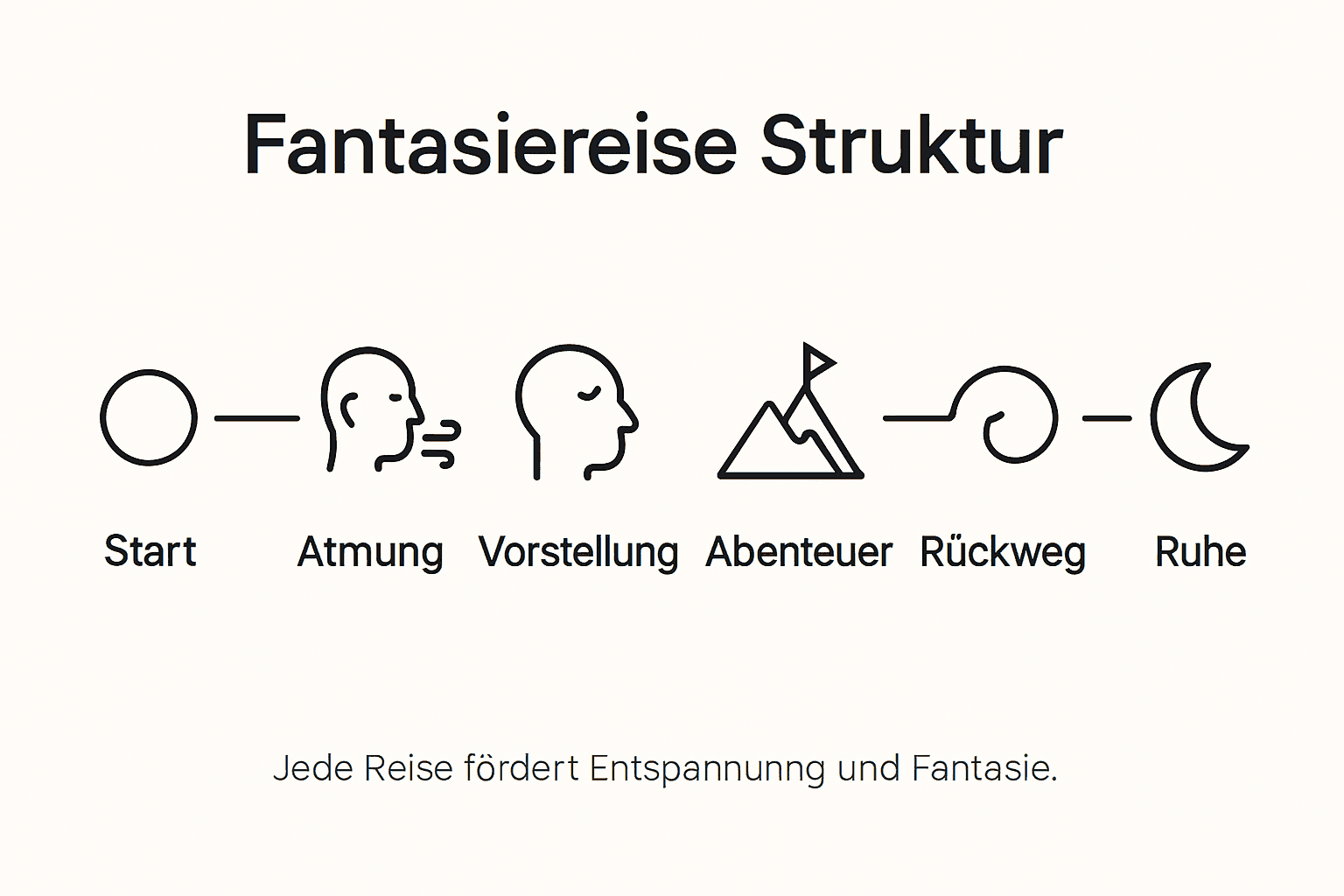
When telling the story, your voice is the most important tool. Speak softly and calmly with clear but gentle emphasis. Vary your volume and pitch slightly to create tension and emotion. The ideal storytelling framework consists of three parts: a relaxing introduction that brings your child to rest, a captivating main part that carries the fantasy journey, and a gentle conclusion that gently brings your child back to reality.

Pro Tip: Practice your storytelling voice in advance and breathe consciously and calmly to guarantee a relaxed atmosphere.
The following table summarizes important design elements for a successful storytelling framework:
| Design Element | Importance for Relaxation | Recommended Implementation |
|---|---|---|
| Dimmed Lighting | Promotes Calm | Use of warm lamps |
| Comfortable Seating | Supports Physical Relaxation | Provide cushions or blanket |
| Calm Voice | Builds Trust | Speak slowly and with emphasis |
| Phone-Free Zone | Minimizes Distractions | Keep electronics out of reach |
Step 3: Create a Child-Friendly, Exciting Story
The art of storytelling for children lies in the ability to create a world that is simultaneously exciting, gentle, and inviting. In this step, you will learn how to develop a story that emotionally touches your child and inspires their imagination.
Use language that is vivid and emotional, incorporating sensory impressions such as sounds, colors, and scents. Word choice should be simple and understandable but lively enough to spark curiosity. Build your story around gentle adventures and discoveries, but avoid elements that are too exciting or frightening. Imagine you are painting a picture with words that invites your child to dream.
Pay attention to clear structure with a gentle beginning, an exciting middle, and a calming end. Integrate familiar images and motifs to create security and interest. Speak slowly and thoughtfully to give your child time to visualize. Leave room for their own imagination so your child can actively shape the story. The fantasy journey should feel like a gentle invitation to embark on a magical discovery adventure.
Pro Tip: Practice your story in advance and make sure your voice sounds warm and inviting to achieve maximum attention.
Step 4: Actively Implement Fantasy Journeys with Your Child
Fantasy journeys are more than just telling stories - they are a shared exploration journey between parents and children. In this step, you will learn how to design your fantasy journey interactively and vividly.
Implementing a fantasy journey requires a calm, undisturbed environment where your child can fully let go. Help your child find a comfortable spot, perhaps a soft blanket or a cozy pillow. Encourage them to close their eyes and breathe deeply. Speak slowly and rhythmically, providing enough pauses so your child can visualize the story undisturbed.
After the fantasy journey, invite your child to share their experiences. Creative activities such as painting, drawing, or having a conversation together can help process the journey experiences. Be patient and show genuine interest in your child's imagination. Each fantasy journey is unique and each child perceives it differently. Regular practice not only promotes relaxation but also concentration ability and emotional intelligence.
Pro Tip: Keep a small fantasy journey diary to record and honor your child's development and experiences.
Step 5: Check the Effect and Adjust
Each fantasy journey is an individual experience and requires empathetic observation and careful adjustment. In this step, you will learn how to carefully perceive the effect of your fantasy journeys on your child and optimize them.
After the fantasy journey, pay attention to subtle behavioral changes in your child. Positive signs such as increased calmness, improved concentration, or a relaxed smile show that the story has had its effect. Observe closely how your child reacts to different themes and storytelling styles. Some children love gentle nature journeys while others prefer magical worlds.
Continuous adjustment is the key to successful fantasy journeys. Actively ask your child about their experiences and be open to feedback. If a journey seems too restless or uninteresting, gently adjust the tone, length, or theme. The goal is to create a personalized experience that brings your child joy and relaxation.
Pro Tip: Have a brief conversation right after the fantasy journey to get valuable feedback from your child.
Create and Experience Creative Fantasy Journeys for Children
Fantasy journeys offer a wonderful opportunity to take children on a journey into a world full of calm and vivid stories. This special adventure requires appropriate themes, a sensitive narrative framework, and an appealing story that sustainably stimulates imagination and contributes to relaxation. Many parents face the challenge of constantly finding new ideas that are safe, exciting, and tailored to their children's needs.
This is where Edory.ai comes in – your innovative solution for creating personalized fantasy journeys perfectly tailored to your child's age and interests. With the help of AI technology, Edory can generate new stories daily that not only entertain but also promote learning playfully. This makes implementing the steps described in the article effortless and makes the shared experience even more intense. Discover many creative suggestions on the page Uncategorized – Edory AI – Educational Children's Stories and let yourself be inspired. Take this opportunity to become active now and create fantastic journeys with Edory that convey security and support your children's emotional development. Visit Edory.ai and start today into a new world of child-friendly storytelling.
Frequently Asked Questions
How do I choose the right theme for a fantasy journey?
Choose a theme that appeals to your child's interests and preferences. Observe which stories fascinate your child and focus on positive and easy-to-imagine themes, such as magical worlds or animal adventures.
What do I need for the optimal narrative framework of a fantasy journey?
For an ideal narrative framework, you should create a quiet room with dimmed lighting and comfortable seating. Reduce distractions by keeping electronic devices out of reach and creating an inviting atmosphere.
How do I build an exciting story for a fantasy journey?
Structure your story with a gentle beginning, an exciting main part, and a calming end. Use vivid and emotional language to inspire your child's imagination and give them time to visualize.
What activities can I do with my child after the fantasy journey?
After the fantasy journey, you can invite your child to share their experiences by painting, drawing, or talking together. This helps process the experiences and strengthen your bond, so take time for it.