 edory
edory
Did you know that over 80 percent of parents in Germany read fairy tales or fables to their children at least once a week? It's no wonder, as these ancient stories continue to fascinate children and adults alike. They offer more than mere entertainment; they shape our understanding of good and evil, courage and wisdom. Those who know the unique differences between fairy tales and fables can more easily find stories suited to curious young hearts.
Table of Contents
- What are fairy tales and fables exactly?
- Typical characteristics of fairy tales and fables
- Examples of fairy tales and fables in comparison
- Pedagogical significance for children's learning
- Practical tips for distinguishing them in everyday life
Key Takeaways
| Point | Details |
|---|---|
| Fairy tales and fables differ fundamentally | Fairy tales are complex stories with fantastical elements, while fables are short, instructive narratives with animals as main characters. |
| Pedagogical significance for children | Both narrative formats promote emotional intelligence and convey important values such as honesty and compassion. |
| Support for language and creativity development | Fairy tales and fables support language development and stimulate children's imagination. |
| Practical distinguishing features | Parents should pay attention to magical elements and the structure of stories to distinguish between fairy tales and fables. |
What are fairy tales and fables exactly?
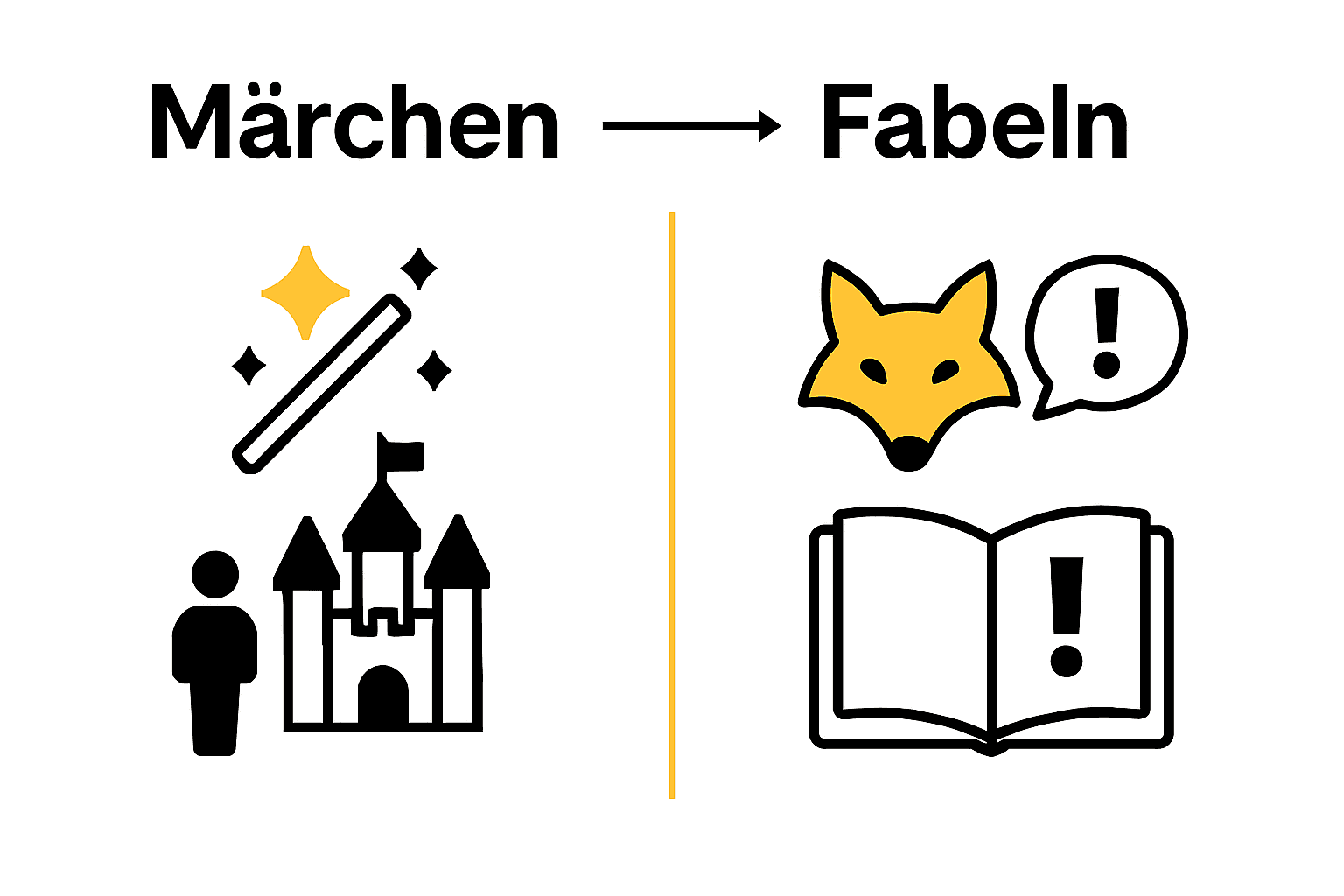
Fairy tales and fables are two fascinating narrative forms that have enchanted children for centuries while conveying important life lessons. Both genres have their own characteristic features and objectives. Fairy tales are traditional stories that usually take place in a fantastical world where magical events and supernatural beings are completely normal. They often convey moral messages and typically end with a "happily ever after."
In contrast, fables have a very specific structure and purpose. They are short narratives in which animals or plants serve as main characters and convey a clear moral lesson. While fairy tales are more mystical and whimsical, fables are very direct and instructive. A famous fable by Jean de La Fontaine, for example, might tell of a fox and a raven that illustrate an important life wisdom.
The main difference between fairy tales and fables lies in their narrative structure and intention. Our comprehensive guide to fairy tales and fables can help you understand these nuances even better. Fairy tales are often longer, more complex, and have a richer narrative world. Fables, on the other hand, are short, concise, and aim to convey a specific moral message. However, both forms share the common feature of teaching children values and life principles in an entertaining and instructive way.
For parents and educators, these story forms are incredibly valuable. They offer not only entertainment but also opportunities to discuss important topics such as honesty, courage, kindness, and cooperation with children. Whether it's a magical fairy tale or a clever fable—these stories have the potential to inspire children's imagination while supporting their emotional and moral development.
Typical characteristics of fairy tales and fables
Fairy tales and fables each have very characteristic and distinctive features that set them apart from other narrative forms. Fairy tales are characterized by several central properties: They usually take place in a timeless and whimsical world where magical events and supernatural beings are completely normal. Typically, they begin with the famous formula "Once upon a time" and end with the classic "and if they haven't died, they're living still."
Very different design principles apply to fables. They are short, concise narratives in which animals or plants appear as main characters and take on human qualities and behaviors. These stories about the importance of fantasy narratives show how significant such narrative forms are for child development. Each fable ends with a clear moral lesson or message that is either directly stated or subtly conveyed.
Additional typical characteristics of fairy tales include:
- Hero's journeys with trials and tests
- Clear distinction between good and evil
- Magical helpers or objects
- Transformations and spells
Fables, on the other hand, are characterized by the following aspects:
- Animals as main characters
- Short, pointed narrative structure
- Direct moral message
- Allegorical representation of human qualities
Both narrative forms share the common feature of conveying complex life situations and moral dilemmas in a way that is understandable and entertaining for children. They help children understand fundamental human values and behaviors without seeming preachy.
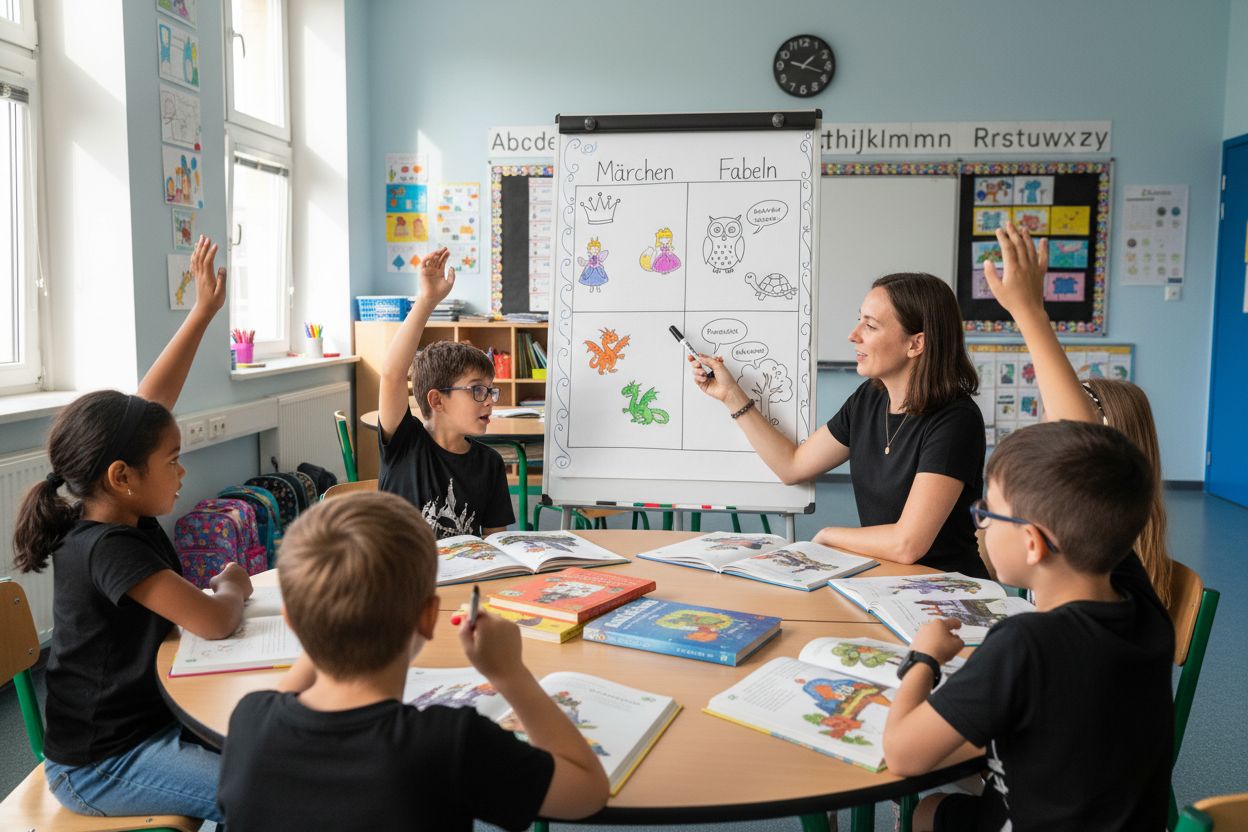
Here is a comparison of typical characteristics:
| Characteristic | Fairy Tales | Fables |
|---|---|---|
| Main characters | Humans Magical beings |
Animals Plants |
| World | Fantastical Timeless |
Realistic Allegorical |
| Beginning | "Once upon a time" | Direct entry |
| Length | Long Comprehensive plot |
Short Concise |
| Structure | Complex Hero's journey Tests |
Simple Clear structure |
| Message | Often subtle Hidden |
Clear Explicit At the end |
| Ending | Happy ending Open ending possible |
Explicit lesson Often with conclusion |
| Style | Magical Mystical Entertaining |
Instructive Moral |
Examples of fairy tales and fables in comparison
The rich world of fairy tales and fables offers numerous fascinating examples that clearly demonstrate the differences and similarities of these narrative forms. Fairy tales such as "Cinderella" or "Snow White" by the Brothers Grimm are classic examples that perfectly illustrate typical fairy tale characteristics: A young heroine overcomes numerous obstacles through courage and goodness and is rewarded for her good qualities in the end.
In contrast stand fables such as the famous works of Jean de La Fontaine or Aesop. Our guide to modern narrative arts shows how timeless these stories are. A classic example is the fable "The Fox and the Grapes," in which a fox who cannot reach the grapes calls them sour—a clear allegory for human self-deception and pride.
Some additional fairy tale examples:
- "Hansel and Gretel" with magical elements
- "Rumpelstiltskin" and its surprising turns
- "Puss in Boots" with its clever protagonist
Examples of fables include:
- "The Tortoise and the Hare" about perseverance and arrogance
- "The Wolf in Sheep's Clothing" as a warning against deception
- "The Ants and the Grasshopper" as a lesson about hard work and foresight
Both narrative forms share the common feature of conveying complex moral lessons in a way that is understandable and entertaining for children. They help children understand human behaviors and ethical principles without pointing an accusing finger.
Pedagogical significance for children's learning
Fairy tales and fables are far more than just entertaining stories—they are powerful pedagogical tools that teach children important life skills in a playful way. Emotional intelligence is particularly fostered through these narrative forms by helping children understand and interpret complex emotions and human behaviors.
Children learn through stories in a unique way that goes far beyond traditional teaching methods. Fairy tales and fables help children develop moral concepts such as compassion, honesty, and courage. By identifying with various characters, children learn to empathize with others and understand different perspectives.
The pedagogical benefits of these narrative forms include:
- Promotion of language development
- Strengthening of social behavior
- Development of empathy and emotional intelligence
- Conveying fundamental moral values
Additional important aspects of pedagogical significance:
- Support for cognitive development
- Promotion of creativity and imagination
- Building problem-solving skills
- Strengthening self-confidence
Through engagement with fairy tales and fables, children develop not only linguistic and cognitive abilities but also learn important life wisdom in an entertaining and accessible way. These stories are timeless tools of education that convey values while inspiring the imagination and creativity of children.
Practical tips for distinguishing them in everyday life
For parents and educators, distinguishing between fairy tales and fables can initially be challenging. According to expert opinion on children learning through stories, there are several key features that can help with differentiation. Fairy tales are usually longer stories with magical elements, vague time and place references, and more complex plot lines.
Fables, on the other hand, are short, concise, and have a very clear structure. According to analyses from the fairy tale atlas, they are usually instructive and have animals as main characters that embody human qualities. A quick memory aid: If animals talk and a direct lesson appears at the end, it's most likely a fable.
Practical distinguishing characteristics:
- Fairy tales have magical elements
- Fables have animals as main characters
- Fairy tales take place in fantastical worlds
- Fables convey a direct moral message
Additional distinguishing aids:
- Fairy tales often begin with "Once upon a time"
- Fables end with an explicit lesson
- Fairy tales usually have a happy ending
- Fables are short and pointed
For parents, it's important to appreciate both narrative forms. They offer children different learning opportunities: fairy tales develop imagination, fables promote moral understanding. The art lies in using both story types deliberately and alternately.
Rediscover fairy tales and fables with Edory
Distinguishing between fairy tales and fables is a challenge for many parents. Just as described in this article, both narrative forms demonstrate important moral messages and promote children's imagination and emotional development. However, finding the right story at the right time can be time-consuming and complicated. That's where Edory comes in. Our platform offers personalized, daily new stories specifically tailored to your child's age and interests. This way, we combine playful learning with entertaining fairy tale and fable elements.
Experience how easy it is to use safe and educational content to guide children on their emotional and cognitive journey. Discover practical ways for a varied narrative world in our Uncategorized – Edory AI – Educational Children's Stories section. Join a new generation of storytelling and visit us at Edory.ai. Get started now and give your child new worlds full of imagination and valuable life lessons every day.
Frequently Asked Questions
What is the main difference between fairy tales and fables?
Fairy tales are traditional stories with magical elements and complex plots, while fables are short narratives in which animals embody human qualities and convey a clear moral lesson.
What are typical characteristics of fairy tales?
Fairy tales often begin with "Once upon a time," take place in fantastical worlds, contain magical beings, and frequently end with a happy ending. They often have complex plots with trials for the protagonists.