 edory
edory
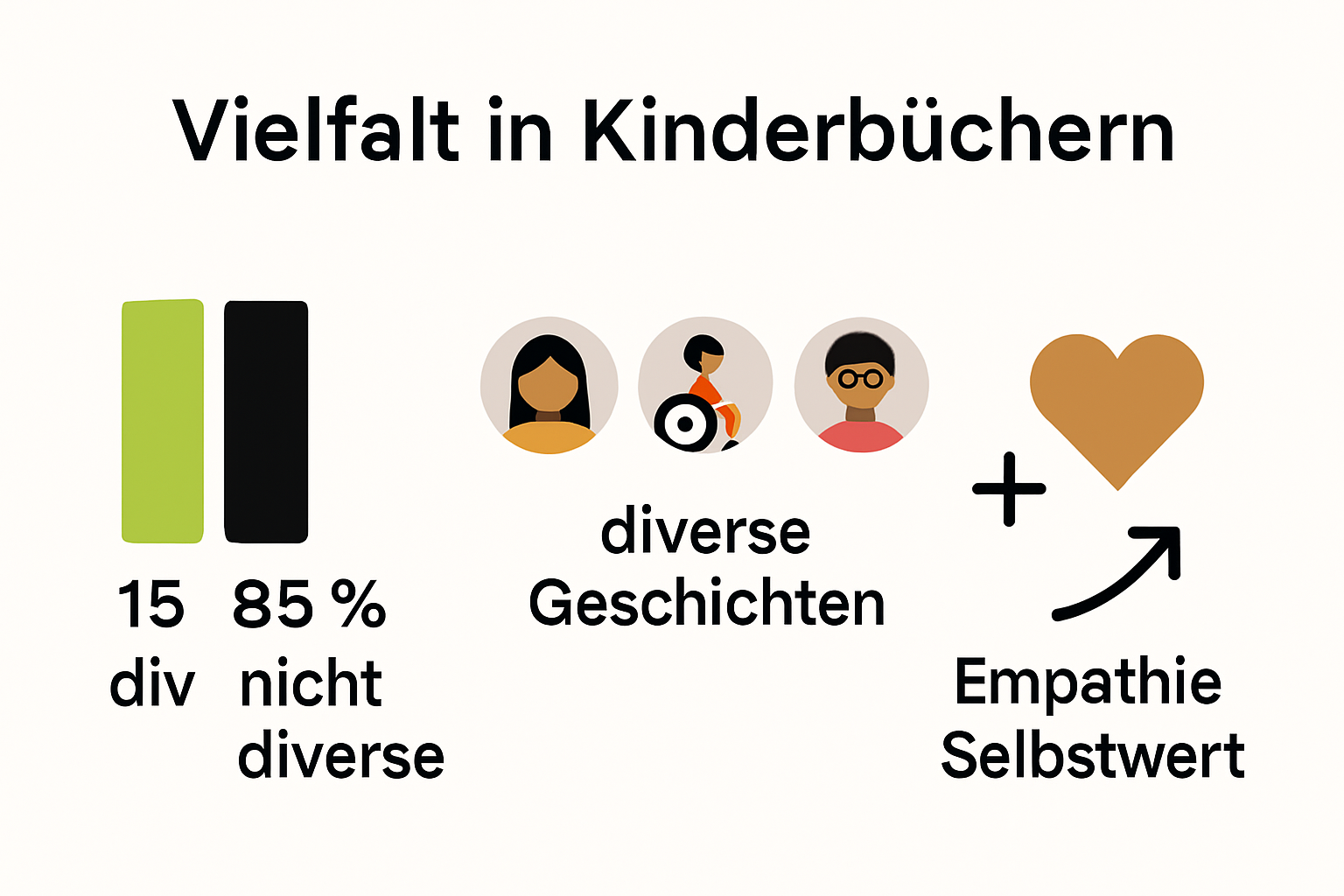
Children's books can do far more than just entertain. They open the door to a world where every child can discover themselves and others. Sounds too good to be true? In many bookshelves, there is still a surprisingly one-sided picture: Only about 15 percent of children's books in Germany show truly diverse worlds of life. But this is precisely where the great potential lies. The more colorful and authentic the stories, the more strongly children feel understood and grow beyond themselves.
Table of Contents
- What Does Diversity in Children's Books Mean?
- Why Diversity in Stories Strengthens Children
- How Families Find Diverse Children's Books
- Tips for Dealing with Diversity Together When Reading
Quick Summary
| Takeaway | Explanation |
|---|---|
| Diversity reflects society. | Children's books should represent different identities authentically and respectfully. This way, children learn about the diversity of the world. |
| Diverse stories strengthen empathy. | Literature with different characters promotes children's understanding and emotional intelligence. They learn to put themselves in others' shoes. | | Self-esteem through identification. | Children develop stronger self-esteem when they identify with protagonists who are similar to their own life reality. | | Parents should actively search for diverse books. | Recommendations from experts and special resources help find books that authentically represent diversity. | | Open conversations while reading promote understanding. | Reading together offers the opportunity to talk about differences and similarities and develop empathy. |
What Does Diversity in Children's Books Mean?
Diversity in children's books means more than just colorful illustrations or random character portrayals. It is about a deliberate and respectful representation of different life realities, identities, and experiences that enables children to have a comprehensive and inclusive perspective on the world.
Representation as a Mirror of Society
Children's books are not just entertainment media, but also important educational tools that help children understand the diversity of our society. According to a study by the Institute for Children's Book Research, it is crucial that books represent different characteristics such as age, gender, skin color, and physical abilities in a neutral and authentic way.
This means in concrete terms: Characters in children's books should not be shown as exotic exceptions, but as a natural part of our society. A child in a wheelchair is not just a "disabled" character, but a fully fledged protagonist with their own dreams, stories, and characteristics.
Breaking Down Stereotypes and Prejudices
A scientific study shows that children's books can play a powerful role in breaking down stereotypes. When children grow up reading stories in which women take on strong leadership roles, men show emotional depth, or people with different cultural backgrounds are portrayed as equals, they learn to understand diversity as natural and valuable.
Diversity does not mean artificially meeting quotas, but telling authentic stories that reflect the complexity of human experience. It is about showing children that there is not just one definition of "normal" and that every person is unique and valuable.
When children's books live diversity, they can be a powerful tool: They promote empathy, break down prejudices, and help children accept and respect themselves and others in all their diversity.
Why Diversity in Stories Strengthens Children
Diversity in stories is far more than a pedagogical concept - it is a powerful tool for children's emotional and social development. Stories with different characters and worlds of life help children understand the complexity of our society and develop their own identity.
Emotional Intelligence and Empathy
Research from Frankfurt University shows that children's books with diverse characters significantly promote children's emotional intelligence. When children read stories in which characters from different backgrounds, with different abilities and life experiences appear, they learn empathy and understanding for people who are different from themselves.
These stories enable children to put themselves in others' shoes. A child who reads a story about an equal-aged protagonist with a hearing impairment develops a deeper understanding of that person's experiences and challenges. They learn to see differences not as a deficit, but as an enrichment.
Strengthening Self-Esteem
A study by the German Youth Institute emphasizes how important it is for children to see themselves in books. Children who see characters that resemble their own identity - whether in terms of skin color, family structure, or cultural background - develop stronger self-esteem.
When a child with an immigrant background finds a protagonist in a book who is portrayed as successful, courageous, and positive, this strengthens their self-image. They understand that their background is not an obstacle, but an enrichment. Such stories send a powerful message: "You are valuable, just as you are."
Stories with diversity are more than entertainment. They are windows into other worlds, mirrors of one's own identity, and bridges between different life experiences. They teach children that differences are not divisive, but connecting. In an increasingly globalized world, these lessons are more important than ever - and children's books are the perfect place to teach them.
How Families Find Diverse Children's Books
The search for children's books that authentically and respectfully represent diversity can initially be challenging for parents. However, there are numerous strategies and resources that support families in selecting diverse literature.
Recommendations from Experts
The Network for Diversity in Children's Books offers extensive book recommendations and evaluation criteria for parents. What is important here is not only the representation of different identities, but also the way characters are portrayed. Good books show people as complex individuals, not as stereotypes.
Parents should pay attention to the following aspects:
- Authentic Representation: Characters should be more than just illustrations of differences
- Positive Portrayals: Avoidance of victim narratives
- Diverse Perspectives: Stories that show different life experiences
Helpful Resources
The Reading Foundation provides annually updated lists of inclusive children's books. Libraries, bookstores with specialized staff, and online platforms can also provide valuable guidance.
Below you will find an overview of what parents should pay attention to when selecting diverse children's books. This checklist helps quickly assess whether a book authentically represents diversity.
| Criterion | Description |
|---|---|
| Authentic Representation | Characters are more than just "being different" |
| Positive Portrayals | Avoidance of victim narratives |
| Diverse Perspectives | Different life experiences are shown |
| Different Authors | Authors with diverse backgrounds |
| Age-Appropriate Representation | Diversity is child-friendly and understandable |
| No Stereotypes | Avoidance of clichéd portrayals |
For the search, special criteria are recommended:
- Books by authors and writers with different backgrounds
- Stories that show not just differences, but shared experiences
- Age-appropriate representations of diversity
Selecting diverse children's books is more than a pedagogical exercise. It is a chance to give children a rich, respectful perspective on our diverse society. Each book can be a bridge of understanding and empathy.
Tips for Dealing with Diversity Together When Reading
Reading together is more than an activity - it is a wonderful opportunity to talk with children about diversity, differences, and similarities. Families can use these valuable moments to promote understanding, empathy, and respect.
Open Conversations and Active Listening
According to the National Parent Association, it is crucial to encourage children to share their thoughts and feelings about the stories. Ask open-ended questions like: "What do you think about these characters?" or "How would you feel in this situation?"
Some conversation tips are helpful:
- Active Listening: Let your child finish speaking and show genuine interest
- Neutral Response: Avoid lecturing; instead, be a conversation partner
- Take Feelings Seriously: Every reaction and question from the child is valuable
Creating Interactive Reading Experiences
The National Association for the Education of Young Children recommends making reading experiences interactive and lively. Encourage children to put themselves in the characters' shoes, explore their perspectives, and find connections to their own world.
Possible activities:
- Role-playing scenes from the book
- Painting or drawing characters together
- Inventing alternative story endings
Living Diversity as Normalcy
Reading Rockets emphasizes that diversity should not be a special topic, but a natural part of life. Choose books that present diversity not as an exception, but as a natural state.
Important considerations:
- Read books with different characters regularly
- Avoid books with stereotypical or offensive portrayals
- Do not treat diversity as a "special case," but as an enrichment
Reading together can be a magical moment. It is an opportunity to build bridges, break down prejudices, and show children that our differences do not divide us, but enrich us.
Here you will find a summary of helpful tips for conversation and dealing with diversity when reading together with children.
| Tip | Short Description |
|---|---|
| Active Listening | Let the child finish and show genuine interest |
| Neutral Response | Do not lecture; act as a conversation partner
🦉
📱 Now Available
Ready for the First Adventure?Get Edory AI for free and start today with personalized children's stories your child will love. ⭐⭐⭐⭐⭐ Over 1,000+ happy families · Start for free |