 edory
edory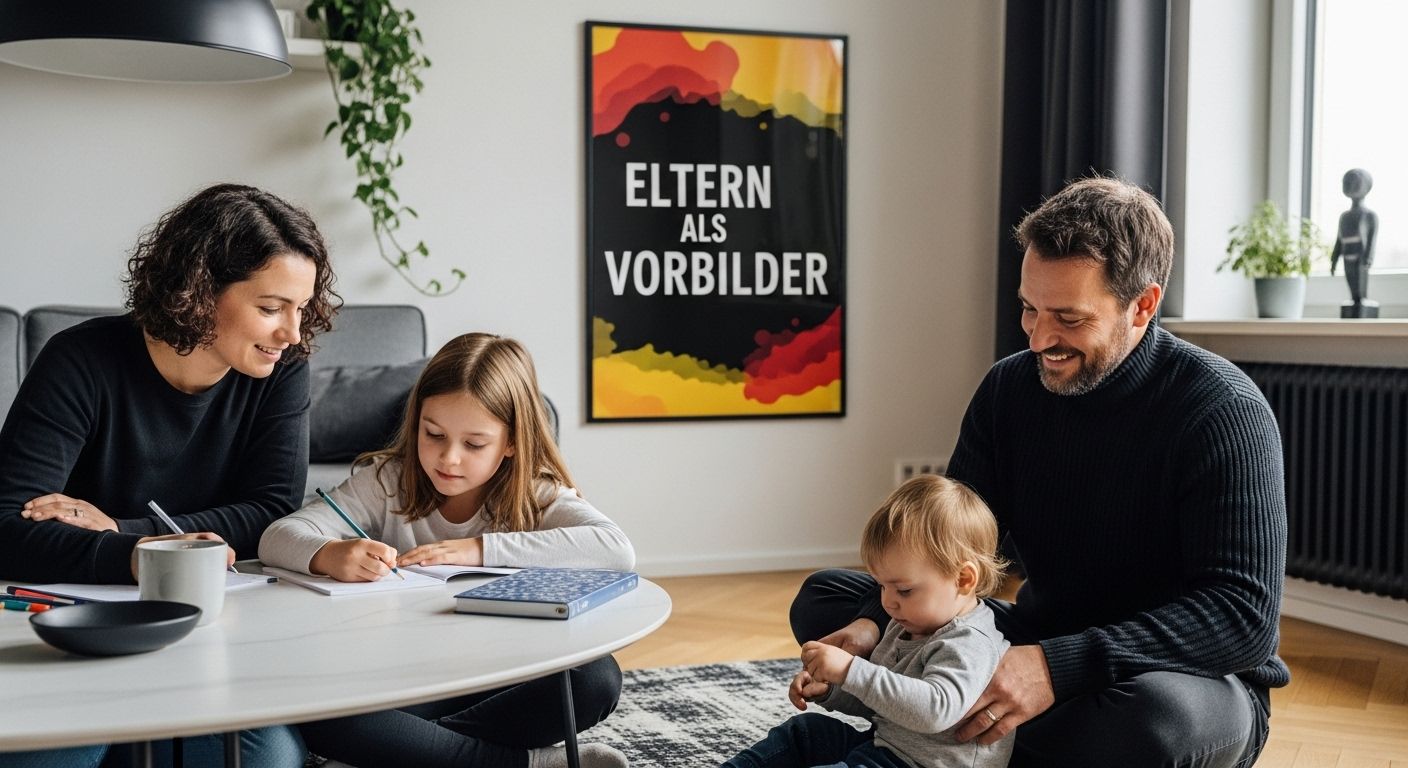
Children look very closely everywhere. They not only absorb what parents say, but especially what they do. What's surprising is that parental behavior influences up to 80 percent of a child's later habits. Many think you have to be perfect to be a good role model. In reality, children learn the most from small everyday moments and even from our mistakes. This is where real parenting happens.
Table of Contents
- Why Children Learn from Role Models
- Everyday Tips for Good Role Model Behavior
- Making Mistakes and Growing Together
- Shared Family Traditions as a Learning Opportunity
Quick Summary
| Takeaway | Explanation |
|---|---|
| Children learn through observation. | Parents and caregivers shape children's behavior and development through their own actions. |
| Model emotional intelligence. | Show how to handle feelings to teach children emotional self-regulation. |
| Promote respectful communication. | Pay attention to respectful language when speaking to strengthen social skills. |
| See mistakes as learning opportunities. | Be open about your own mistakes to give children a positive attitude toward failures. |
| Family traditions create bonds. | Establish regular rituals that strengthen your family's sense of community and values. |
Why Children Learn from Role Models
Parents and caregivers play a crucial role in children's development. Children learn not only through words, but especially through observation and imitation. This process, known as social learning, is fundamental to children's personality development and behavior formation.
The Psychology of Model Learning
Learning through role models is a complex psychological mechanism. The American Academy of Child and Adolescent Psychiatry emphasizes that children intensely observe and involuntarily imitate the behaviors of their parents and caregivers. This process helps them understand social norms, develop skills, and navigate various life situations.
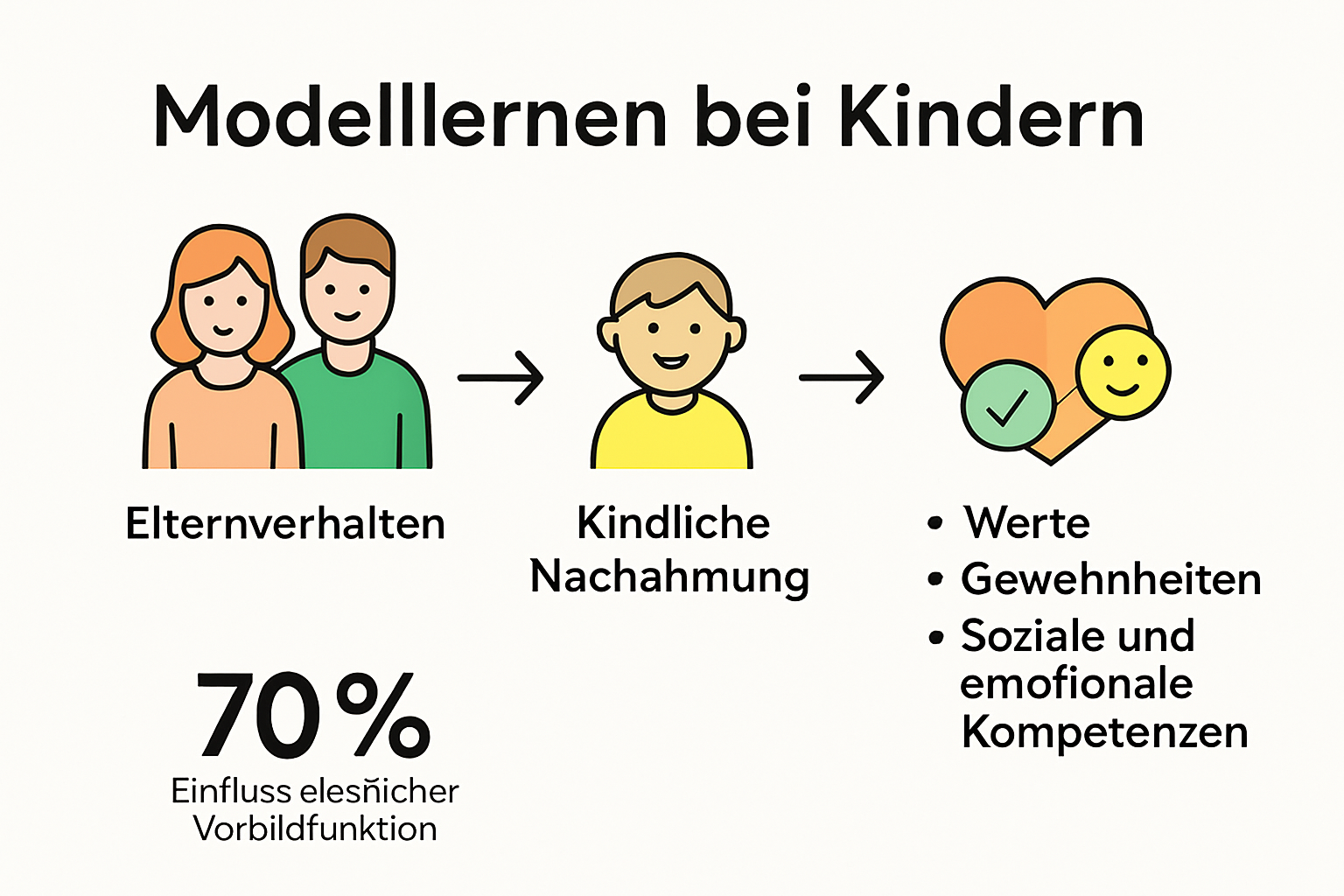
Children are like sponges - they literally absorb all the behaviors they perceive in their immediate environment. Whether it's communication styles, manners, problem-solving strategies, or emotional reactions - children often unconsciously copy the patterns they see in their primary caregivers.
Health and Behavior as a Learning Field
A study in the Maternal and Child Health Journal impressively demonstrates how strongly parental role models can shape children's behavior. The research found that children of parents who maintain healthy eating habits and lead active lives are likely to develop similar behaviors.
This means concretely: When parents prepare balanced meals, regularly eat fruit and vegetables, and integrate exercise into their daily lives, children often adopt these patterns as a matter of course. The role model function goes far beyond mere nutrition issues - it encompasses all areas of life.
Emotional and Social Competencies
Research findings from developmental psychology underscore that children primarily learn complex social and emotional skills through observation. How do parents handle stress? How do they show empathy? How do they resolve conflicts? All these aspects shape children's emotional intelligence.
Parents as role models means more than just setting rules. It's about living authentically, expressing emotions appropriately, and meeting challenges with resilience and dignity. Children learn most not from what they're told, but from what they experience and observe daily.
The responsibility is great - but so is the opportunity to actively shape positive developmental processes. Every interaction, every reaction is an opportunity to teach children valuable life skills.
Everyday Tips for Good Role Model Behavior
Parents face the daily challenge of being authentic and positive role models for their children. The way we behave, communicate, and handle challenges fundamentally shapes our children's development.
Modeling Emotional Intelligence
Psychologists at Harvard University emphasize the importance of emotional self-regulation. Children learn most from how parents handle their own emotions. This means concretely: Show how to express and process emotions in a healthy way.
When you experience anger, frustration, or sadness, it's important not to suppress these emotions but to communicate them constructively. For example, say: "I'm very upset right now, and I'm taking a deep breath to calm down" instead of acting out emotions impulsively.
Communication and Respect
A study from the University of California shows that respectful communication in families is crucial for children's social development. Pay attention to how you speak with your partner, friends, and family members.
Examples of respectful communication:
- Active listening: Let others finish speaking, show interest through questions
- Non-violent language: Avoid insults or demeaning comments
- Conflict resolution: Demonstrate constructive problem-solving strategies
Healthy Lifestyle Habits
Children don't only copy emotional and communicative patterns, but also behaviors related to health and self-care. Research from the Robert Koch Institute underscores how strongly parental habits influence children's behavior.
Important aspects of healthy role model behavior:
- Movement: Show joy in physical activity
- Nutrition: Present balanced, varied meals
- Stress management: Practice techniques like meditation or sports to manage stress
- Sleep culture: Pay attention to sufficient sleep and regular sleep times
Every interaction is a chance to convey positive values and behaviors. Be patient with yourself - there's no such thing as a perfect role model. It's about acting authentically, lovingly, and consciously.
Remember: Children learn more through observation than through instruction. Your daily actions are the most powerful teaching method.
To illustrate the various ways parents can be good role models in everyday life, the following table shows the key areas and corresponding practical examples:
| Area | Goal | Practical Example |
|---|---|---|
| Emotional Intelligence | Convey emotion regulation | "I'm upset right now, I'm taking a deep breath." |
| Respectful Communication | Promote social skills | Active listening, non-violent language, constructive conflict resolution |
| Healthy Life Habits | Model health-promoting behavior | Shared physical activity, fresh cooking, fixed sleep times |
| Accepting Mistakes | Present dealing with failures positively | Openly admitting your own mistakes and reflecting |
| Growth Orientation | Promote motivation and learning | "You can't do that yet" instead of "You can't do that" |
Making Mistakes and Growing Together
Mistakes are a natural part of the learning process - for both parents and children. The way we handle setbacks can have a decisive influence on our children's emotional development and resilience.
The Art of Accepting Mistakes
The Center for Parenting Education emphasizes how important it is to see mistakes as learning opportunities. When parents openly admit their own mistakes, take responsibility, and reflect constructively on them, they convey a healthy attitude toward failure to their children.
A practical example: If you accidentally drop something or make a mistake at work, don't comment negatively on it, but explain: "Oops, I didn't do that well just now. Let's think about how I can do it better next time."
Fostering a Growth-Oriented Mindset
According to insights from MindsetKit, it's crucial to show children that mistakes are not failures but learning opportunities. A growth-oriented mindset means seeing challenges as opportunities for further development.
Concrete strategies include:
- Positive language: Replace "You can't do that" with "You can't do that yet"
- Process focus: Praise effort and willingness to learn rather than just results
- Normalize mistakes: Share your own learning experiences and show how you've overcome challenges
Emotional Support When Dealing with Failures
A research study on child psychology shows that maternal communication has an enormous influence on how children handle setbacks. What matters is empathy, joint problem-solving, and conveying confidence.
Important communication principles:
- Validate feelings: "I see you're frustrated"
- Reflect together: "What can we learn from this situation?"
- Encourage: "I trust that you can do this"
The key is to see mistakes not as a threat but as growth opportunities. Children who learn to interpret failure positively develop resilience, creativity, and perseverance.
Remember: Perfection is not the goal. It's about learning together, growing, and facing challenges with courage and openness. Every mistake is an opportunity to become stronger and wiser.
Shared Family Traditions as a Learning Opportunity
Family traditions are more than just recurring events - they are powerful tools for transmitting values, forming identity, and developing children emotionally. They create moments of togetherness, security, and shared learning.