 edory
edory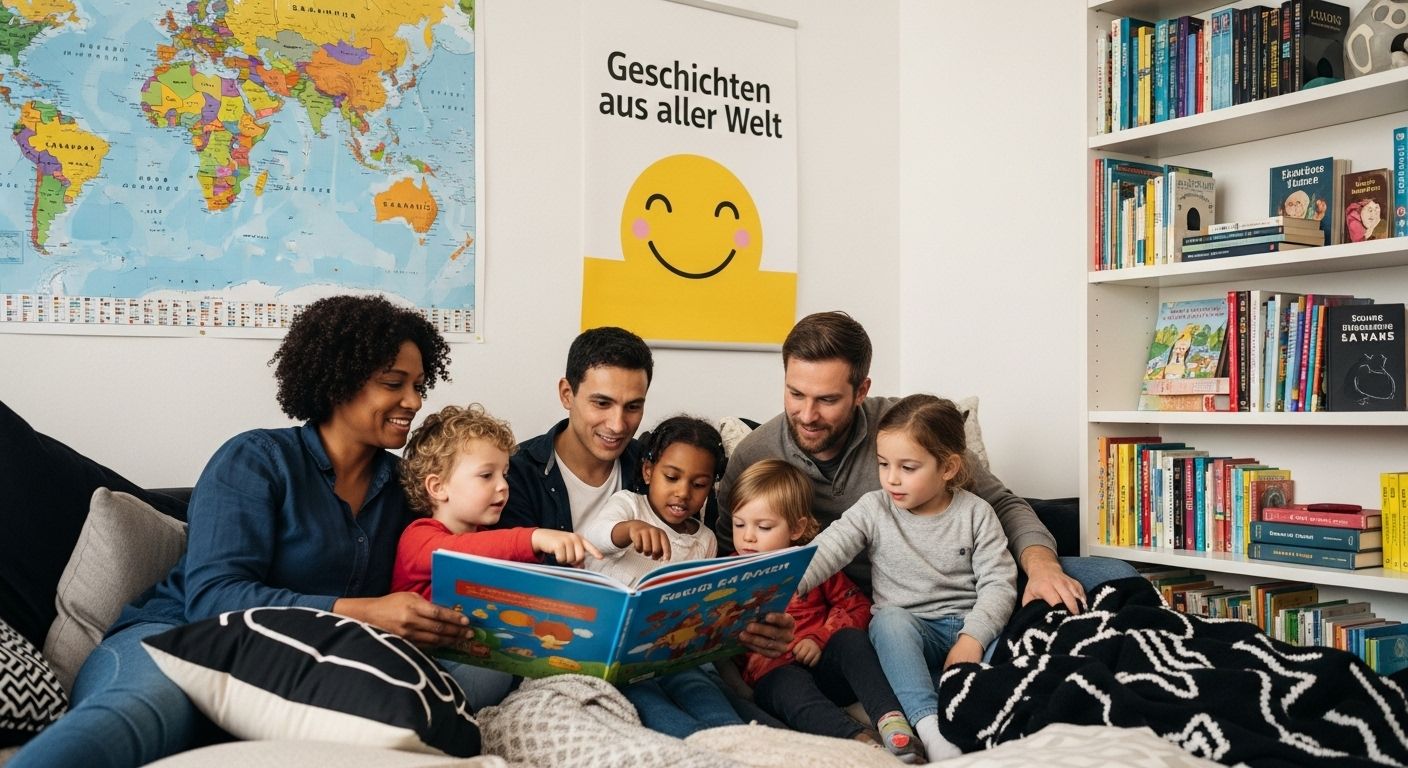
Stories from all parts of the world immediately captivate children and transform every living room into a gateway to distant lands. And it gets even better. Children who regularly hear stories from different cultures develop not only imagination, but also demonstrably significantly higher empathy and a stronger understanding of other perspectives. Who would have thought that a simple reading ritual could expand entire worldviews and take family interaction to a new level?
Table of Contents
- Why Stories from Around the World Excite Children
- The Most Beautiful Tales from Different Cultures
- Tips for Reading Aloud and Storytelling Together as a Family
- How Stories Support Child Development
Quick Summary
| Takeaway | Explanation |
|---|---|
| Stories promote empathy | By listening to stories, children learn to put themselves in different perspectives and understand emotions. |
| Cultural diversity expands horizons | Stories from other cultures give children the opportunity to discover new viewpoints and values. |
| Regular reading aloud strengthens bonds | Reading together creates memories and promotes emotional development in children. |
| Stories improve language and thinking skills | Listening to stories increases vocabulary and promotes logical thinking and problem-solving abilities. |
| Moral values are conveyed through content | Characters in stories demonstrate how values like kindness and cooperation can be applied in everyday life. |
Why Stories from Around the World Excite Children
Children are naturally curious explorers who develop an incredible fascination for stories from different cultures and parts of the world. Stories are more than just words on paper - they are magical windows into unknown worlds that allow children to look beyond their own experiential horizons.
The Power of Cultural Diversity
When children hear stories from different cultures, they are not only entertained but also shaped in their personal development. A study with ten-year-old children from different countries shows that children worldwide share similar basic themes in their personal narratives. This means that stories from around the world reflect universal human experiences and appeal to children on a deep emotional level.
The diversity of stories allows children to view the world from different perspectives. They learn that there is more than one viewpoint and thus develop empathy and understanding for other cultures. This intercultural competence is invaluable in our globalized world.
Learning Through Told Stories
Research in Ghana confirms that storytelling is not only entertaining but also crucial for child development. The study shows that children aged 36 to 59 months can improve their reading and math skills as well as social-emotional competencies through stories.
Stories from around the world offer more than just entertainment. They are a powerful educational resource that helps children understand complex concepts, develop moral values, and expand their imagination. Each story carries a unique message that inspires children, makes them think, and broadens their worldview.
Emotional Development and Understanding
By listening to and experiencing stories from different cultures, children learn to understand and interpret feelings. Studies show that children can positively influence their behavior through stories with positive messages - for example, increased willingness to share after reading a book about sharing and community.
Stories from around the world are more than just entertainment. They are bridges between cultures, tools for education, and windows into unknown worlds. They help children understand the diversity of our world, develop empathy, and shape their own identity.
The Most Beautiful Tales from Different Cultures
The world of stories is an endless ocean full of wonders, wisdom, and magical moments. Each culture contributes its own unique storytelling traditions that transport children into fantastic worlds and inspire their imagination.
Magical Stories from Africa
African stories are rich in metaphors and deep moral lessons. They often tell of animals that represent human character traits and convey complex life lessons. An examination of children's picture books underscores the importance of authentic cultural representation and shows how important it is to represent different perspectives in children's literature.
Folk tales from countries like Kenya, Senegal, or Namibia tell of wisdom, unity, and respect for nature. They teach children subtle values such as community spirit, courage, and creativity.
Asian Storytelling Traditions Full of Wisdom
Research shows that multicultural children's literature supports students in becoming global citizens. Asian stories - whether from China, Japan, or India - are particularly rich in philosophical elements and deep wisdom about life.
Chinese fables about wise dragons, Japanese legends about samurai, or Indian stories about brave princesses open up new perspectives for children. They show that wisdom, respect, and honor are universal values that transcend cultural boundaries.
Latin American Stories Full of Imagination
An interesting study confirms that stories that value diversity can positively influence children's social perception. Latin American narratives are particularly rich in magical elements and fantasy.
Stories from Mexico, Brazil, or Argentina are often filled with colorful characters, mythological creatures, and adventures that amaze children. They teach children that the world is full of wonders and possibilities and that imagination knows no bounds.
To provide a quick overview of the special values and lessons of different storytelling traditions, this table shows the typical themes, characters, and distinctive features of African, Asian, and Latin American stories.
| Culture | Typical Themes | Main Characters/Elements | Conveyed Values or Lessons |
|---|---|---|---|
| Africa | Community, nature, unity | Animals with human qualities | Wisdom, courage, creativity, respect for nature |
| Asia | Wisdom, philosophy, respect | Dragons, samurai, princesses | Life wisdom, honor, respect |
| Latin America | Fantasy, adventure, diversity | Colorful characters, mythological creatures | Imagination, wonders of the world |
Each of these cultural storytelling traditions is a window into another world. They invite children to look beyond their own experiences, discover new things, and explore the wonderful diversity of our planet.
Tips for Reading Aloud and Storytelling Together as a Family
Reading stories together is more than just an activity - it is valuable family time that strengthens bonds and helps children understand the world. Every moment of reading together is an opportunity for learning, closeness, and magical discoveries.
Creating the Perfect Reading Environment
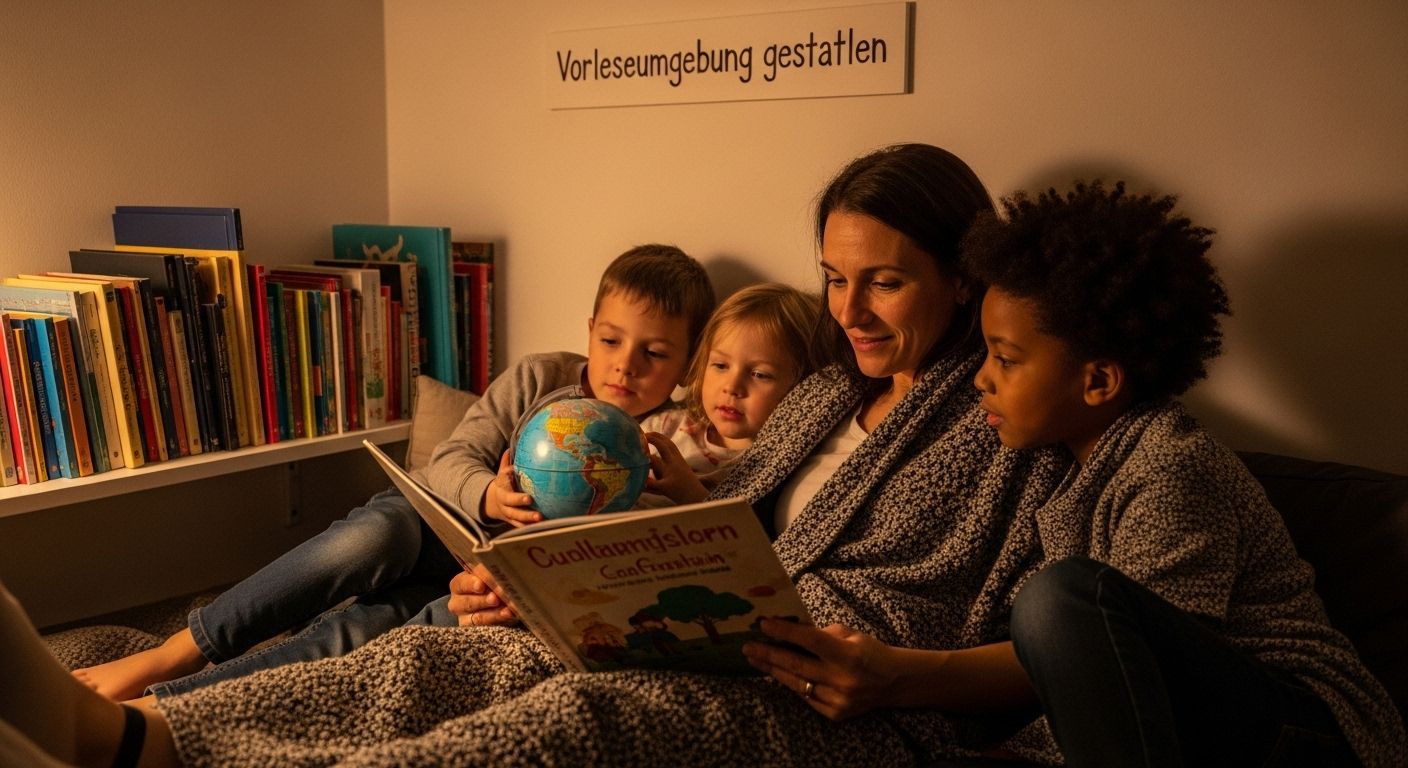
A cozy and inviting environment is the key to successful storytelling. Choose a quiet place where everyone feels comfortable - a cozy corner with soft pillows, a warm reading nook, or even a snuggly bed. Educational research from the U.S. Department of Education emphasizes how important interactive family activities are for language development.
Make sure there is good lighting and minimize distractions such as televisions or cell phones. Attention should be completely focused on the story and the shared experience. Let children help design the space - perhaps they can bring their favorite blanket or stuffed animal.
Interactive and Lively Reading Aloud
Reading aloud is an art that requires engagement and creativity. Turn reading aloud into an interactive experience. Use different voices for different characters, make sounds, and encourage children to participate.
Ask questions while reading, such as "What do you think happens next?" or "How would you solve this situation?". This method not only promotes critical thinking but also makes the storytelling experience more entertaining. Let children make guesses, imitate characters, or even invent their own small continuations.
Regularity and Ritualization
Make reading stories together a fixed ritual in your family. Whether every evening before bed or on specific days of the week - regularity creates anticipation and expectation. Let each family member select or tell a story.
Vary the reading formats. Sometimes it's a picture book, then an audiobook CD, then a self-invented story. This variety keeps interest alive and shows children that stories exist in many forms.
Reading stories together is more than an activity - it is a bridge between generations, a window into fantasy worlds, and a powerful tool for education and emotional development. Every minute spent together creates memories that last a lifetime.
This table summarizes the most important tips and aspects for a successful reading experience in the family.
| Aspect | Approach/Recommendation |
|---|---|
| Creating a reading environment | Cozy corner, good lighting, minimal distraction |
| Interactive reading aloud | Different voices, asking questions, involving children |
| Regularity & rituals | Fixed times, varying reading formats, each family member reads |
| Material variety | Picture book, audiobook, self-told story |
| Involving children | Bringing favorite blanket/stuffed animal, designing space together |
How Stories Support Child Development
Stories are far more than just entertaining breaks from everyday life. They are powerful tools that make crucial contributions to children's cognitive, emotional, and social development. Each narrative is a journey that invites children to discover knowledge, emotions, and human experiences.
Cognitive Development and Language Skills
Research from the National Institutes of Health shows that storytelling stimulates children's cognitive abilities in impressive ways. Stories not only expand vocabulary but also promote complex mental processes such as logical thinking, problem-solving, and imagination.
When children listen to stories, they train their attention, learn to understand cause-and-effect relationships, and develop a deeper understanding of narrative structures. They learn to sort information, follow plot lines, and recognize connections.
Emotional Intelligence and Empathy
Stories are unique windows into the emotional world of others. They