 edory
edory
Anyone who plays with young children knows that there is often a lot of hustle and bustle and chaos. And yet games are much more than just a way to pass the time. They promote development in amazing ways. What surprises many: even simple activities like puzzles or building blocks demonstrably support motor skills and concentration, because cognitively stimulating games can increase the attention span of preschool children by up to 50 percent. While many believe that any game works by itself, a closer look reveals that the right selection, explanation, and shared reflection are what make real learning success and shared joy possible in the first place.
Table of Contents
- Step 1: Choose appropriate games for your child's age
- Step 2: Prepare the necessary materials
- Step 3: Explain the game rules clearly and simply
- Step 4: Play the games with your child
- Step 5: Check the fun and learn from the experience
Quick Summary
| Main Point | Explanation |
|---|---|
| 1. Choose age-appropriate games | Consider your children's developmental stages to find suitable games that promote motor and cognitive skills. |
| 2. Prepare materials carefully | Clean and organize play materials well to ensure safety and optimal playing conditions. |
| 3. Explain the rules simply | Use clear language and visual demonstrations to make game rules understandable to children. |
| 4. Play actively with your child | Be present and flexible to create a positive play experience that fosters creativity and engagement. |
| 5. Reflect on the play experience | Conduct an honest analysis after playing to assess both the play experience and your child's development. |
Step 1: Choose appropriate games for your child's age
When it comes to games with young children, age-appropriateness is the first crucial key to success. Each developmental stage brings its own abilities and needs that must be considered when choosing games. Parents should understand that not every game is equally suitable for every child.
For children under three years old, it is recommended to choose games that promote sensory experiences and motor development. Simple puzzles with large pieces, stacking games, and building blocks help small children improve their grasping and coordination skills. Educational games offer an excellent way to learn through play, so parents can deliberately choose development-promoting activities here.
With children between three and five years old, the focus shifts to cognitively stimulating games that promote problem-solving skills and creativity. Memory games, simple board games, and role-playing games help children develop social competencies and expand their attention span. It is important to adapt the game duration to the child's concentration ability.
When selecting the right games, parents should consider the following criteria:
- Child's developmental stage
- Personal interests and preferences
- Safety of play materials
- Inviting character and fun factor
Ultimately, it's about finding games that are not only entertaining but also gently and playfully support your child's development.
This table provides a compact overview of all main steps when playing with young children, with goal and focus for each step.
| Step | Goal | Focus |
|---|---|---|
| 1. Select age-appropriate games | Support development optimally | Child's abilities and interests |
| 2. Carefully prepare materials | Ensure safety and fun | Organization and cleanliness |
| 3. Explain rules simply | Ensure understanding | Clear communication |
| 4. Play games actively | Shared joy and learning success | Positive attention |
| 5. Reflection after playing | Strengthen and analyze learning experience | Open communication |
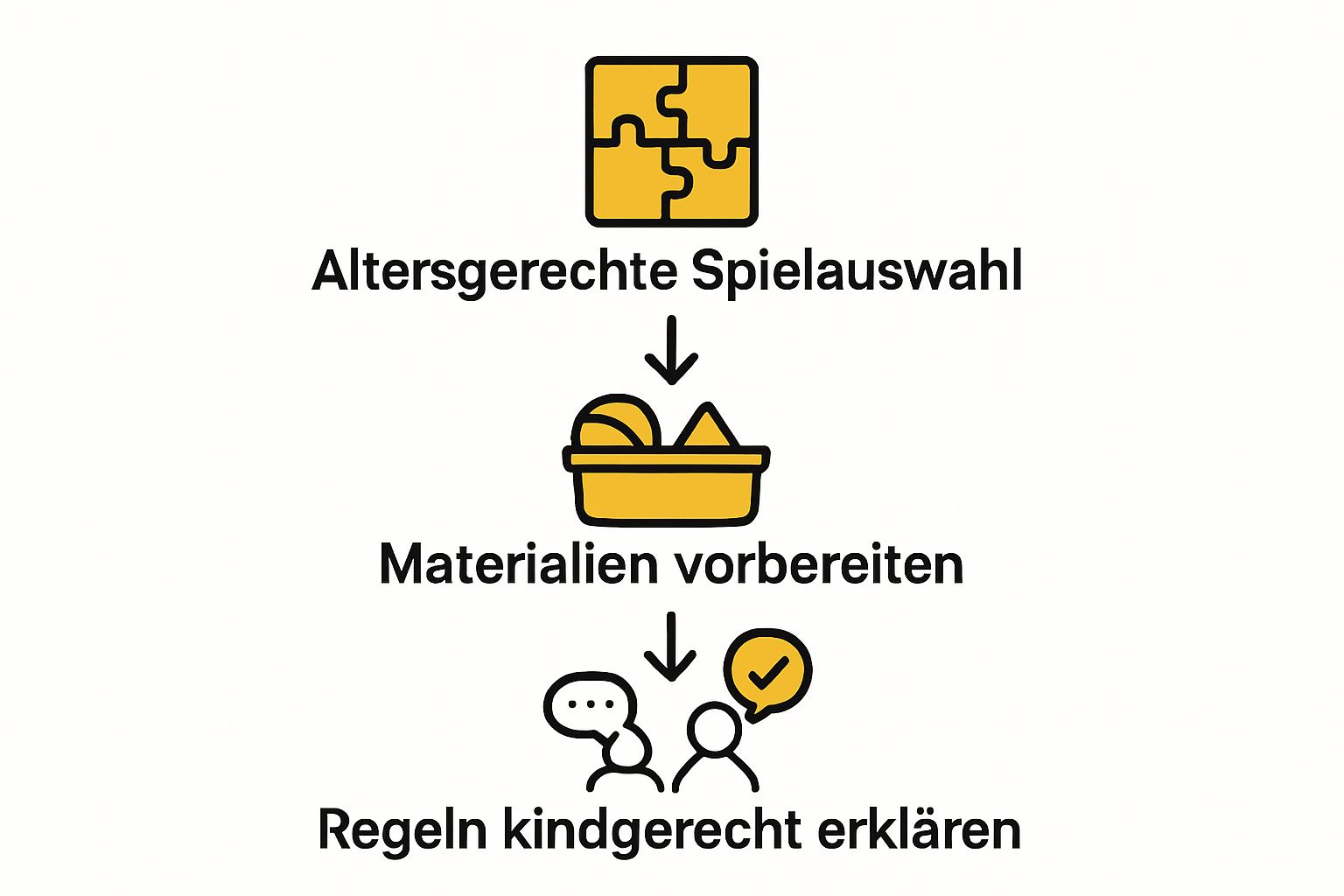
Step 2: Prepare the necessary materials
Careful preparation of play materials is crucial for a smooth and entertaining play experience with young children. Parents should be aware that the right selection and organization of materials not only increases the fun of playing but also ensures safety and learning success.
Begin with a careful inventory of available toys and materials. Sort toys by age, condition, and your child's developmental stage. Clean and disinfect all materials thoroughly, especially if you are using toys from older siblings or secondhand sources. Our guide to creative play design offers additional tips for optimal material selection.
For indoor games, it is recommended to set up a special play area. This should be clear, safe, and easily accessible. Use storage boxes or shelves to sort materials by category: building blocks, puzzles, painting and craft supplies, costumes for role-playing. Make sure that smaller parts are inaccessible to children under three years old to prevent choking hazards.
For outdoor activities, you need a different approach. Put together a play kit with weather-resistant clothing, sun protection, water bottle, and possibly spare clothing. Important materials for outdoors include:
- Sturdy toys like balls and sand toys
- Chalk for sidewalk drawings
- Bubbles
- Small shovels and buckets
- Light sports equipment
The key lies in flexibility and adaptability. Regularly check materials for damage, wear, or safety risks. A well-prepared play environment not only creates fun but also promotes your child's development and creativity.
Here is a tabular overview of typical play materials for indoors and outdoors with their respective areas of use, as described in the article.
| Material | Suitable for | Specialty |
|---|---|---|
| Building blocks/stacking games | Indoors | Promotes motor skills and creativity |
| Puzzles (large pieces) | Indoors | Ideal for children under three years old |
| Craft supplies | Indoors | Supports sensory experiences |
| Costumes | Indoors | For role-playing and imagination |
| Balls | Outdoors | Robust and versatile |
| Sand toys | Outdoors | Promotes sensory play |
| Chalk | Outdoors | For creative drawing on pavement |
| Bubbles | Outdoors | Fun motor skill exercise |
Step 3: Explain the game rules clearly and simply
Communicating game rules is an art that requires patience and creativity, especially with young children. Simple language and visual demonstrations are crucial to ensure that children understand the rules and enjoy playing. Our guide to learning through games offers further insights into child-friendly teaching techniques.
Start with short, precise instructions and avoid complex explanations. Children have a limited attention span, so it's important to present rules in small, digestible chunks. Use body language and facial expressions to support your words. Show examples directly with the game materials instead of giving long theoretical explanations.
When explaining the rules, make sure to spark the child's motivation and curiosity. Turn the explanation into a little adventure. Instead of saying "You have to do it this way," use playful language like "Let's discover together how this great game works." Encourage children to ask questions and show understanding for their comprehension difficulties.
For younger children, interactive explanations are particularly effective. Let them perform the first move together with you. This helps them understand the rules practically. With board games or more complex activities, you can play a "trial round" where mistakes are explicitly allowed and viewed as a learning opportunity.
Pay attention to these crucial aspects when communicating rules:
- Speak in short, clear sentences
- Use age-appropriate language
- Demonstrate rules through showing
- Be patient and repetitive
- Stay positive and encouraging
Finally, it's important to observe your child's reaction. True understanding shows itself not only through correct execution but through enthusiasm and engagement. If your child is enjoying the game and following basic rules, you have accomplished your task successfully.
Step 4: Play the games with your child
The actual playing of games is the moment when theory and preparation come alive. Positive interaction and loving attention are the key to a successful play experience with your child. Our guide to playing with children under three years old offers additional insights into age-appropriate playing techniques.
During play, it's crucial to be authentic and present. Turn off distractions like cell phones or television and focus completely on the shared play experience. Your undivided attention tells your child that they are important and valuable. Pay attention to non-verbal signals like your child's body language and facial expression to understand their emotional state and play enjoyment.
Be flexible and ready to adjust game rules. Not every game has to follow the original rules strictly. Sometimes children develop their own creative variations that are equally valuable. Support this creativity by being open to improvisation and giving your child room for their own ideas.
During play, you act as a guide and motivator. Praise efforts, not just successes. Comments like "Great how you're trying that" or "You're really doing that well" strengthen confidence and play motivation. Avoid excessive criticism or correction that could diminish the joy of playing.
Pay attention to these aspects during play:
- Remain patient and relaxed
- Show genuine interest
- Adjust the pace to your child
- Accept different playing styles
- Be ready to switch games if interest wanes
A successful play experience manifests itself not only in rule-compliant play but especially in the joy and connection between parent and child.
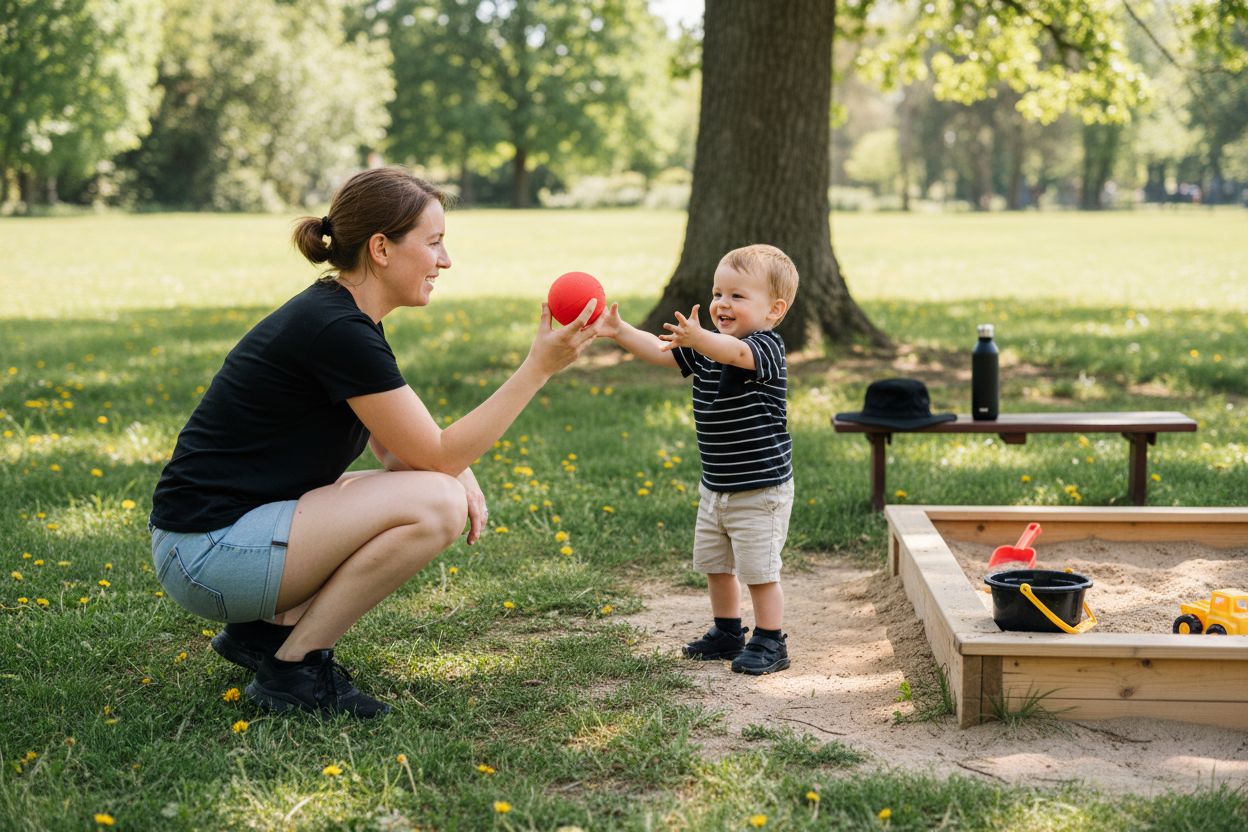 If your child is laughing, concentrating, and having fun, you have achieved more than any game victory. The time together is the real prize.
Step 5: Check the fun and learn from the experience
After the game, an important reflection process begins that not only improves play quality but also deepens the relationship between parent and child. Honest observation and open communication are the key elements of this analysis phase. Our guide to learning through experience offers additional insights into child-friendly reflection methods.
Begin the evaluation with a child-friendly conversation round. Ask open-ended questions like "What was the most fun for you today?" or "What was difficult for you?". This approach allows your child to articulate their feelings and experiences. Make sure not to sound interrogating but create a relaxed atmosphere where your child feels safe and secure.
Reflection serves not only to evaluate entertainment but also to observe development. Pay attention to progress in motor skills, social behavior, and cognitive competencies. Quietly note small developmental steps like improved coordination, understanding of rules, or creative problem-solving. These observations help you choose future games more strategically.
Also reflect on your own role as a play partner. Were you patient? Did you explain the rules under