 edory
edory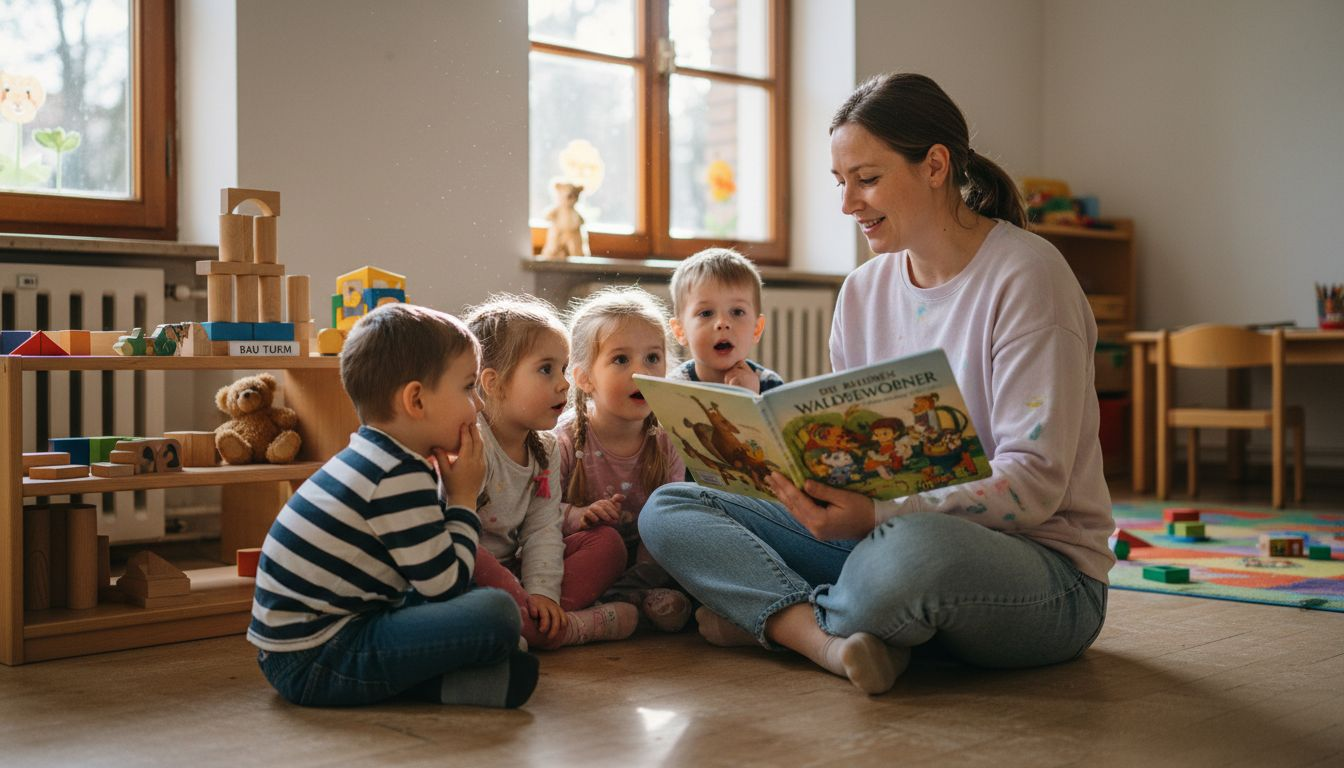
Many parents experience how quickly children develop language skills at kindergarten age and how crucial this developmental step is for later learning enjoyment. Especially in Germany, targeted measures in the area of language support play a central role, as they not only enable communication but also lay the foundation for school and social success. Anyone who wants to know what professional and everyday language support really looks like and why an individual approach can strengthen every child will find valuable insights and practical tips here.
Table of Contents
- Language Support in Kindergarten: What Does It Mean?
- Important Methods and Concepts in Everyday Life
- Targeted Programs and Playful Approaches
- Parent Involvement and Individual Support
- Challenges, Opportunities, and Common Mistakes
Key Insights
| Point | Details |
|---|---|
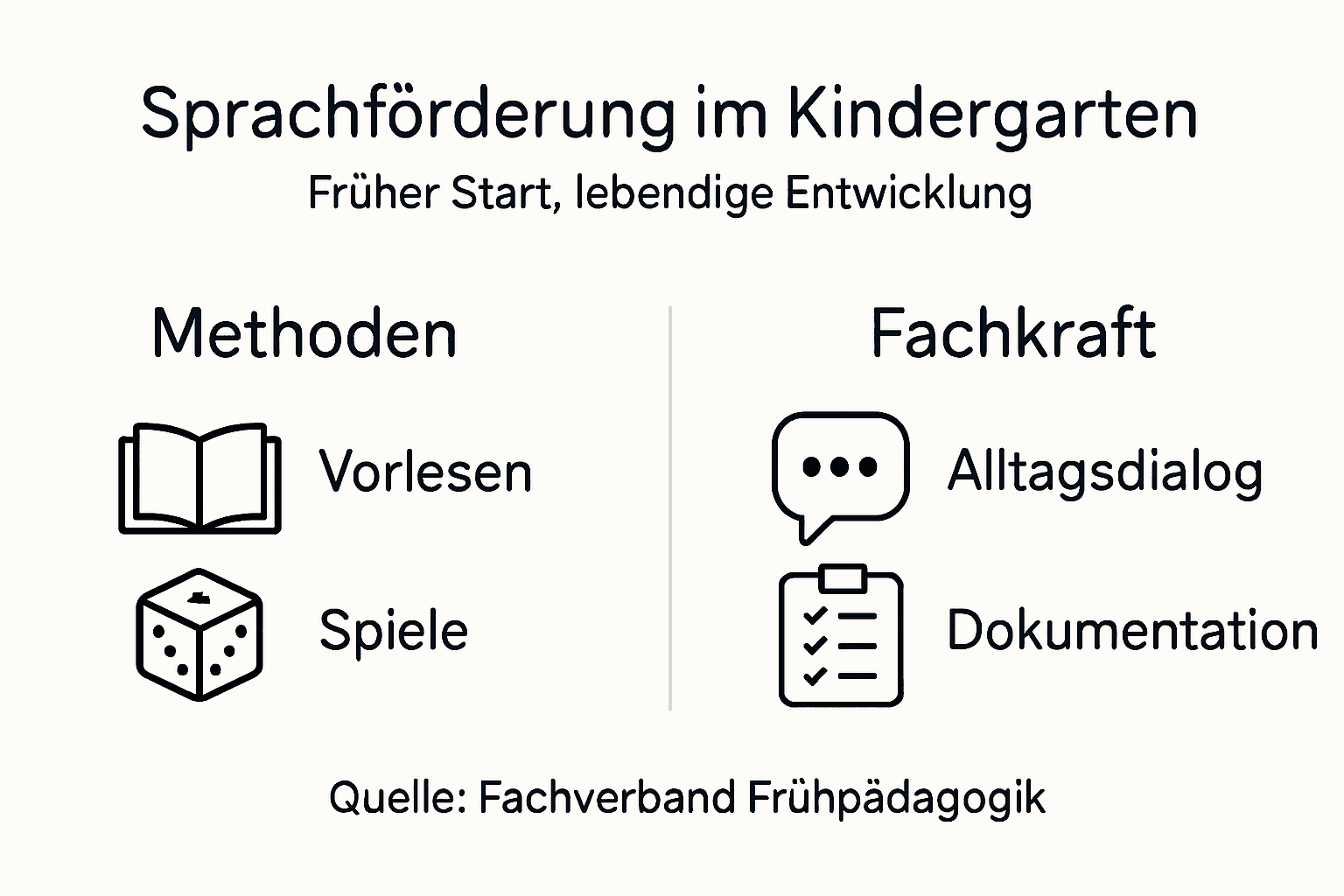
| Language support is integrative | It does not take place in isolated sessions but is integrated into the kindergarten's everyday life. Every moment should be used as an opportunity for language support. |
| Individual support is crucial | Every child has different language needs that must be recognized and addressed through targeted observation and individual support plans. |
| Parent involvement is central | Engaged parents who are actively involved in the support process sustainably support their children's language development. |
| Play promotes learning | Playful approaches and learning games naturally integrate language support and increase children's motivation. |
Language Support in Kindergarten: What Does It Mean?
Language support in kindergarten means much more than just getting children to speak. It's about consciously creating a language-rich environment where children can naturally develop their communication skills. Language support encompasses methods aimed at supporting children linguistically and aligning their developmental level with their peers. At kindergarten age, this is particularly crucial because language forms the foundation for social relationships, cognitive learning, and later school success. When your child starts kindergarten, you'll quickly notice that the first words, the first sentences, and the growing ability to express themselves progress almost explosively.
What does language support in kindergarten specifically entail? It's not something that happens in separate "support sessions" but an integral part of everyday life. While the teacher has breakfast with your child, talks about the day, sings together, or reads stories, language support is happening. The goal is to strengthen children's language skills and purposefully integrate them into academic language. This academic language is the toolkit children need to be successful in school later and participate in society. Especially for children with a different linguistic background, from educationally disadvantaged households, or with language delays, this supportive framework in kindergarten is incredibly valuable.
Practical implementation works through various approaches:
- Dialogic interactions: Real conversations between teacher and child, not just one-way communication
- Language modeling: Adults demonstrate how language works through reading, storytelling, and speaking
- Vocabulary expansion: Purposeful introduction of new words in meaningful, everyday contexts
- Reading and writing experiences: First contact with books and written language
- Acknowledging multilingualism: Appreciation and support of all languages a child speaks
Language development through stories offers a comprehensive guide on how narrative learning can accelerate language development. Stories are one of the most powerful tools in kindergarten because they put children in emotional situations where they not only hear language but truly understand and process it. A child who hears a story about a brave rabbit doesn't just connect new words with actions but also experiences feelings, conflicts, and resolutions. This leaves a much deeper impression than isolated vocabulary training.
What distinguishes professional language support from passive listening? The difference lies in intent and quality of interaction. A teacher implementing language support asks questions, waits for answers, confirms expressions, expands them, and models correct language. She doesn't simply present content but creates space for active participation. This is demanding because it requires attention, patience, and educational expertise.
For you as parents, it's crucial to understand: Language support in kindergarten is not a measure relevant only for children with "language problems." Every child benefits from it. It's the difference between a kindergarten that lets children develop on their own and one that actively supports them in unfolding their abilities.
Pro-Tip: When choosing a kindergarten, specifically ask about their language support philosophy and whether staff members carry out regularly trained language support measures, not just general educational work.
Important Methods and Concepts in Everyday Life
Theory is one thing, practical implementation in kindergarten everyday life is another. This is where it shows whether language support really works or only exists on paper. Everyday integrated language support is the concept most commonly implemented in modern childcare centers, and for good reason: It doesn't hide in separate support blocks but takes place where life actually happens. During breakfast, during play, when putting on jackets, when changing younger children. A teacher working with everyday integration uses every moment as a language opportunity. She names what the child is doing, asks questions about it, and patiently waits for answers. This sounds simple but requires constant attention and professional attitude.
Which specific methods work best? Research shows that interactive support measures tailored to the individual child are particularly effective. This doesn't mean the teacher promotes each child in isolation. Rather, support is tailored to the individual child's current developmental level and interests. A child who finds animals interesting will learn much more from a language activity about animals than from an arbitrarily chosen activity. Additionally, small support groups work better than mass measures because they provide more room for interaction and individual response.
The Heidelberg Interaction Training is one of the most concrete examples of a structured support concept applicable directly in kindergarten everyday life. It's based on the idea that professionals can promote language development through conscious conversation techniques. The core elements are simple but effective:
- Language-aware interactions: Adults consciously pay attention to their own language use and use it as a model
- Regular language screenings: Observation and documentation of language level to detect delays early
- Questions and wait times: Rather than making statements, questions are asked and the child is given time to answer
- Expand and repeat words: When a child says "doggy," the teacher confirms: "Yes, a big brown dog!"
- Creating joy in language: Language support should feel like play, not like instruction
Another important aspect is the inclusion of family languages. If a child grows up multilingual, that's not a problem to be solved but a resource. Research shows that children whose mother tongue is valued in kindergarten learn German faster and better. This concretely means: A teacher who doesn't speak the mother tongue can at least learn about it, have important words pronounced, and encourage parents to speak the mother tongue at home. Playful learning through creative activities makes language support feel less like instruction and more like fun for children.
The role of the professional is crucial here. It's not enough for a teacher to be friendly and care for the children. She needs knowledge about language development, training in support concepts, and time to implement these methods. A kindergarten with 25 children and two caregivers has structural obstacles that good intentions simply can't overcome. That's why when searching for a kindergarten, you shouldn't just focus on philosophy but also hard factors like staffing ratios and continuing education opportunities.
What makes the difference between good and poor language support? Good language support is everyday, individually adapted, enjoyable, and based on genuine interaction. Poor language support is isolated, one-sided, boring, and tries to teach language like a subject that has nothing to do with the child.
Pro-Tip: During kindergarten visits, note concrete examples of how professionals talk with children: Do they ask questions or just give instructions? Do they wait for answers or keep talking? The way interaction happens often says more about language support quality than the written concept.
Targeted Programs and Playful Approaches
Until now, we've talked about concepts anchored in everyday life. But there are also specialized programs developed specifically for language support and scientifically tested. These programs provide structured frameworks, concrete materials, and clear goals that make teachers' work easier. Language support programs in childcare centers offer diverse approaches that often integrate playful elements and are scientifically based. An example is the MITsprache program, which systematically trains language skills in various areas using support folders, games, and movement exercises. The advantage of such programs is that they're suitable not just for children with diagnosed support needs but for all children in the group and even provide new challenges for children with strong language skills.
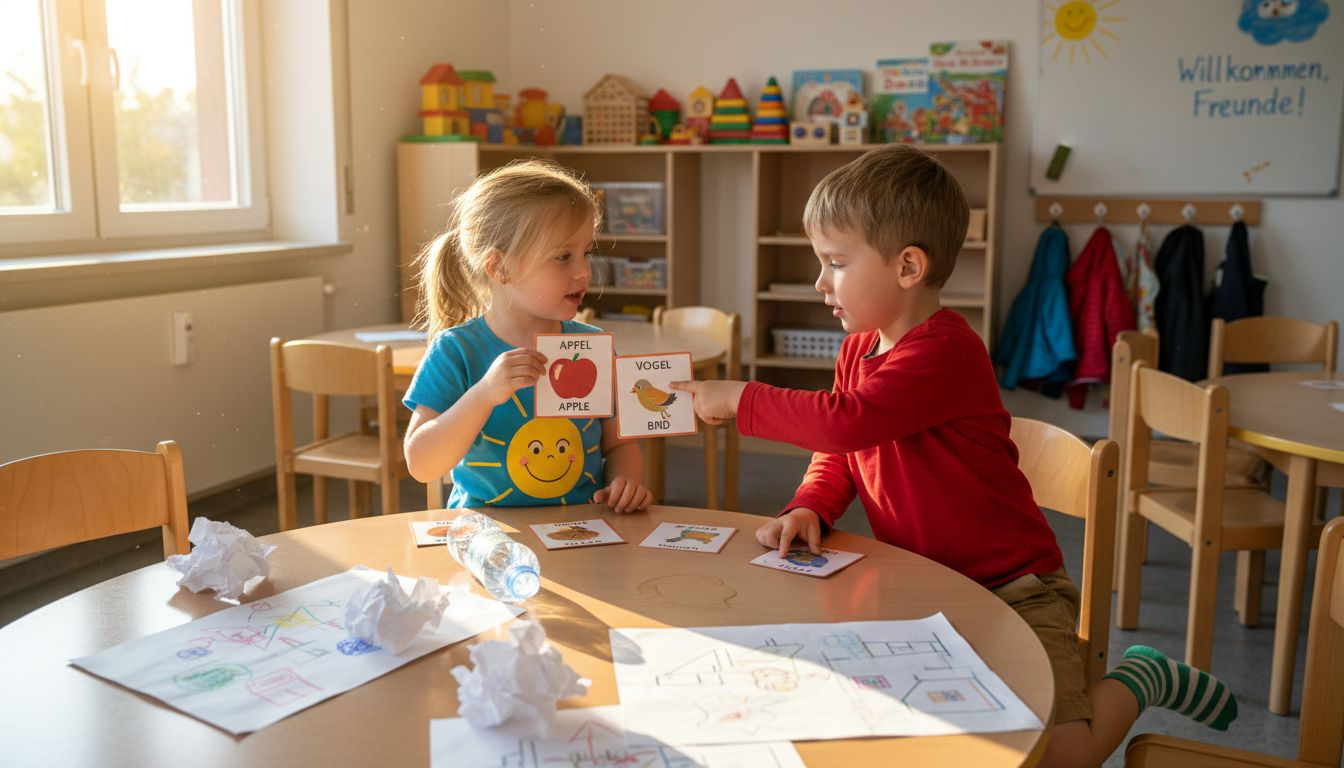
What makes playful approaches so effective in language support? The answer is simple: Children learn best when it's fun. A structured game with language goals won't be perceived as "support" but as playtime. The child isn't sitting in a support session working on deficits but solving tasks, possibly winning a game, and having learned quite incidentally. Learning games for toddlers are designed to promote language development without feeling forced. The best games combine multiple senses: movement, visualization, listening comprehension, and language production simultaneously. A game where children touch different objects, name them, and then describe them engages visual, tactile, and auditory senses and anchors language content much deeper than pure vocabulary training.
A particularly effective medium, often underestimated, is the picture book. It sounds old and simple, but research shows: Picture books encourage dialogue and promote language production naturally. The trick is how you use picture books. A teacher who just reads aloud misses the opportunity. A teacher who asks questions while reading ("Do you see the rabbit? What's it doing?"), shows the pictures, and waits for answers uses the picture book as a language support tool. Picture-rich and narrative books work especially well because they connect to children's lived experience and thus naturally create what brain researcher Stephen Krashen would call "comprehensible input": input the child understands because it connects to their experience.
How does this work concretely? A teacher could use a picture book about shopping and invite the child into real shopping role-play. The child isn't passively listening but participating, speaking, making mistakes, getting feedback, and practicing real communication. This is the opposite of sterile language training situations. The playful and creative use of picture books supports language development not in isolation but holistically.
There are also digital programs and apps, but you should remain critical here. A tablet game can be entertaining, but real language support works best through interaction with people. An app can't answer a question a child asks surprisingly. It can't build the emotional connection that motivates learning. The best use of technology in language support is supplementary, not replacing.
The choice between standardized programs and everyday integrated approaches is not either-or. Most good kindergartens combine both: They use everyday moments but also targeted programs and games. This offers structure, reliability, and flexibility at the same time.
Here's an overview of important programs and approaches in language support:
| Approach/Program | Target Group | Main Feature | Typical Use |
|---|---|---|---|
| Everyday Integrated Language Support | All children | Language support in daily life | Meals, play, routines |
| Heidelberg Interaction Training | Children with increased need | Structured conversation techniques | Small groups, targeted individual work |
| MITsprache Program | Diverse groups | Systematic materials | Group exercises, parent involvement |
| Learning games and picture books | Younger children | Playful, multisensory | Free play, targeted support |
Pro-Tip: Ask concretely in kindergarten which language support programs or games they use and whether you can use them at home too. Many kindergartens have materials you can borrow to create continuity between kindergarten and home.
Parent Involvement and Individual Support
Until now, we've mainly talked about what happens in kindergarten. But here's the uncomfortable truth: Kindergarten is only part of a child's life. Your child spends most of their time at home with you. That's why parent involvement is not an optional add-on to language support but its core. A child who receives two hours of targeted language support per week in kindergarten but sits in front of the TV at home will make significantly less progress than a child who lives in a language-rich environment at both kindergarten and home.