 edory
edory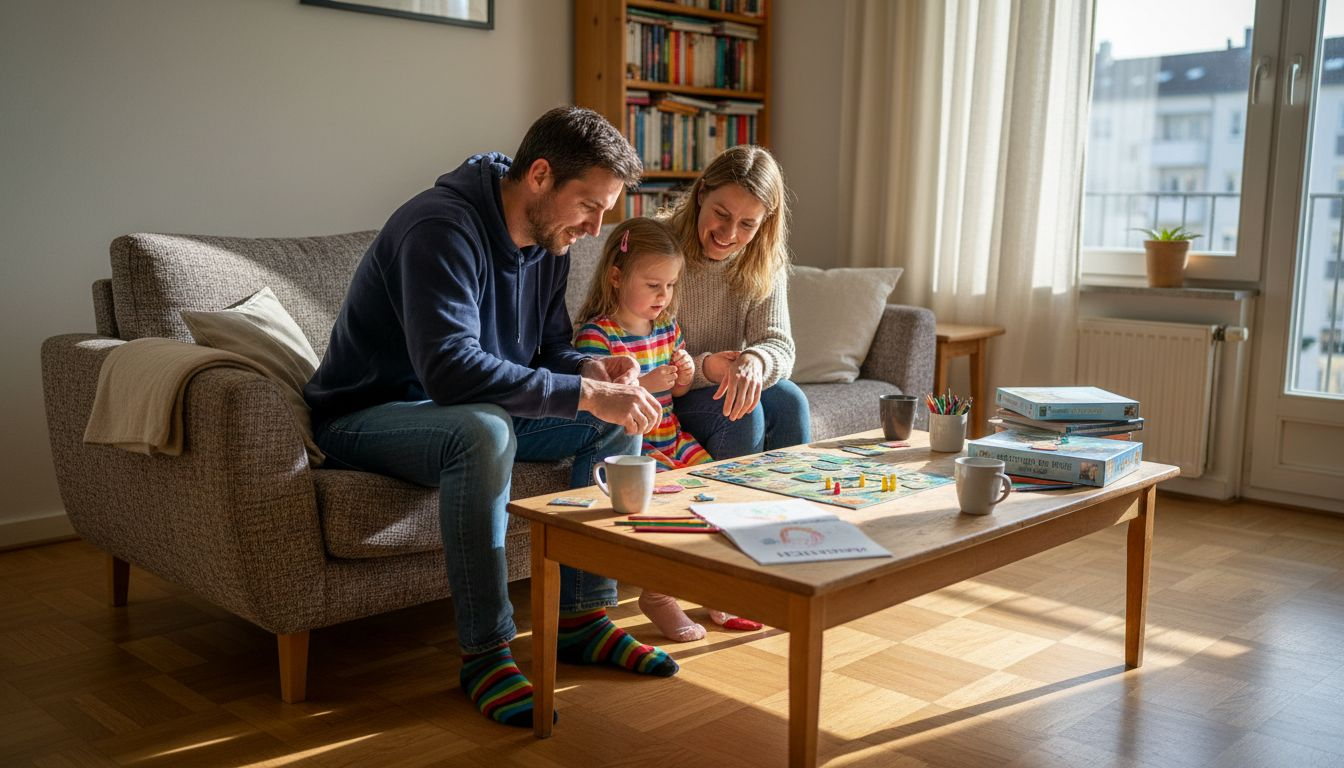
Parents constantly experience the moment when their child observes curiously, participates, and seemingly playfully absorbs new things. This is exactly where authentic value transmission occurs: children adopt patterns, attitudes, and feelings through the behavior of mother and father every day. Role modeling means that parents foster creativity, social competence, and emotional strength not only through words, but through lived examples. This approach lays the foundation for healthy development and focuses on the power of authentically lived values in family life.
Table of Contents
- Parents as Role Models – Definition and Central Importance
- How Children Adopt Parental Behavior
- Core Values, Attitudes and Their Transmission
- Authenticity and Everyday Life: Being a Role Model Without Perfection
- Risks of Negative Role Models and Typical Mistakes
- Strategies for Positive Role Modeling in Family Life
Key Findings
| Point | Details |
|---|---|
| Parents' Role Modeling Function | Parents serve as the most important reference persons, whose behavior decisively influences the emotional and moral development of children. |
| Behavioral Adoption | Children learn through direct observation and unconsciously adapt emotional reactions and communication patterns of their parents. |
| Authenticity in Role Modeling | Genuineness and a reflective approach to one's own mistakes are essential for a positive role model function in family life. |
| Risks of Negative Role Models | Inconsistent or overcontrolling parental behavior can have severe negative effects on children's mental health and independence. |
Parents as Role Models – Definition and Central Importance
Role models play a decisive role in children's development, especially when it comes to parents. Role modeling function means more than occasional advice - it's about continuous role model impact through daily actions and behavior.
In moral education, role models serve as central transmitters of values and norms. Moral development of children is largely based on the examples that parents set daily. They not only illustrate moral views but also motivate children toward positive action.
The importance of parents as role models can be summarized in several essential aspects:
- Emotional Imprinting: Parental behavior directly influences emotional development
- Social Learning: Children unconsciously copy communication patterns and behaviors
- Value Transmission: Moral principles are conveyed through daily examples
- Mental Health: Family interactions shape children's development
So parents are not just educators, but active shapers of children's personality development. They function as the first and most important reference persons who provide orientation and emotional security through their authentic behavior.
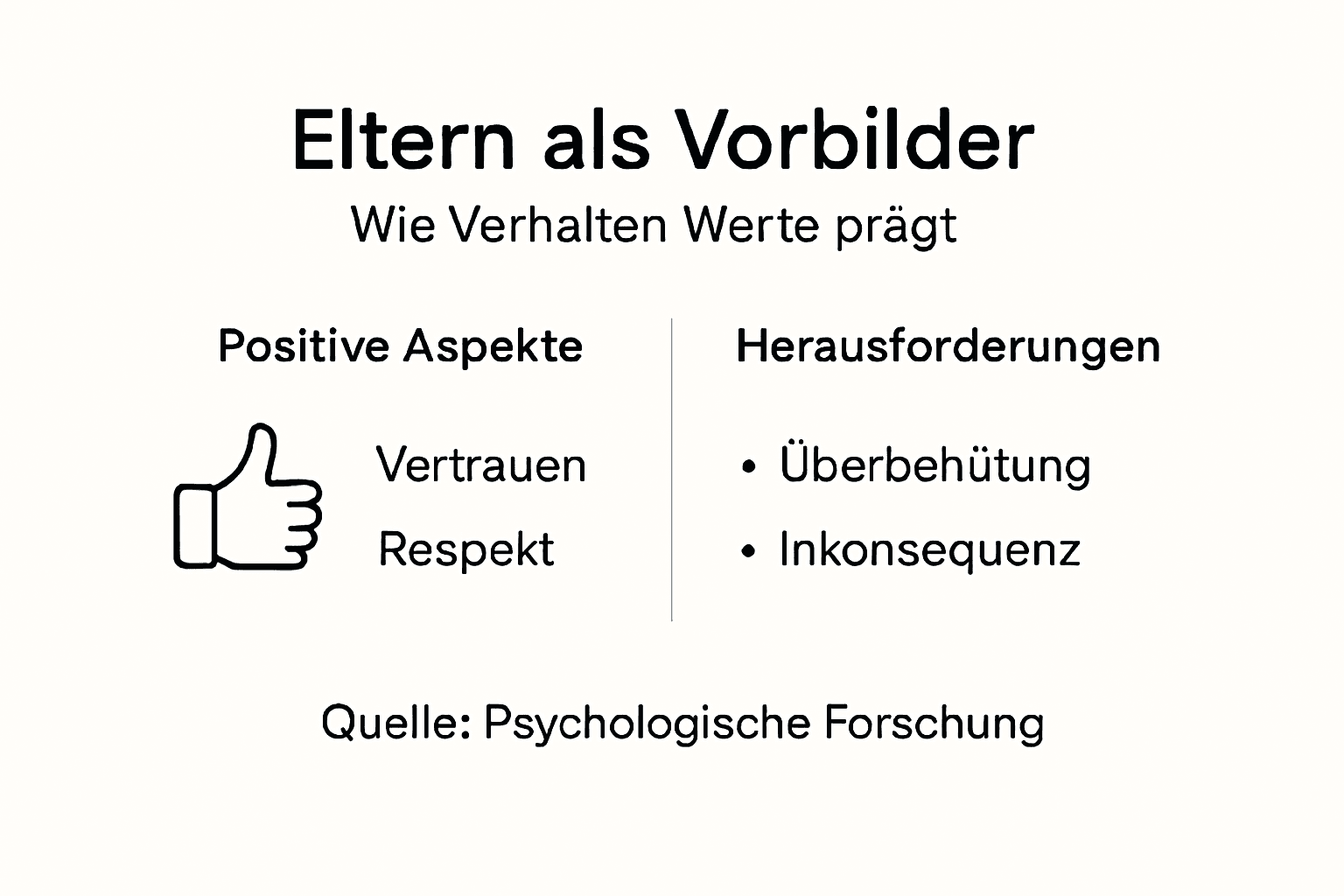
Pro Tip: Regularly reflect on your own behavior and be aware that your children constantly perceive and learn from you as a role model.
How Children Adopt Parental Behavior
Children are like little sponges, constantly absorbing and unconsciously adapting their parents' behavior. Behavioral adoption is a complex psychological process that encompasses far more than simple imitation.
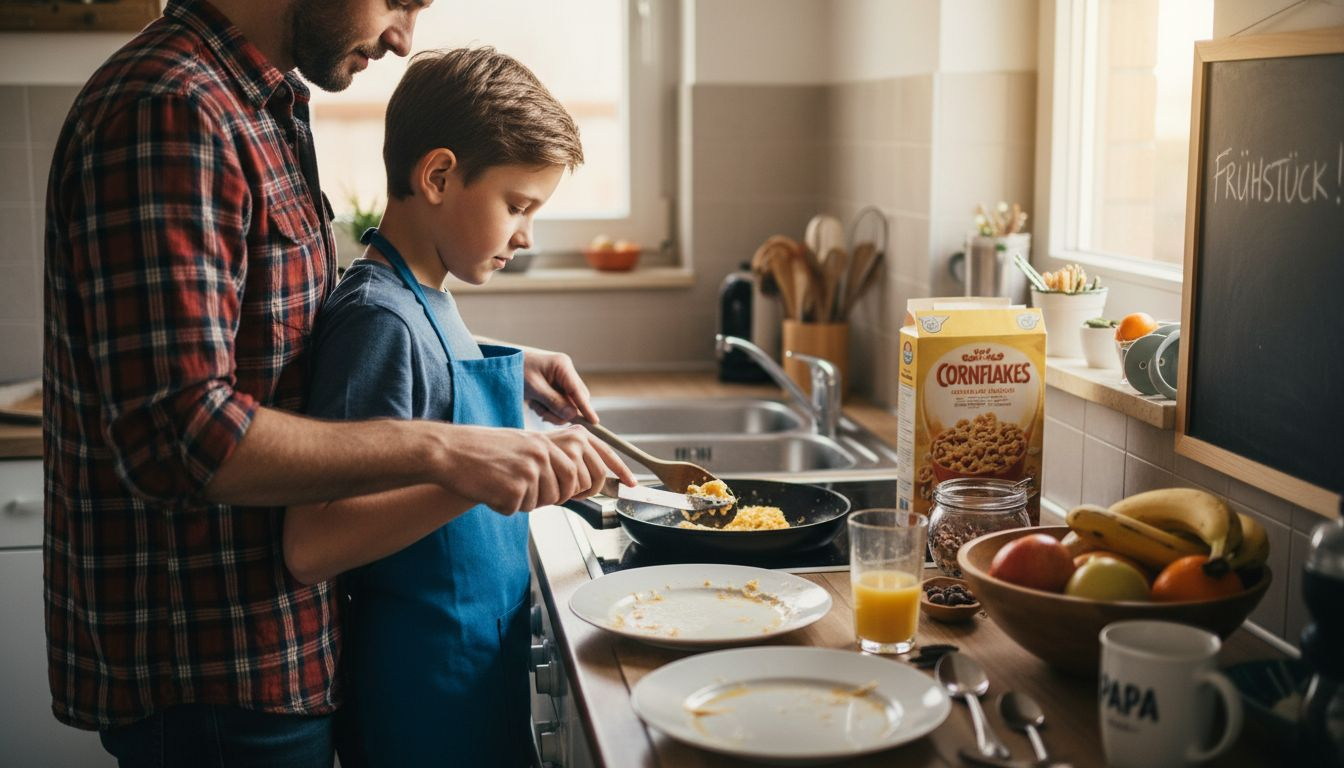
Family interactions shape child development in many ways. Children learn not only through direct instructions, but especially through daily observation and experience with their parents. They develop a deep understanding of communication patterns, emotional reactions, and conflict resolution strategies.
The mechanisms of behavioral adoption can be divided into several core aspects:
- Emotional Mirroring: Children unconsciously copy emotional reaction patterns
- Relationship Dynamics: Communication styles are directly adopted
- Conflict Resolution: Parental strategies serve as learning scenarios
- Moral Orientation: Values are conveyed through authentic behavior
Children learn more through what parents do than through what they say.
Studies show that social competence development depends heavily on parent-child relationships. This means parents are not just educators, but active shapers of children's personality development.
Pro Tip: Be aware that every action you take is a potential learning model for your child - live the values you want to teach your children.
Core Values, Attitudes and Their Transmission
The transmission of core values is a subtle and complex process that encompasses far more than mere verbal instruction. Parents are the first and most important role models who convey fundamental attitudes and moral orientations to children.
Family interactions shape value development in many ways. Timeless values such as friendship, respect, and helpfulness are instilled not through lectures, but through authentic role modeling. Children observe closely how parents communicate with each other and with others, how they solve conflicts, and how they face challenges.
The central mechanisms of value transmission can be divided into the following core aspects:
- Authenticity: Alignment between words and actions
- Emotional Communication: Felt values are conveyed more strongly than spoken ones
- Consistency: Consistent behavior creates foundations of trust
- Reflective Interaction: Thinking together about experiences and decisions
Children don't learn what we tell them, but what we model for them.
Family interactions support value internalization through positive shared experiences. This means that not only individual actions, but the overall emotional climate of the family is decisive for value development.
Pro Tip: Hold regular family reflections where you discuss values, experiences, and feelings together, giving your children deeper insight into your thought process.
Authenticity and Everyday Life: Being a Role Model Without Perfection
The idea of parents as perfect role models is an illusion. Authenticity doesn't mean being flawless, but handling the challenges of family life with honesty and reflection.
Parental media use and authenticity show that credibility is more important than artificial perfection. Children need parents who know their limits, admit mistakes, and lovingly handle shortcomings.
The essential aspects of authentic role modeling include:
- Self-Reflection: Honestly perceiving your own weaknesses and strengths
- Error Culture: Seeing mistakes as learning opportunities
- Transparency: Sharing feelings and thought processes
- Consistency: Creating alignment between words and actions
Perfect parents don't exist - authentic ones do.
New authority in family life means being present and respectful without exercising power. It's about acting consistently and lovingly despite imperfect circumstances.
Pro Tip: Practice self-compassion and show your children that perfection is not the goal, but continuous development and genuine effort.
Risks of Negative Role Models and Typical Mistakes
Not all parental behavior promotes children's healthy development. Negative role models can have long-term and profound effects on mental health and personality development.
Family conflict patterns influence child development in complex ways. Inconsistent parenting behavior, emotional neglect, and constant conflicts can cause significant emotional and social problems in children.
The typical risks of negative role models include:
- Overcontrol: Limiting children's autonomy
- Authoritarian Parenting Style: Suppressing initiative
- Emotional Manipulation: Creating guilt feelings
- Inconsistent Boundary Setting: Making children feel insecure
Negative role models often shape children more strongly than positive ones.
Helicopter parenting behavior blocks independence and can lead to long-term developmental obstacles. Overprotection and failure to let go prevent the natural unfolding of children's competencies.
Pro Tip: Regularly reflect on your parenting style and be willing to make changes that support your children's development.
The following table provides an overview of typical differences between positive and negative role models in everyday parenting:
| Aspect | Positive Role Model | Negative Role Model |
|---|---|---|
| Promoting Autonomy | Supports own decisions | Controls or patronizes |
| Value Transmission | Authentically models values | Speaks values but doesn't live them |
| Conflict Resolution | Uses constructive conversations | Reacts with pressure or withdrawal |
| Handling Mistakes | Openly admits mistakes and learns from them | Denies mistakes or blames others |
Strategies for Positive Role Modeling in Family Life
Family life is more than a sequence of tasks - it's a stage for positive role modeling. Every interaction, every reaction is an opportunity to teach children valuable life lessons.
Family-oriented prevention approaches show that sustainable education is based on emotional warmth and consistent care. It's not about perfection, but about authentic, loving encounters.
The most important strategies for positive role modeling include:
- Emotional Presence: Active listening and empathy
- Conflict Culture: Constructive and respectful resolution strategies
- Error Tolerance: Honestly admitting your own shortcomings
- Self-Reflection: Regularly questioning your own behavior
Children learn more through observation than through instruction.
Stable parent-child relationships are based on trust, respect, and the willingness to give children space for their own experiences. Authentic parenting means setting boundaries while promoting autonomy.
Pro Tip: Turn everyday situations into conscious learning moments by sharing your feelings, thoughts, and decision-making processes with your children.
The following table summarizes key strategies for effective positive role modeling in family life:
| Strategy | Goal | Example |
|---|---|---|
| Emotional Presence | Strengthens bonding and trust | Shared active listening |
| Self-Reflection | Development and willingness to learn | Regularly reflecting on your own reactions |
| Conflict Culture | Modeling respectful solutions | Calmly addressing disagreements |
| Error Tolerance | Role modeling how to handle mistakes | Admitting and discussing mistakes |