 edory
edory
A book written just for you personally? That sounds almost too good to be true. But nowadays, thousands of personalized books are sold every year in Switzerland that are tailored to couples, families, or children. The biggest surprise: personalized details today go far beyond just first names – they transform stories into emotional keepsakes that last forever.
Table of Contents
- What is a personalized partner book?
- Why are personalized books important for children?
- How does personalization work in books?
- What types of personalized books are there?
- Cultural and social impacts of personalized books
Quick Summary
| Takeaway | Explanation |
|---|---|
| Individual book design is unique | Personalized books create emotional connection and individual experiences for readers. |
| Increased reading motivation in children | Children identify with the protagonists, which increases their joy in reading. |
| Technology enables flexible design | Digital platforms offer simple customization of characters and stories. |
| Variety of personalized book formats | There are special formats for children and adults that promote emotional stories. |
| Cultural significance of personalized books | They support identity formation and reflect individual life experiences. |
What is a personalized partner book?
A personalized partner book refers to an innovative concept of individualized book design in which couples or families can create a custom-made book together. This type of book goes far beyond traditional reading experiences and creates a unique, emotional connection between those involved.
The basic idea of personalized books
The heart of a personalized partner book lies in the ability to integrate individual details and personal experiences directly into the narrative. Unlike standard books, names, appearance, and even specific life events of the protagonists are customized individually. Framily, a leading provider of personalized books, shows how such books can make stories vivid and meaningful.
Core features include:
- Individual name customization
- Personalized character representations
- Integration of personal experiences
- Unique design and layout
Technology and creativity
Modern personalized partner books use advanced technology to enable a seamless personalization experience. Digital platforms allow users to design their stories in just a few steps. From selecting character images to incorporating specific life moments, every book becomes a unique work of art.
The technology makes it possible to create complex narrative structures that are both personal and professionally designed. Personalization goes far beyond simple name changes – it creates a completely individual reading experience that evokes emotions and memories.
The goal is to create a book that can not only be read but also preserved as a precious keepsake.
Why are personalized books important for children?
Personalized books play a crucial role in child development by promoting learning, creativity, and emotional bonding in a unique and engaging way. They go far beyond traditional reading materials and create an individual learning experience that resonates deeply with children.
Promoting reading enthusiasm
By integrating personal details, books for children suddenly become much more interesting and relevant. When children find themselves as the main character in a story, their motivation and joy in reading increases enormously. According to a study by the educational research institute, children develop stronger initiative and curiosity through personalized learning experiences.
Key benefits include:
- Increased reading motivation
- Improved language development
- Strengthened self-esteem
- Individual learning support
Emotional and cognitive development
Personalized books not only support reading comprehension but also promote emotional intelligence in children. Identifying with the main character helps children understand and reflect on emotions. They learn empathy by putting themselves in different situations and taking on the perspective of the characters.
The creative design of such books encourages children to develop their own imagination and see themselves as active shapers of their stories. They learn that books are not just media for consumption but interactive experiences they can help create.
The goal is to provide children with a positive and inspiring reading experience that goes far beyond mere book study.
How does personalization work in books?
Book personalization is a complex process that combines modern technology, creativity, and user-centered design. It makes it possible to create individual stories that are precisely tailored to the needs and interests of readers.
Technological foundations
The personalization process is based on advanced digital platforms that allow users to customize their books. The technology enables dynamic adaptation of text content, character design, and visual elements. A study by the Northwestern Switzerland University of Applied Sciences shows how such personalization features can revolutionize user experience.
The most important technological components include:
The following table presents the most important technological components used in the creation process of personalized books.
| Technological component | Function in the personalization process |
|---|---|
| Interactive input forms | Users enter personal details for customization |
| Dynamic graphic generators | Creation of individual character images and layouts |
| Text adaptation algorithms | Automated adaptation of story texts |
| Automated layout systems | Dynamic page layout and design for each user |
- Interactive input forms
- Dynamic graphic generators
- Text adaptation algorithms
- Automated layout systems
Individual design options
Users can integrate various personal elements into their books. This ranges from basic customizations like the name and appearance of the main character to more complex personalizations such as specific life events or individual interests.
Important personalization levels:
- Name change of the main character
- Adjustment of character traits
- Integration of personal photos
- Selection of thematic focal points
The goal is to create a reading experience that is not only informative but also emotionally meaningful. By combining technology and creativity, books become personalized works of art that bring stories to life and make them personal.
What types of personalized books are there?
The world of personalized books is diverse and includes various categories that address different needs and interests. From child-friendly adventures to emotional keepsakes, this book format offers a wide range of possibilities.
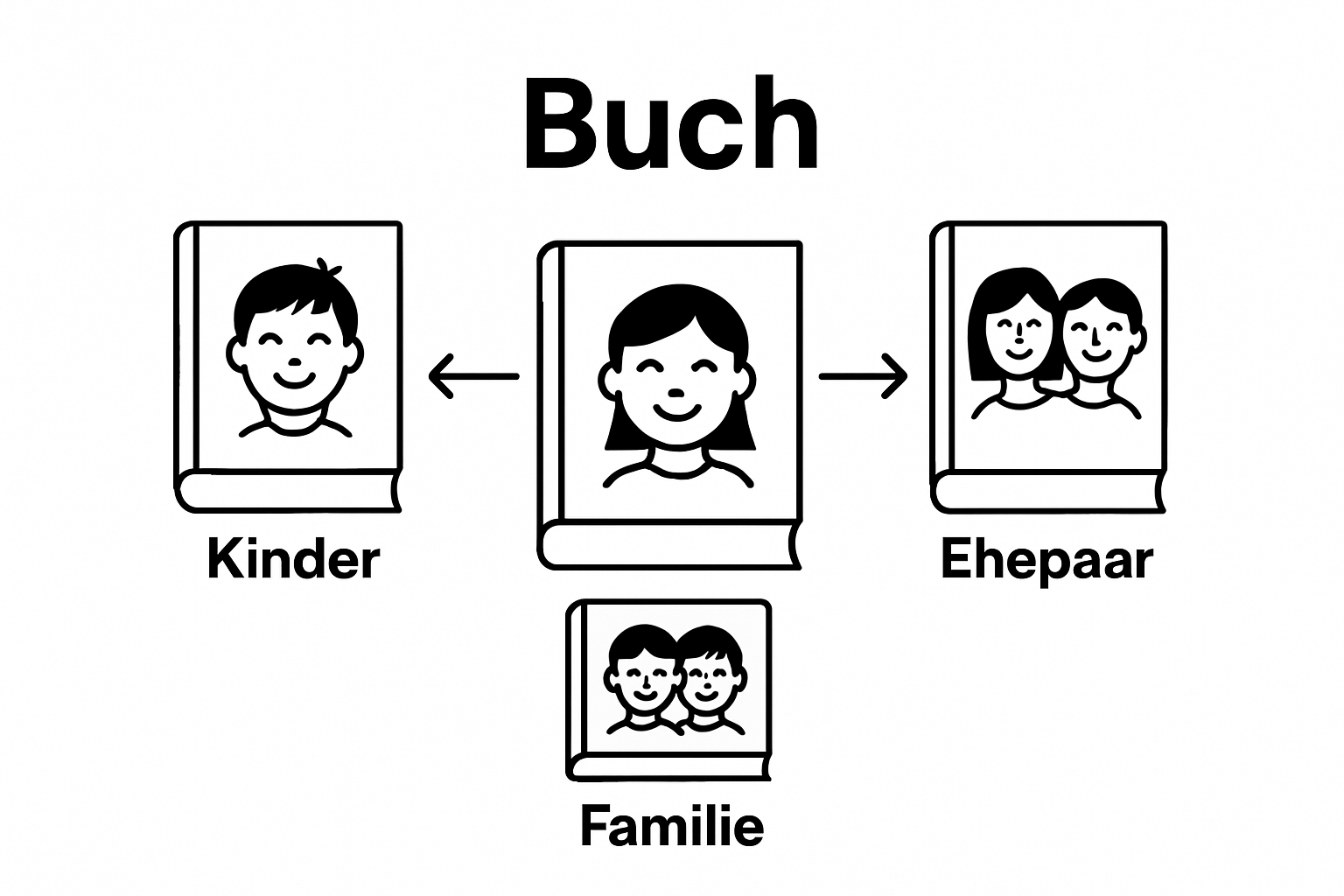
Children's and family books
Children's books form the largest and most popular category of personalized books. They allow children to see themselves as the main character in exciting stories. According to a usage study, personalized content significantly increases children's interaction and motivation.
Examples of children's book variants:
- Fairy tale adaptations with the child as protagonist
- Learning books with individual character names
- Adventure stories with personal elements
- Education-oriented books with customized learning content
Adult and relationship books
Personalized book formats also exist for adults, often focusing on emotional stories and relationship experiences. These books serve as unique gifts and keepsakes. They can document love stories, family histories, or shared travel experiences.
Typical variants include:
- Romantic love stories for couples
- Family chronicles and generational stories
- Biographical books with personal documentation
- Travel journals with individual experiences
Personalization goes far beyond simple name changes and creates a profound, individual reading experience that brings emotions and memories to life.
Below you will find a comparison table that contrasts the main features and personalization options of children's and adult books.
| Category | Customizable features | Typical content | Target audience |
|---|---|---|---|
| Children's book | Child's name, appearance, personal photos, individual interests | Fairy tales, adventures, learning content | Children, families |
| Adult or relationship book | Partner names, important life events, personal photos | Love stories, family chronicles, travel reports | Adults, couples |
Cultural and social impacts of personalized books
Personalized books go far beyond simple entertainment and are developing into a significant cultural and social phenomenon. They influence not only individual reading habits but also shape societal communication and education structures.
Identity formation and representation
Personalized books enable a new dimension of self-perception and identity development. Children and adults can experience themselves for the first time as active protagonists of their own stories. According to a cultural science study, such individualized media formats can challenge traditional narrative structures and forms of representation.
Key aspects of identity formation include:
- Strengthening self-esteem
- Promoting empathy and perspective-taking
- Expanding cultural narratives
- Deconstructing stereotypical representations
Education and social development
Personalized books have the potential to fundamentally transform educational processes. They enable an individualized learning environment tailored to the specific needs and interests of children. Personalization can be understood as an instrument for democratizing education.
Societal impacts include:
- Inclusion of diverse life experiences
- Promotion of critical thinking
- Support for individual learning pathways
- Strengthening educational equity
The development of personalized books reflects a larger societal trend toward individualization and personalized experience. It shows how technology and creativity work together to redefine traditional cultural practices.