 edory
edory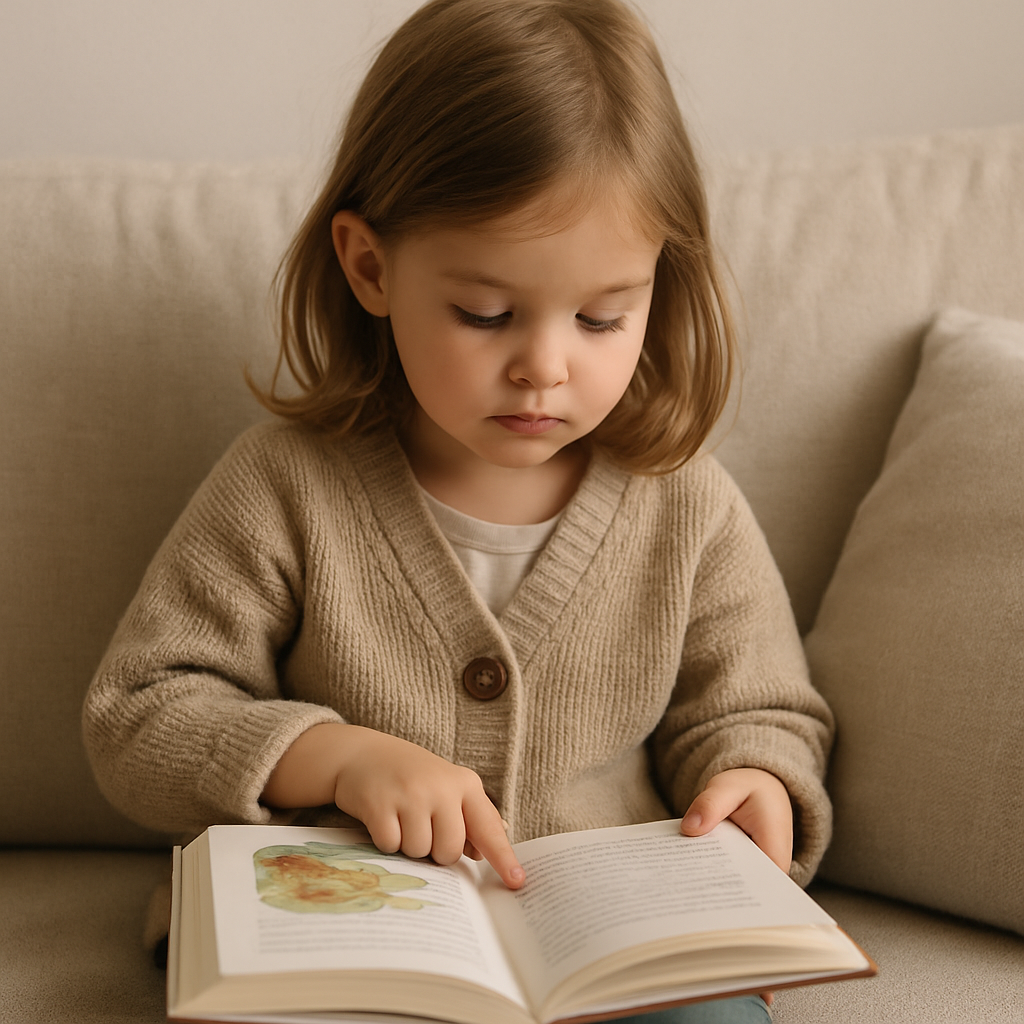
Short Children's Stories – The Most Beautiful Short Stories for Kids
Short children's stories accompany many families through their daily lives. They are ideal for a small reading session in the afternoon, a quiet activity in between, or as a ritual in the evening before bedtime. In this article, you will learn everything worth knowing about short children's stories: From the benefits and themes to suitable age groups and tips for writing your own. You will receive practical advice, concrete examples, and answers to frequently asked questions.
What are short children's stories?
Definition and meaning
Short children's stories are narrative texts for children that are characterized by limited length. Often, such stories do not exceed one or a few pages. Essential features are a clear plot, simple language, and usually a positive message. They can be presented in book form, online, as an audiobook, or told orally. The stories specifically appeal to the interests and developmental level of children of different ages.
Why are short stories important for children?
Children are naturally curious and enjoy learning through stories. However, concentration skills vary greatly during childhood – especially in younger children. Short children's stories adapt to children's attention span and make it possible to follow a topic from beginning to end without becoming overwhelmed. In addition, they make regular reading aloud easier regardless of time and situation – an important aspect for language acquisition, imagination, and emotional development.
Benefits of short children's stories
Promoting attention span
Young children can rarely concentrate on a story for an extended period. Short children's stories address this directly: They offer quick plot progression with manageable characters and turns. Regular reading aloud promotes the ability to listen, follow along, and stay attentive – fundamental skills for later learning.
Ideal stories for in between
Not always is there time for extended reading rituals in everyday life. Short children's stories are particularly suitable for creating small "reading breaks" – for example, while waiting for food, during a train ride, or before bedtime. They are told concisely, yet still bring excitement, humor, or interesting information, and can be integrated into the daily routine at any time with little effort.
The best themes for short children's stories
Animals and nature
Stories about animals are among the most popular short children's stories. They allow playful access to nature and stimulate imagination. Whether the adventures of a small hedgehog, life in the forest, or experiences on the farm – animals appeal to all age groups. Often, they also convey a small lesson about solidarity, helpfulness, or environmental protection.
Friendship and family
Social themes such as friendship, family, or helpfulness are emotional anchors in children's daily lives. Short children's stories that address these themes help children understand roles, categorize conflicts, and reflect on their own feelings. Examples include stories about sharing, forgiving, or making a new friend in kindergarten.
Adventure and fantasy
Children love immersing themselves in foreign worlds. Imaginative adventures in which brave children find pirate treasure, meet a magical creature, or go on a time travel, excite and promote creativity. Such stories inspire dreaming and provide impulses for free play.
Popular short children's stories for reading aloud
Classics of short children's stories
Many classic children's book authors have written small, self-contained stories that are still popular today. Examples:
- "The Little Hawelmann" (Theodor Storm): A little boy travels through the city at night in his bed.
- "The Three Little Pigs": The pigs build themselves houses until the wolf comes.
- Fables by Aesop: Short animal stories with a clear moral.
Modern short children's stories
Over time, many new short children's stories have emerged that address the most diverse topics:
- "The Little WE" (Daniela Kunkel): About solidarity and friendship in daycare and school.
- "Zippel, the Really True Castle Ghost" (Alex Rühle): Funny adventures of a little ghost.
- Numerous online platforms regularly publish short, current children's stories on modern topics such as diversity or the environment.
Short children's stories for different age groups
Stories for toddlers (2-4 years)
For this age group, particularly simple stories with recurring elements, onomatopoeia, and familiar characters are suitable. Animals, everyday situations, or small surprises are the focus. The texts should not contain long sentences or complex plot lines.
Example:
The little bear searches for his friend. In the garden, he meets the duck, the mouse, and finally the frog. In the end, they all find each other at the pond and celebrate a little feast.
Stories for kindergarten children (4-6 years)
Kindergarten children already understand more complex relationships and love small adventures. Short stories can contain small conflicts (e.g., arguments and reconciliation) or first fantasy elements.
Example:
Marie and the Magic Star: Marie finds a sparkling stone and experiences a day full of wonders until the magic star glows softly in her doll's bed in the evening.
Stories for school children (6-8 years)
For school children, short stories can be a bit more challenging. The characters experience adventures, encounter small challenges, and develop further. The ending is usually positive and motivating.
Example:
Lucas and the Invisible Pet: Lucas discovers an invisible creature that only he can see. The two help each other through the first exciting school day.
Short children's stories for falling asleep
Why soothing stories in the evening are important
Reading a children's story aloud as a ritual before falling asleep creates a sense of security. Calm stories with a friendly ending and that keep everyday worries at bay promote good sleep. Without frightening content, children come to rest, can process what they've heard, and fall asleep more easily.
Examples of short bedtime stories
- The little moon bear gently sways on his cloud and visits his friends in the starry sky in his dreams.
- Lea's dream of the magic garden begins when a colorful flower invites her on a dream journey – everything is peaceful and quiet.
- Fox Fritz counts the fireflies until he falls asleep – and takes the children with him into a quiet night.
Tips for reading short children's stories aloud
How to make reading exciting
While reading aloud, small gestures and disguised voices can bring the story to life. Ask in between what the child thinks or how the story might continue. Pauses, emphasis, and varying speaking speeds help maintain attention and convey emotions.
Reading tips for parents and educators
Checklist for successful reading aloud of short children's stories:
1. Create a calm atmosphere
Turn off the television and phone, choose a cozy place.
2. Select the story beforehand
Briefly check the content to see if the theme and length are appropriate.
3. Speak slowly and clearly
The child can follow the plot better this way.
4. Make eye contact
The connection remains, even if the child is already tired.
5. Allow for conversations
Leave room for questions or thoughts after the story.
6. Allow repetitions
Children like to hear favorite stories more often – it provides security.
Writing your own short children's stories
Creative tips for self-written stories
If you want to write a short story for your child or group yourself, you can use simple stylistic devices:
- Address everyday situations from the child's life
- Choose animals, fantasy characters, or favorite figures as the main character
- Build in a small challenge or task
- Use dialogue and simple sentences
- Provide a positive, calming ending
Simple structure for your own stories
Step-by-step instructions for writing a short children's story:
1. Determine the main character
Human, animal, or fantasy creature.
2. Establish the setting
In the child's room, in the forest, in outer space, etc.
3. Include a small problem or adventure
For example: friend looks for something, animal helps the group, a puzzle is solved.
4. Find a solution
Main character and friends find a solution together.
5. Concluding, reconciling ending
The characters are satisfied, celebrate, or return safely.
Example sketch:
A little dog loses his ball. In his search, he meets other animals. Together they discover it buried in the garden and celebrate their find.
FAQ – Frequently asked questions about short children's stories
What are the advantages of short children's stories over long ones?
Short children's stories are manageable and better suited to the still short attention span of many children. They are easy to integrate into everyday life, do not overwhelm either child or reader, and allow for quick success experiences.
What age group is best suited for short children's stories?
They are particularly suitable for children aged 2 to 8 years. For older children and teenagers, longer stories or novels are usually more exciting and appropriate.
Are there short children's stories available for free on the Internet?
Yes, numerous websites, libraries, and public institutions provide short children's stories free of charge. Many audiobook platforms also offer a selection.
How long should a short children's story ideally be?
The ideal length is between half a page and a maximum of three pages – depending on the child's age, usually between 100 and 800 words.
Can I read my child a new short story every evening?
Yes, that is recommended. Variety stimulates imagination and language comprehension. However, it is equally valuable to repeat favorite stories regularly.
Are there apps or audiobooks with short children's stories?
Yes, many apps offer a large selection of short children's stories as text or audiobook – often sorted by age group and often free of charge. Streaming services and libraries also offer corresponding options.
Conclusion
Short children's stories are a valuable part of child development. They can be flexibly integrated into everyday life, promoting language, imagination, and social behavior. Whether at home, in kindergarten, or on the go – short stories captivate, soothe, and bring parents and children closer together. With the right themes and a little creativity, every reading session can become a special moment.