 edory
edory
Children love stories and often seem to get completely absorbed in them. Surprisingly, it's not just about fantasy and fun. Studies show that stories can sustainably support children's linguistic, social, and even cognitive development. Words, feelings, and important values are conveyed almost incidentally. This makes stories the most powerful learning tool that parents often don't consciously use.
Table of Contents
- What does children's education through stories mean?
- Why Are Stories Important for Children's Education?
- How Do Stories Promote Linguistic and Social Development?
- What Types of Stories Are Particularly Educational for Children?
- How Can Parents and Grandparents Use Stories Effectively?
Quick Summary
| Insight | Explanation |
|---|---|
| Stories promote linguistic development. | Children expand their vocabulary and learn language structures through listening. |
| Narratives help with emotional intelligence. | Stories support children in recognizing and expressing feelings. |
| Identification with characters teaches social values. | Through stories, children learn empathy and moral concepts. |
| Storytelling transforms learning into an interactive experience. | It enables children to grasp theoretical concepts through narrative contexts. |
| Parents should use interactive storytelling. | Questions and facial expressions promote understanding and emotional bonding. |
What does children's education through stories mean?
Stories are more than just entertaining narratives. They are a powerful tool for children's education and development. Child-appropriate educational stories combine entertainment with targeted knowledge transfer and emotional development.
The Fundamentals of Children's Education Through Stories
Stories form a unique bridge between entertainment and learning. They enable children to understand complex concepts and emotions in a playful and accessible way. According to UNICEF research, stories support the development of language skills, socio-emotional competencies, and cognitive abilities.
The key elements of children's education through stories include:
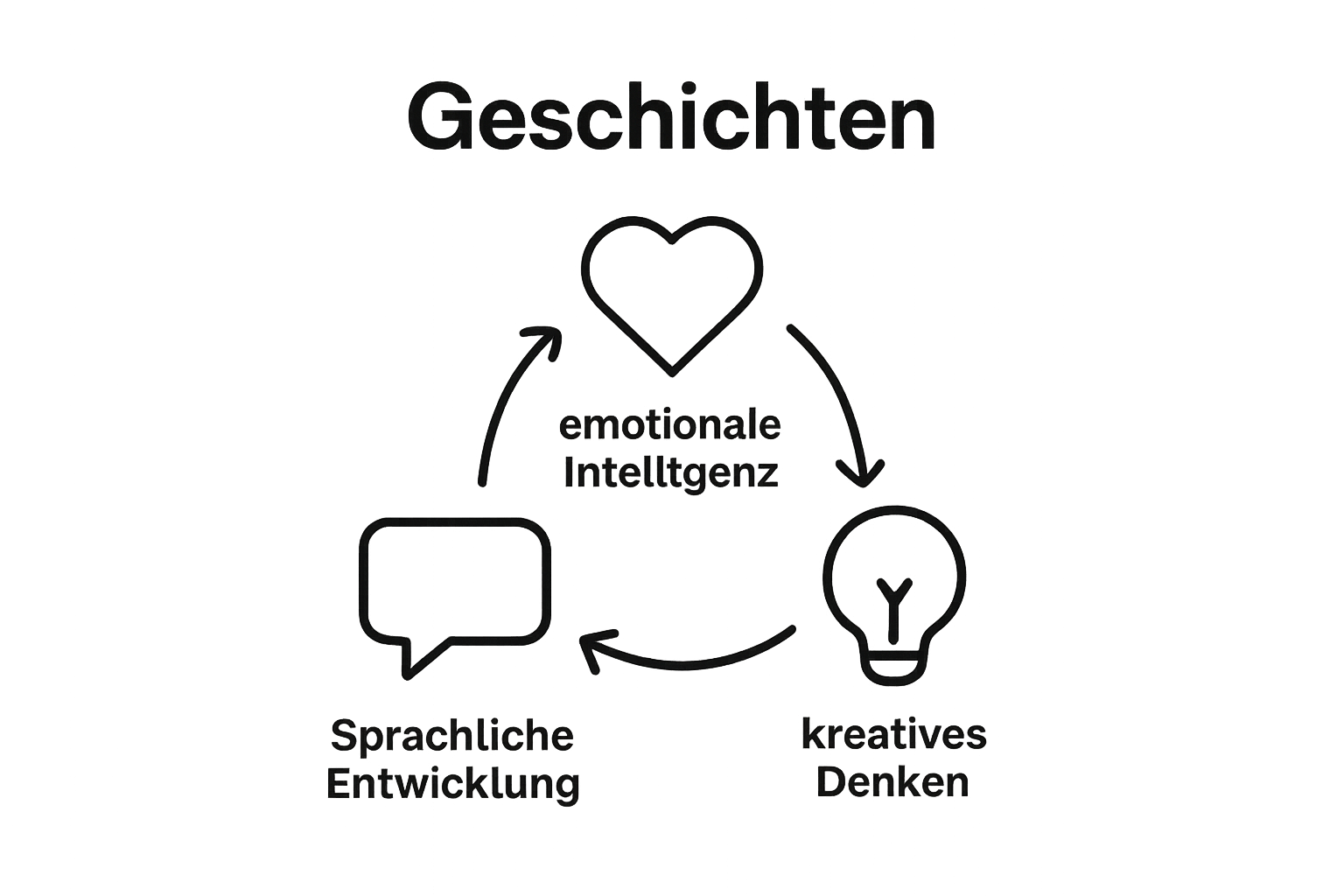
- Linguistic Development: Children expand their vocabulary and learn language structures
- Emotional Intelligence: Stories help in understanding and expressing feelings
- Creative Thinking: Narratives promote imagination and problem-solving skills
How Stories Transform Learning
Stories work like a magical learning tool. They create a safe space where children can explore complex life situations. By identifying with characters, children learn social values, empathy, and moral concepts. The narrative structure helps them understand connections and develop logical thinking.
The educational value of stories goes far beyond mere entertainment. They are a holistic development instrument that supports children emotionally, cognitively, and socially, helping them better understand and interpret the world around them.
Why Are Stories Important for Children's Education?
Stories are not just entertainment, but a powerful educational tool that helps children understand and learn about the world. Children learn through stories in a unique way that goes far beyond traditional learning methods.
The Psychological Significance of Stories
Stories engage children on an emotional and cognitive level. According to Stanford University research, narrative experiences support mental development on multiple levels. They help children process complex feelings, understand social dynamics, and form their own identity.
The key psychological benefits of stories include:
- Emotional Regulation: Children learn to recognize and understand feelings
- Empathy Development: Through experiencing different perspectives
- Social Intelligence: Understanding of interpersonal relationships
Stories as an Educational Tool
Stories transform learning from an abstract process into a vibrant, interactive experience. They enable children to understand theoretical concepts through narrative contexts. Complex topics like morality, cultural understanding, and scientific principles become more accessible and memorable through stories.
The power of stories lies in their ability to emotionally charge information. They create connections between knowledge and personal experience, making learning not only more effective but also more sustainable. Children retain information better when it is conveyed emotionally and narratively.
How Do Stories Promote Linguistic and Social Development?
Stories are far more than simple narratives. They are a crucial instrument for promoting children's linguistic and social development. Storytelling for parents demonstrates how powerful narrative experiences can be in children's education.
Linguistic Development Through Storytelling
According to current research, stories support language development on multiple levels. Through regular listening, children expand their vocabulary, learn more complex sentence structures, and improve their communication skills.
The key linguistic benefits of stories include:
- Vocabulary Expansion: Children learn new words in meaningful contexts
- Grammatical Understanding: Unconscious learning of language structures
- Communicative Competence: Improved expression abilities
Social Development Through Narrative Experiences
Stories are a social learning tool that helps children understand complex interpersonal dynamics. By identifying with characters, children learn empathy, perspective-taking, and social norms. They develop a deeper understanding of feelings, motivations, and interpersonal relationships.
These narrative experiences enable children to playfully explore social situations. They learn conflict resolution, cooperation, and emotional intelligence in ways that formal teaching methods cannot provide.
The following table shows which linguistic and social competencies are particularly promoted in children through storytelling.
| Competency | Description |
|---|---|
| Vocabulary Expansion | Children learn new words in meaningful contexts |
| Language Structures | Unconscious understanding and application of grammar |
| Communicative Ability | Improvement of expression and speaking skills |
| Empathy Development | Ability to put oneself in others' positions |
| Social Understanding | Understanding of relationships and social rules |
| Emotional Intelligence | Dealing with own and others' feelings |
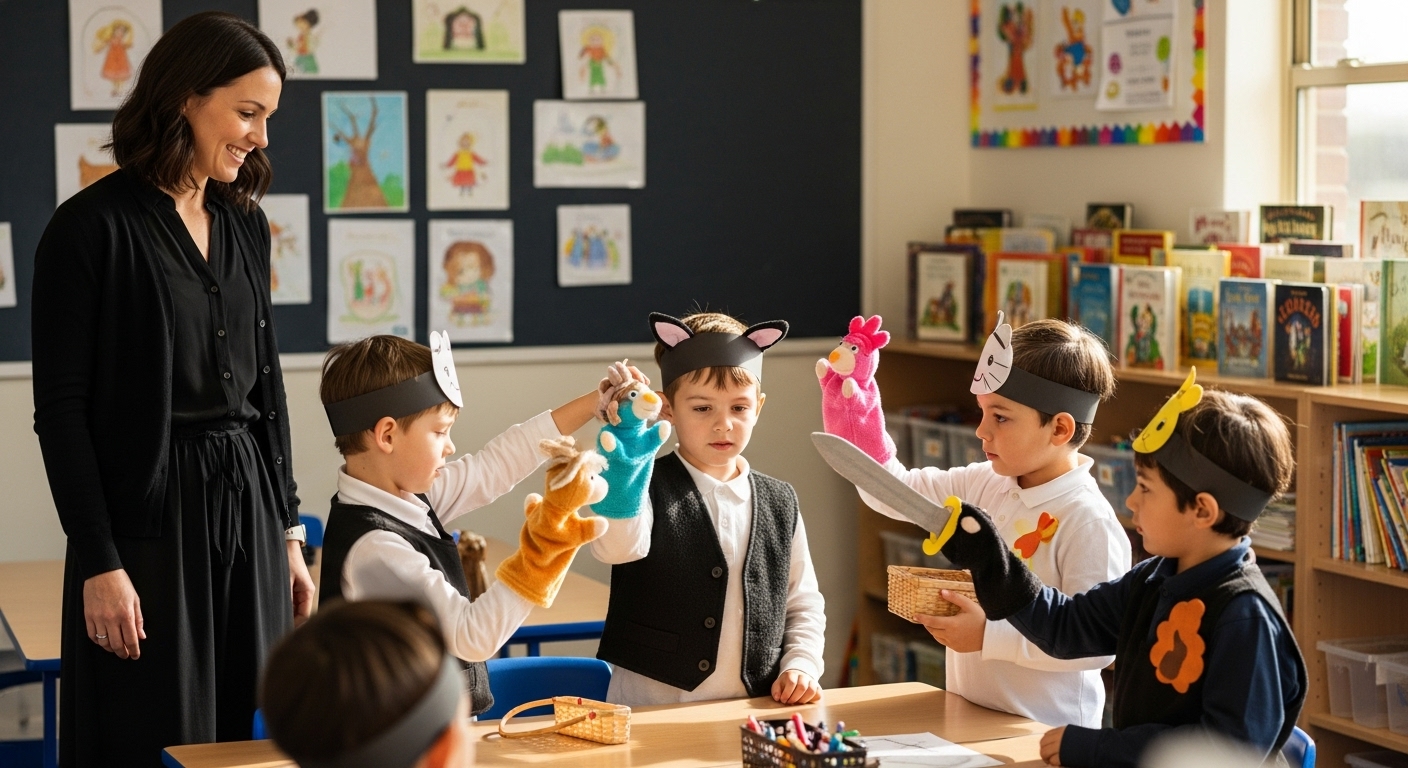 Stories create a safe space where children can experimentally explore social concepts and behaviors.
What Types of Stories Are Particularly Educational for Children?
Not all stories are equally valuable for children's education. Some narratives have special potential to promote learning and development. Fantasy stories in kindergarten show how creative narratives can inspire and educate children.
Moral and Value Stories
Stories that deal with moral dilemmas and ethical principles are particularly valuable. They help children understand complex social concepts and develop moral thinking. By identifying with characters who face difficult decisions, children learn important values such as honesty, compassion, and respect.
The core elements of moral stories include:
- Character Development: Figures who overcome moral challenges
- Consequences of Actions: Understanding ethical decisions
- Empathetic Perspectives: Sensitivity to different situations
Scientific and Discovery Stories
According to research findings, stories that convey science and discoveries in a playful way are particularly effective for children. They spark curiosity, promote critical thinking, and make complex concepts accessible. Narratives about inventors, explorers, or natural phenomena inspire children to explore and understand the world.
These stories transform dry scientific facts into exciting adventures. They show children that learning can be an exciting endeavor that expands boundaries and opens new perspectives.
This table compares the characteristics and educational effects of moral and scientific discovery stories for children.
| Story Type | Core Elements | Educational Effects |
|---|---|---|
| Moral Stories | Dilemmas, ethical principles, character development | Promotion of empathy, value understanding, moral development |
| Scientific Stories | Discoveries, problem-solving, adventures | Promotion of curiosity, critical thinking, interest in science |
How Can Parents and Grandparents Use Stories Effectively?
The art of storytelling is a powerful tool for families. Stories from around the world can open new perspectives for children and significantly support their development. Parents and grandparents play a central role in using stories as an educational tool.
Interactive Storytelling as a Learning Method
According to research findings, shared storytelling experiences are more than just entertainment. It is an active learning process that emotionally and cognitively stimulates children. What matters is not only the content but also how the story is told.
Effective storytelling strategies include: