 edory
edory
Children love stories that spark their imagination. Yet classic books often create only limited closeness to young readers. Surprisingly, personalized stories have been proven to significantly increase children's reading motivation and self-esteem. It becomes much more exciting when modern technology personally addresses each child's interests and makes every adventure unique.
Table of Contents
- What are personalized stories and how do they work?
- Why are personalized stories important for child development?
- How do personalized stories influence learning and imagination?
- What benefits do personalized stories offer for parents and children?
- How can personalized stories be integrated into family life?
Quick Overview
| Takeaway | Explanation |
|---|---|
| Personalized stories increase reading motivation. | Individually designed narratives promote children's interest in reading and make it more entertaining. |
| Emotional development is strengthened. | Children reflect on their feelings and identify with stories, which increases their self-esteem. |
| Cognitive abilities are promoted. | Through content adaptation, children's text comprehension and critical thinking improve significantly. |
| Parents can actively participate. | Personalized stories allow parents to target educational content to their children's interests. |
| Integration into family life is flexible. | Using personalized stories easily fits into existing family reading habits. |
What are personalized stories and how do they work?
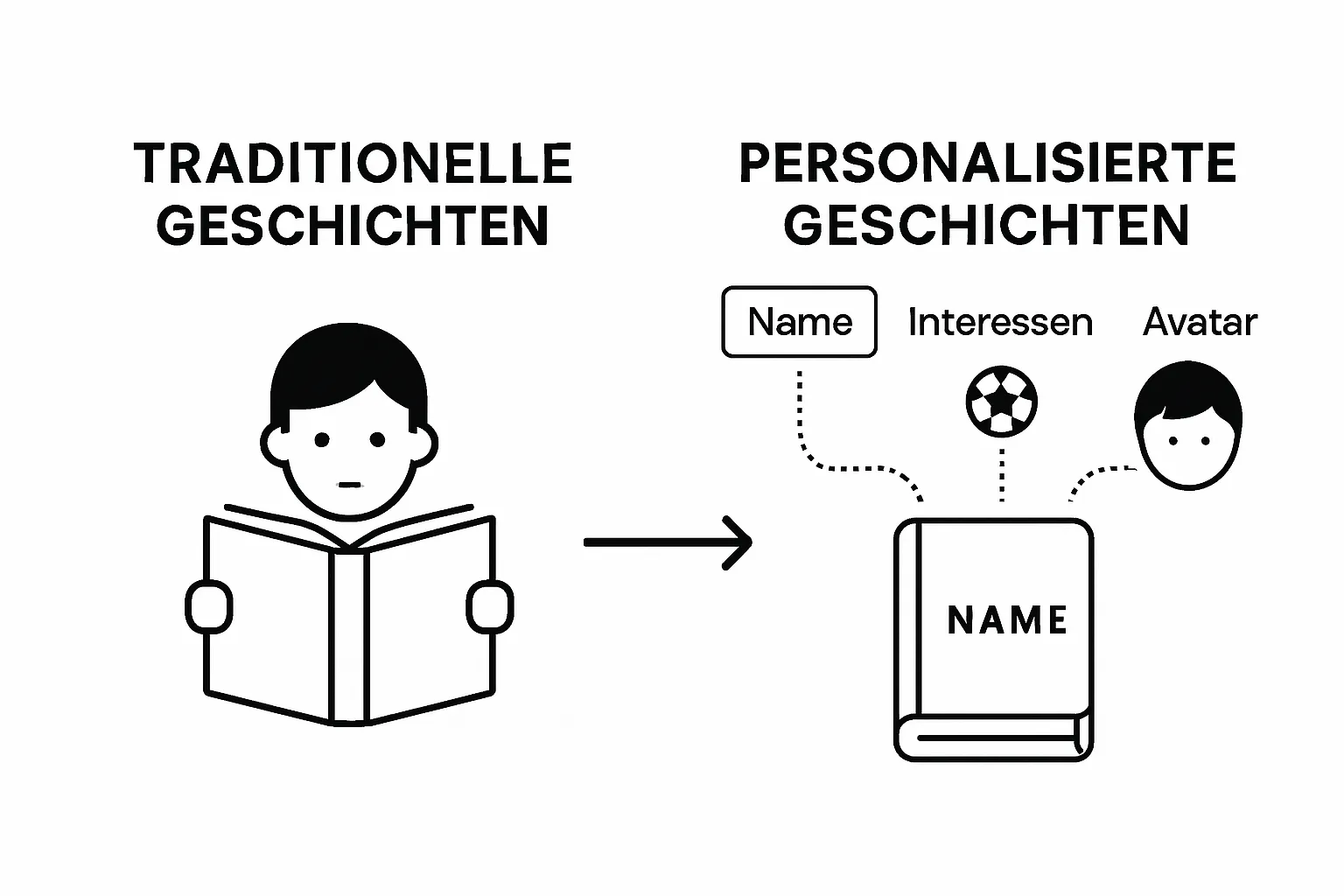
Personalized stories are an innovative form of storytelling specifically tailored to a child's individual needs, interests, and experiences. Unlike traditional stories, these narratives are dynamically generated to create a unique and highly relevant reading experience.
The Basics of Personalized Stories
The concept is based on the idea that children learn better and identify more strongly with content that reflects their own world. Pedagogical research from the University of Munich shows that personalized stories offer several important advantages:
- Increased reading motivation
- Improved cognitive development
- Strengthened self-esteem
By integrating personal details such as a child's name, hometown, or interests, stories become an interactive experience that goes far beyond traditional reading experiences.
Technology Behind Personalized Stories
Modern technologies, particularly artificial intelligence, play a crucial role in creating personalized stories. Algorithms analyze available information and generate tailored narratives in seconds. A study by the Fraunhofer Institute demonstrates how AI systems can dynamically adapt complex story structures.
The process includes several steps: data collection, contextual analysis, creative generation, and adaptation. This technology makes it possible to create stories that are not only entertaining but also educationally focused and age-appropriate.
Personalized stories represent a fascinating intersection between technology, education, and child development. They offer a unique way to tailor reading enjoyment and learning processes to each child's needs.
Why are personalized stories important for child development?
Personalized stories are more than just entertaining narratives. They play a crucial role in holistic child development and offer much more than traditional reading experiences. These tailored narratives support children on emotional, cognitive, and social levels.
Emotional Development and Self-Understanding
Through personalized stories, children learn to understand themselves better and reflect on their feelings. Psychological research from the University of Heidelberg shows that stories considering individual experiences and identities strengthen children's self-esteem and emotional intelligence:
- Promotion of self-acceptance
- Development of empathy
- Strengthening of self-confidence
Personal address and integration of a child's own characteristics help them recognize themselves in the story and experience their own significance.
Cognitive Development and Learning Motivation
Personalized stories are a powerful educational tool for promoting cognitive abilities. By customizing stories to individual children, they increase interest and motivation to learn. A study by the Max Planck Institute proves that personalized content significantly improves children's attention and text comprehension.
The complexity and adaptability of these stories make it possible to convey learning content in a playful and age-appropriate manner. They support not only language development and reading skills but also promote critical thinking and problem-solving abilities.
Personalized stories are therefore much more than an entertainment form. Read more about the importance of personalized books and discover how they help children develop and strengthen their individual potential.
How do personalized stories influence learning and imagination?
Personalized stories are a powerful tool that goes far beyond traditional educational methods. They transform the learning process by actively engaging children in their own educational journey and stimulating their imagination in unique ways.
The Role of Imagination
Developmental psychology research from the University of Hamburg shows that personalized stories activate children's imagination in a special way. Children are no longer just passive listeners but active participants in their own narrative worlds:
- Strengthening creative thinking processes
- Expanding mental imagination
- Promoting problem-solving skills
When children experience themselves as protagonists, entirely new mental dimensions open up to them. The emotional connection to the story makes the learning process an immersive experience.
Cognitive Stimulation Through Personalization
The personalization process acts like a cognitive catalyst. A study by the Leibniz Center for Educational Research illustrates how individualized narratives optimize neural processing in children.
By integrating personal elements, abstract concepts become tangible and understandable. The stories function like custom cognitive maps that help children structure and understand complex information.
Learn more about personalized learning strategies and discover how modern educational technologies are revolutionizing learning. Personalized stories are more than entertainment – they are keys to individual development.
What benefits do personalized stories offer for parents and children?
Personalized stories create a unique bridge between parental wishes and child development. They offer not only an innovative educational form but also strengthen the emotional bond between parents and children through shared interactive learning experiences.
Below you will find a table overview showing how personalized stories compare to traditional stories and what unique benefits they offer children.
| Aspect | Personalized Stories | Traditional Stories |
|---|---|---|
| Inclusion of personal characteristics | Yes, customized to name, interests, and life world | No, generic characters and plot |
| Promotion of reading motivation | Very high, as identification is present | Moderate, depending on topic |
| Impact on self-esteem | Strengthens confidence through recognition | Lesser impact |
| Cognitive development | Optimized promotion through individual adaptation | Standardized, less individual |
| Emotional engagement | High emotional connection through personal address | Moderate emotional connection |
| Flexibility and adaptability | Dynamic, adaptable anytime | Fixed, no individualization |
Benefits for Children
Pedagogical studies from the University of Zurich confirm the transformative benefits of personalized stories for children:
- Significant increase in reading enjoyment
- Improvement in text comprehension
- Individual adaptation to learning needs
Children experience a deeper connection to stories when they themselves are part of the narrative. This identification not only promotes motivation but also supports emotional and cognitive development.
Parent Perspective
For parents, personalized stories represent a revolutionary approach to education and entertainment. Research findings from the German Youth Institute show that these stories help parents actively participate in their children's learning journey.
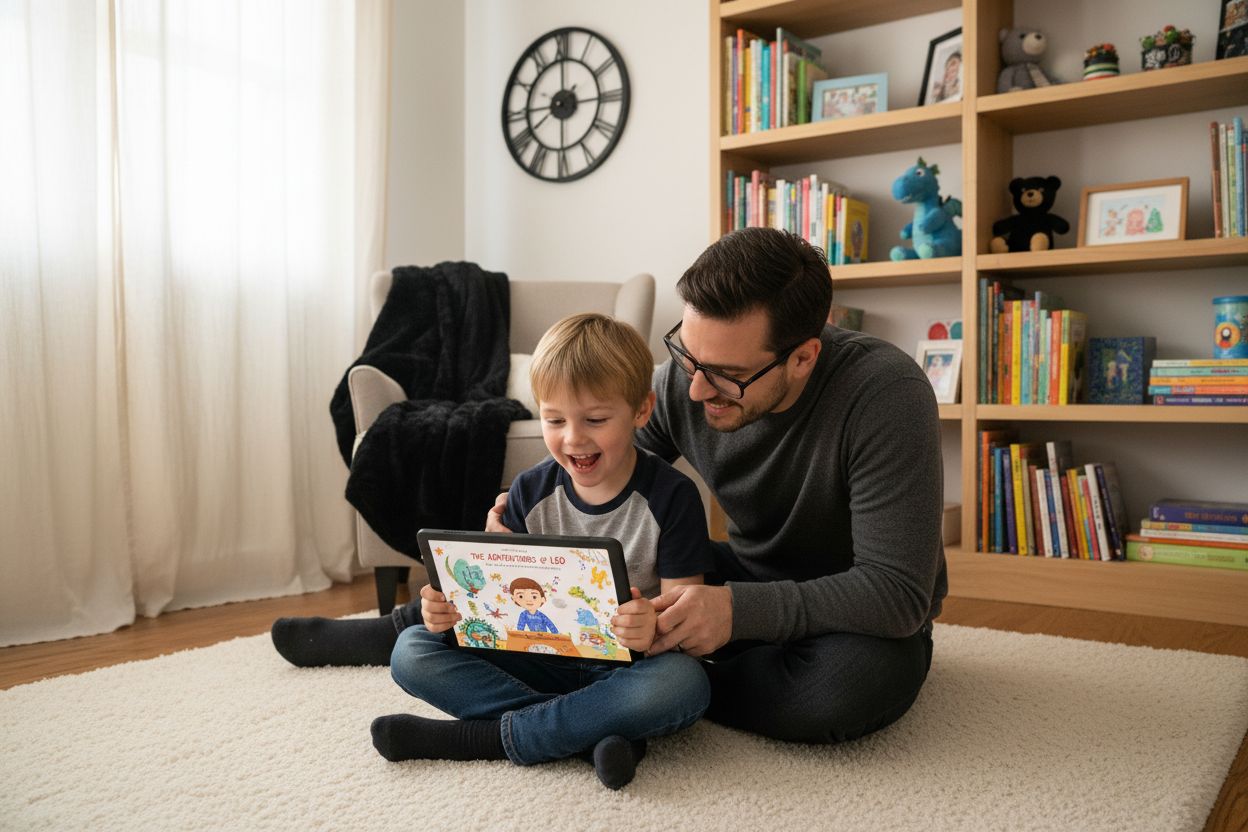
The technology enables parents to generate customized educational content precisely tailored to their children's individual interests and developmental stages. They can control learning topics, difficulty levels, and educational goals individually.
Discover more about personalized learning concepts and learn how modern technologies are redefining education. Personalized stories are more than a trend – they are a groundbreaking tool for holistic child development.
How can personalized stories be integrated into family life?
Integrating personalized stories into family life is a creative and effective way to seamlessly combine education and entertainment. It requires no complicated changes to existing family routines but offers flexible approaches for different life situations.
Daily Reading Times and Rituals
Family psychology research from the University of Freiburg emphasizes the importance of regular reading times for child development. Personalized stories can make these moments even more meaningful:
- Evening reading rituals
- Shared interaction during reading
- Flexible scheduling according to family rhythm
Parents can strategically incorporate personalized stories into existing family routines, such as bedtime stories or weekend projects.
Technological Integration
Modern digital technologies greatly facilitate the integration of personalized stories. A study by the Institute for Media Research outlines various integration options:
Digital platforms make it easy for families to generate stories spontaneously. Whether during a car ride, in waiting times, or as a shared evening project – personalized stories adapt flexibly to family life.
Discover more strategies for family integration and learn how modern technologies can enrich family time. Personalized stories are more than an entertainment form – they are an interactive educational experience.