 edory
edory
Artificial Intelligence is considered one of the most exciting inventions of our time and is already changing how children learn and how families shape their everyday lives. It's hard to believe, but over 90 percent of surveyed parents already use AI-powered applications to support learning and household tasks. What many don't expect: it's not tech enthusiasts who benefit the most, but rather families with little time who experience how this technology makes education more personal, faster, and more accessible.
Table of Contents
- What is artificial intelligence and how does it work?
- Why is artificial intelligence important in education?
- How does artificial intelligence influence children's learning?
- What challenges and opportunities does artificial intelligence offer in schools?
- Future developments in artificial intelligence education and their significance
Quick Summary
| Takeaway | Explanation |
|---|---|
| AI enables personalized learning | Artificial intelligence adapts learning content to individual progress and student needs. |
| Real-time feedback improves the learning process | Students receive immediate feedback on their performance, making learning more efficient. |
| AI promotes creative problem-solving skills | Through interactive learning environments, AI supports the development of critical and creative thinking. |
| Digital transformation requires infrastructure | Schools must significantly improve digital equipment and teachers' technical competencies. |
| Ethical aspects are important | Handling AI should consider data protection and equal opportunity to prevent negative impacts. |
What is artificial intelligence and how does it work?
Artificial Intelligence (AI) is a revolutionary technology that enables computers and machines to simulate human-like thinking processes. At its core, it's about developing systems that can process information, learn, and make independent decisions.
The basics of artificial intelligence
The functionality of AI is based on complex algorithms and data analysis.
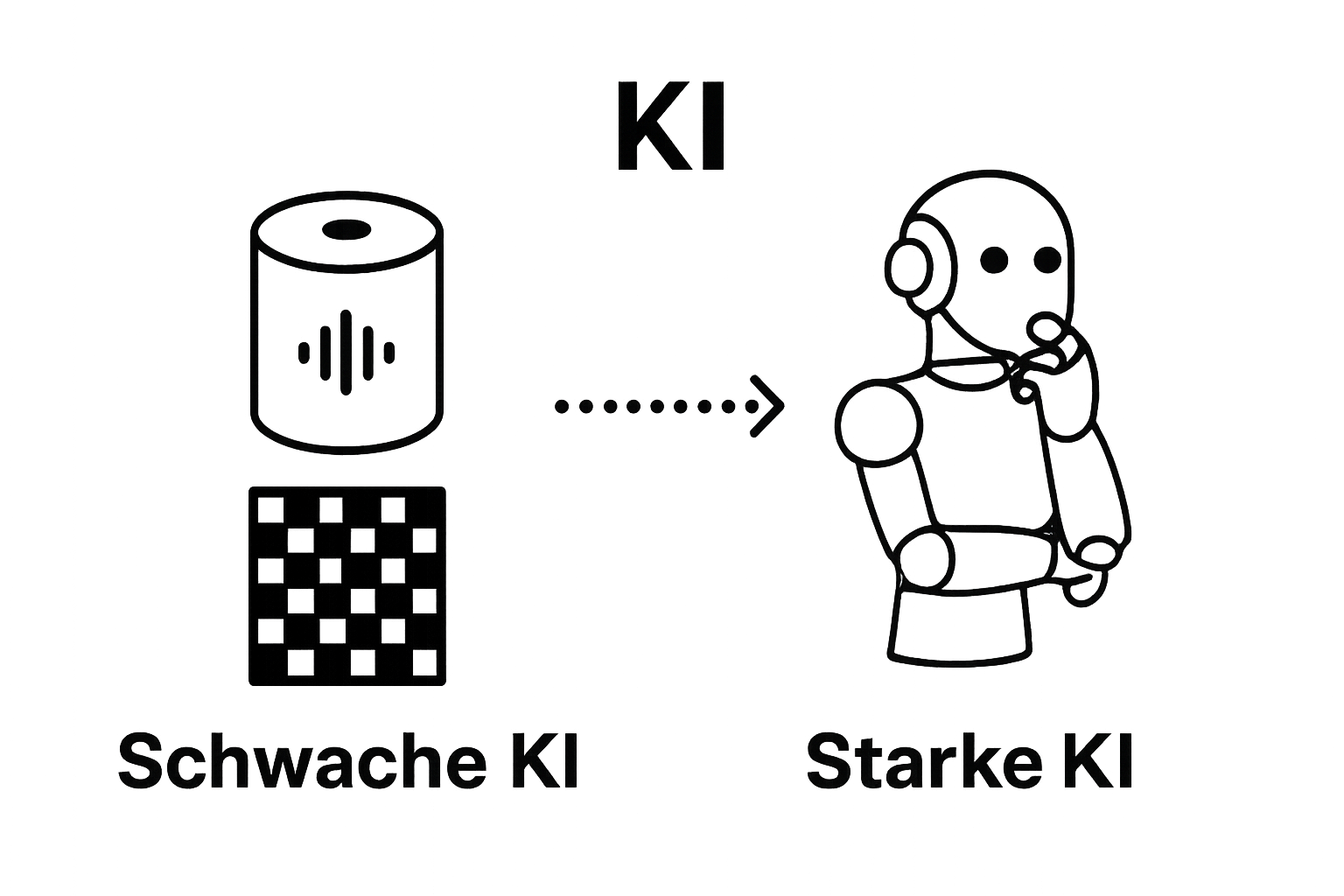
Below you will find a table comparing the two main types of artificial intelligence as described in the article.
| AI Type | Objective | Typical Applications |
|---|---|---|
| Weak AI | Specific tasks, no general intelligence | Speech recognition, playing chess |
| Strong AI | Development of human-like, general intelligence | Future vision: independent problem-solving |
 :
:
- Weak AI: Focuses on specific tasks like speech recognition or playing chess
- Strong AI: Aims to develop human-like intelligence
The technology learns through various methods:
- Machine Learning: Systems improve through human input
- Deep Learning: Algorithms learn independently from large amounts of data
Practical applications of AI
AI is already being used in many areas. Coursera explains that AI systems can handle complex tasks that were previously only performed by humans. These include activities such as:
- Logical thinking and problem-solving
- Real-time decision-making
- Customer service through intelligent chatbots
- Personalized recommendations in streaming services
The functionality of AI is based on analyzing enormous amounts of data. The more high-quality data a system receives, the more precise its predictions and decisions become. Modern AI systems can recognize patterns, learn from experience, and continuously improve their performance.
For families, this means that AI can increasingly simplify education, entertainment, and everyday tasks. From personalized learning programs to intelligent household assistants, AI opens up completely new possibilities for interaction and support.
Why is artificial intelligence important in education?
Artificial intelligence is increasingly revolutionizing the education sector and offering families and children completely new learning opportunities. The integration of AI in educational processes opens up innovative ways to enable individualized and efficient learning.
Personalized learning approaches
According to a UNESCO study, AI can transform education by adapting learning processes individually. Each child has different learning needs and speeds, and AI systems can recognize these differences precisely:
- Individual learning pace: AI adapts learning content to individual progress
- Targeted feedback: Immediate feedback on strengths and areas for improvement
- Adaptive learning materials: Adjusting difficulty level and learning style
Promoting creativity and problem-solving
AI not only supports learning but also promotes important future skills. Research from the Massachusetts Institute of Technology (MIT) shows that AI can help children develop critical thinking skills:
- Development of algorithms and logical thinking
- Promoting creativity through interactive learning environments
- Preparation for an increasingly digital work world
Inclusion and accessibility
A particularly important aspect of AI in education is the ability to make learning more inclusive. AI technologies can break down barriers and provide children with different learning prerequisites better educational opportunities.
For families, this means an opportunity to make education more individual, motivating, and accessible. AI becomes an important tool to provide every child with fair educational opportunities and to promote their potential purposefully.
How does artificial intelligence influence children's learning?
Artificial intelligence is more than just a technology - it becomes an important tool that fundamentally changes children's learning processes. AI can make education more interactive, individual, and motivating.
Personalized learning support
The Harvard Graduate School of Education shows that AI-based learning systems can help children understand complex concepts better. The technology makes it possible to adapt learning content precisely to individual needs:
- Dynamic learning paces: Adjusting difficulty in real-time
- Interactive learning support: Immediate feedback and explanations
- Motivating learning environments: Playful tasks and challenges
Development of cognitive abilities
AI can specifically promote children's cognitive competencies. It not only supports learning but also helps develop important thinking skills:
- Logical and analytical thinking
- Problem-solving skills
- Creative experimentation
Challenges and limitations
Despite the positive aspects, there are important considerations. Scientists at the National Academies of Sciences emphasize that AI cannot completely replace human interaction. The balance between technological support and human guidance remains crucial.
For parents, this means understanding AI as a supplementary learning tool. It can motivate children, provide individual support, and make learning playful - but can never replace the important emotional and social components of human education.
What challenges and opportunities does artificial intelligence offer in schools?
The integration of artificial intelligence in schools is a complex process that brings both great opportunities and significant challenges. Schools face the task of implementing technological innovations in a meaningful and responsible manner.
This table summarizes the main advantages and challenges of artificial intelligence in schools.
| Advantage | Challenge | Description |
|---|---|---|
| Individualized learning | Data protection | Better adaptation to students, but sensitive data handling |
| Early weakness detection | Algorithm bias | Problems are identified, but biases are possible |
| Efficiency improvement | Maintaining human relationships | Process optimization, but personal interaction remains important |
| Improved accessibility | Technical infrastructure | Education for more children, but schools need new technology |
Digital transformation of the education landscape
According to a school development study, implementing AI requires comprehensive change at all school levels. Digital transformation is more than just acquiring new technologies:
- Infrastructure requirements: Expansion of digital school equipment
- Technical competency: Teacher training and development
- Pedagogical reorientation: Adaptation of teaching methods
Opportunities for individualized learning
Artificial intelligence offers enormous potential for customized educational concepts. AI systems can:
- Analyze learning progress precisely
- Generate individual learning recommendations
- Identify weaknesses early
- Personalize learning pace
Challenges and ethical considerations
Despite the advantages, there are important challenges. Technology should not replace human relationships and pedagogical interactions. Key aspects include:
- Student data protection and privacy
- Avoiding algorithm bias
- Balance between technological support and human care
For schools, this means understanding AI as an intelligent supplement - not a replacement, but as a tool to support individual learning processes.