 edory
edory
More and more children use smartphones, tablets and computers – many are online daily by elementary school age. Suddenly we're not just talking about fun while surfing. According to studies, one in seven children online is already exposed to unwanted sexual advances. Most people think that technical protection programs are completely sufficient to protect their children. But true protection begins somewhere else entirely – with knowledge, open communication and trust within the family.
Table of Contents
- What does child safety on the internet mean?
- Why is child safety on the internet important?
- How does child safety on the internet work?
- Key Factors for Safe Internet Use by Children
- Real Risks and Challenges in the Digital Space
Quick Summary
| Takeaway | Explanation |
|---|---|
| Activate technical safety measures | Install parental control software and use filter options to block inappropriate content. |
| Promote open communication | Talk regularly with children about their online experiences and create a trusted basis for exchange. |
| Provide educational awareness | Teach children digital competencies and help them recognize risks on the internet. |
| Develop age-appropriate security strategies | Adapt safety measures to children's developmental age and gradually expand their digital freedoms. |
| Use a dynamic approach to safety | Combine technical solutions with education and trust to make children confident internet users. |
What does child safety on the internet mean?
Child safety on the internet describes all measures and strategies aimed at protecting children from potential dangers in the digital world. This includes not only technical solutions, but also educational approaches and parental supervision.
The Basics of Digital Protection
In a world where children use digital devices at an early age, child safety on the internet becomes a central challenge for parents and guardians. According to FBI research, one in seven children online is exposed to unwanted sexual advances, which underscores the importance of preventive measures.
The core aspects of digital child protection include:
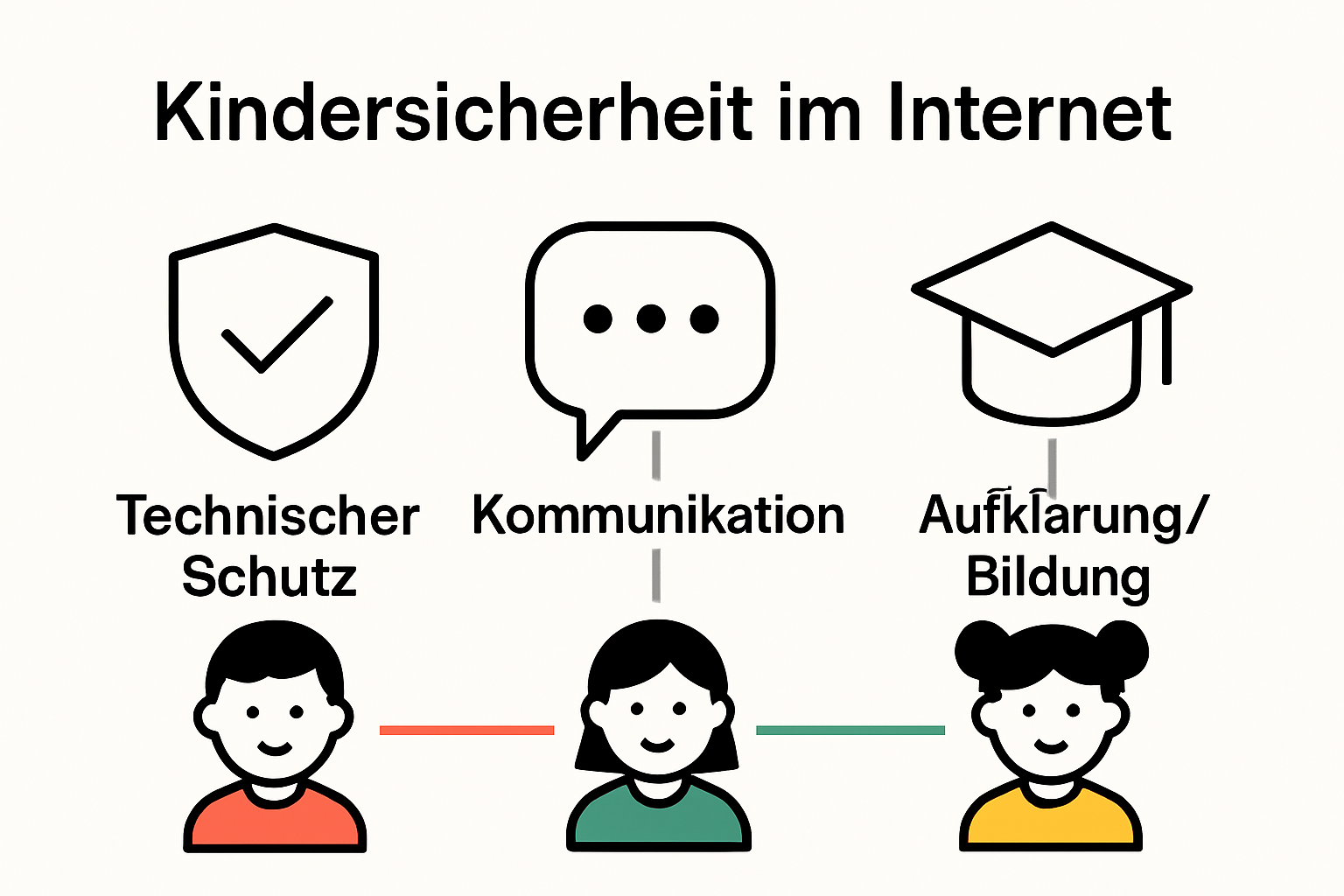
- Technical Protection: Installation of security software and parental control settings
- Education: Informing and raising awareness of children about online risks
- Communication: Promoting open communication culture about digital experiences
Risks and Challenges
The digital world holds various dangers for children. These include cyberbullying, inappropriate content, data privacy risks and potential contact with strangers. Parents must understand that child safety on the internet is a dynamic process that requires continuous attention and adaptation.
The most important risk areas are:
- Social media and its unsupervised use
- Unprotected communication in online games
- Access to developmentally inappropriate content
Modern child safety means not control, but joint learning and trusted support from parents and caregivers. The key lies in teaching children digital competencies and empowering them to interact with the internet independently and responsibly.
Why is child safety on the internet important?
The importance of child safety on the internet is constantly growing as digital technologies become increasingly part of children's daily lives. In an increasingly connected world, children face numerous digital risks that can endanger their safety, development and mental health.
Protection from Digital Dangers
Children are particularly vulnerable to online risks due to their inexperience and curiosity. Scientific studies show that longer daily internet use can be associated with increased risks:
- Psychological strain from cyberbullying
- Data privacy risks and possible identity theft
- Exposure to inappropriate content
Development of Digital Competencies
Child safety means more than just protection. It's about teaching children how to navigate the internet responsibly and safely. This includes:
- Recognizing potential online dangers
- Developing critical thinking in internet use
- Building trust and open communication
Long-term Health Effects
The digital world can have significant impacts on children's development. A comprehensive study shows that excessive internet use is associated with:
- Increased risk of obesity
- Hyperactivity symptoms
- Emotional and social adjustment difficulties
Therefore, child safety is not just short-term protection, but an important investment in the healthy development of young people.
How does child safety on the internet work?
Child safety on the internet is a complex system of technical, educational and communicative approaches designed to protect and support children in the digital world.
Technical Safety Measures
Research from the National Institute of Health shows that technical solutions play a central role in child protection. These include:
- Parental control software: Blocks inappropriate content and limits access times
- Browser extensions: Filters potential hazards and warns of risky websites
- Device settings: Enables age-appropriate access restrictions
Educational Strategies
Beyond technical solutions, education and communication are essential. Parents and caregivers should:
- Teach children digital competencies
- Develop an open communication culture about online experiences
- Provide age-appropriate education about internet risks
Monitoring and Support
Active supervision of internet use does not mean control, but rather trusted support. Important aspects include:
- Regular discussion of online activities
- Joint exploration of digital platforms
- Gradual expansion of digital freedoms
The key lies in a holistic approach that combines technology, education and trust to develop children into independent and safe internet users.
For a better overview of the most important protection strategies for children on the internet, this table summarizes the features of technical, educational and communicative support measures.
| Protection Strategy | Features | Examples |
|---|---|---|
| Technical Measures | Software-based, provides filters and access controls | Parental controls, youth protection apps, time limits |
| Educational Strategies | Promotion of digital competencies, age-appropriate information provision | Educational conversations, media literacy training |
| Monitoring & Support | Active personal support, joint use of digital offerings, trusted relationship | Joint browsing, regular discussion |
| Family Communication | Open communication culture, promoting safety and trust | Conversations about online experiences, feedback questions |

Key Factors for Safe Internet Use by Children
Safe internet use for children requires a comprehensive approach that takes various aspects of digital protection and education into account. It's not just about technical barriers, but about a comprehensive strategy to promote digital competency.
Technical Security Fundamentals
Online safety guides recommend several basic technical measures:
- Activation of parental controls on all devices
- Setting up age-specific user profiles
- Using filter options and access controls
Communication and Building Trust
The most important key factor is open and trusted communication between parents and children. This includes:
- Regular conversations about online experiences
- Joint exploration of digital platforms
- Teaching media literacy without being condescending
Age-Appropriate Strategies
Each age group requires different approaches to internet safety. Important aspects include:
- Adapting safety measures to developmental age
- Gradually expanding digital freedoms
- Promoting critical thinking in internet use
The key lies in a dynamic and trusted approach that develops children into independent and safe internet users.
Real Risks and Challenges in the Digital Space
The internet offers children numerous opportunities, but it also harbors significant risks that can endanger their safety, development and mental health. A comprehensive understanding of these challenges is critical for effective child protection.
Contact Risks and Social Dangers
Humanium research shows that children face various social risks in the digital space:
- Contact with strangers: Unwanted communication and potential endangerment
- Cyberbullying: Emotional and psychological strain from digital violence
- Manipulation: Risks from targeted contact and influence
Information and Content Risks
The quality and safety of online content poses a massive challenge. Children can unintentionally be confronted with:
- Misinformation and fake news