 edory
edory
Surprisingly many parents underestimate how strongly classic and modern fairy tales shape children's understanding of values. Already in preschool age, many children internalize central concepts such as justice, respect, and self-assertion through stories from Europe or Asia. The connection of timeless stories with current social values shows how powerful fairy tales are as a tool for developing social competencies. Those who use fairy tales deliberately promote not only imagination but also important moral skills for life.
Table of Contents
- What Connects Fairy Tales and Modern Values
- Traditional Fairy Tales: Values and Messages
- Current Values in Contemporary Fairy Tales
- Personalized Fairy Tales through Digital Storytelling Apps
- Opportunities and Challenges for Families
Key Insights
| Point | Details |
|---|---|
| Value Transmission through Fairy Tales | Fairy tales are effective tools for conveying social and ethical values such as empathy, resilience, and critical thinking. |
| Transformation of Traditional Fairy Tales | Modern fairy tales reflect contemporary values such as equality and inclusion, which affects the portrayal of characters and their development. |
| Personalized Storytelling Apps | Digital technologies enable interactive and individual storytelling that helps children integrate their own experiences into the narrative. |
| Challenges of Digitalization | Families must promote balanced media consumption to use digital fairy tales as a supplement to personal interaction. |
What Connects Fairy Tales and Modern Values
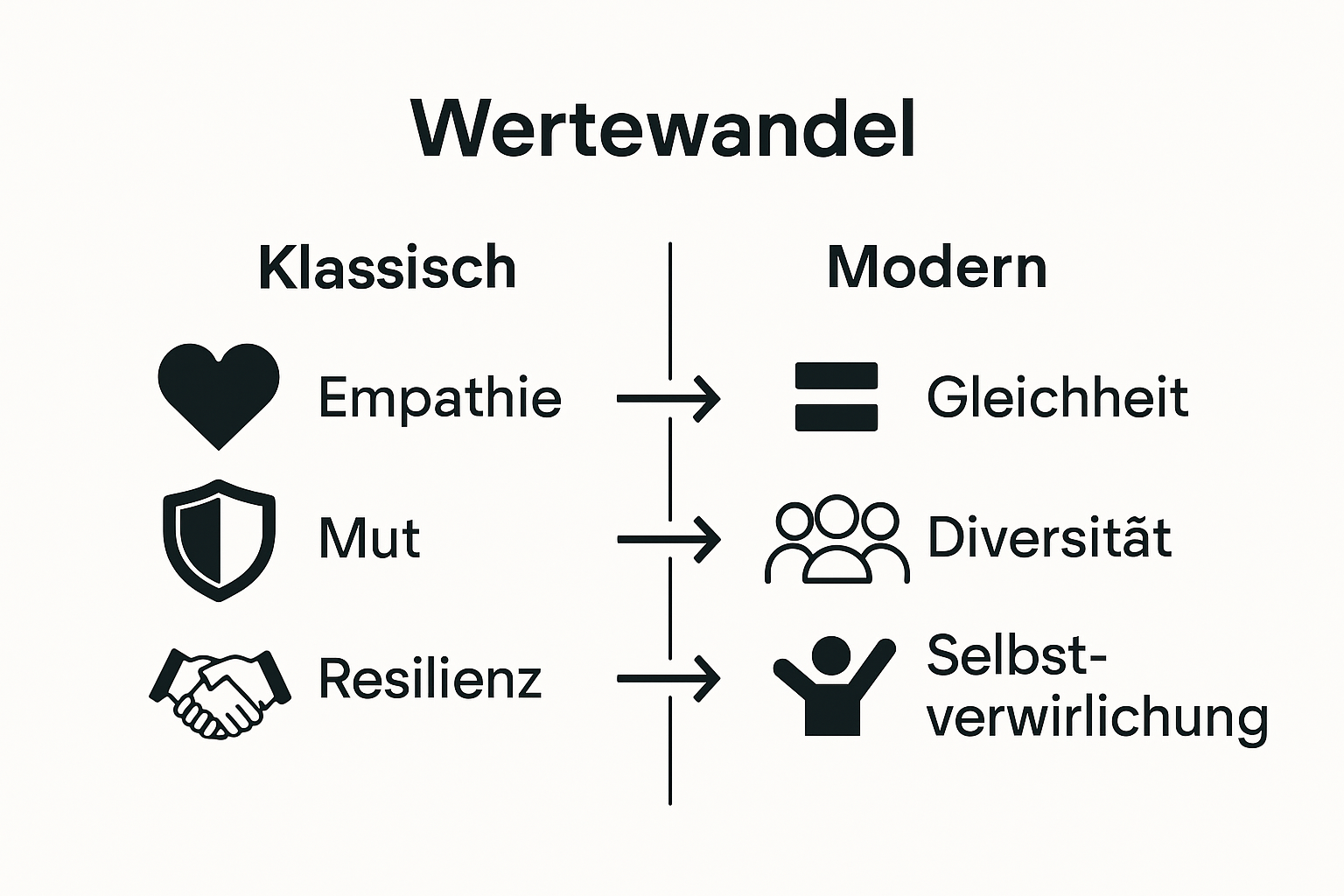
Fairy tales are more than just romantic stories with kings and princesses. They are powerful tools for value transmission that can surprisingly well convey modern social principles. The stories function like subtle textbooks that make complex moral concepts accessible and engaging for children.
In traditional fairy tales, there are surprisingly many parallels to contemporary values such as equality, empathy, and personal development. Take, for example, the fairy tale of Cinderella: Here not only perseverance and inner beauty are emphasized, but also the idea that origin and social status need not be obstacles to personal success. Fairy tale values can teach children modern social competencies by translating complex ethical concepts into understandable narratives.
The connection between fairy tales and modern values is particularly evident in their ability to teach children resilience, compassion, and critical thinking. Stories like "Little Red Riding Hood" teach not only caution, but also the importance of communication and trust. Modern interpretations of these fairy tales can be deliberately used to teach children important social and emotional competencies—from conflict resolution to self-determination. The narrative structure of fairy tales makes abstract concepts tangible and allows children to experience and understand moral dilemmas through the perspective of characters.
Traditional Fairy Tales: Values and Messages
Traditions and stories from the past often carry profound moral messages that shape generations of children. Fairy tales are more than just entertaining stories—they are complex mediators of social norms and ethical principles. These narrative artworks convey subtle lessons about courage, compassion, justice, and personal development.
Each classic fairy tale contains specific moral core messages. The wolf in Little Red Riding Hood teaches caution and obedience, Cinderella demonstrates the importance of dignity and inner strength, while the Frog Prince symbolizes loyalty and overcoming prejudice. Traditional fairy tales can teach children important life skills by making complex ethical concepts tangible through engaging narrative structures.
Value transmission in fairy tales works particularly effectively through their universal narrative structure. Characters face challenges, learn from mistakes, and grow—a process that helps children understand moral dilemmas. Fairy tales show that goodness, honesty, and compassion ultimately triumph, while arrogance and selfishness are punished. These narrative patterns subtly shape young people's moral understanding and provide them with emotional and ethical guidance in a complex world.
Current Values in Contemporary Fairy Tales
The world of fairy tales continually evolves and adapts to changing social norms and values. Modern fairy tales increasingly reflect concepts such as equality, diversity, inclusion, and emotional intelligence, which were often neglected in traditional stories. These contemporary interpretations enable children to understand complex social dynamics and ethical principles.
Newly interpreted fairy tales break old stereotypes and present more diverse characters. Princesses are no longer portrayed as passive victims, but as self-determined heroines with their own dreams and abilities. Male protagonists show emotional depth and vulnerability, rather than merely serving as strong protectors. Contemporary fairy tales convey modern values and life skills to children by combining traditional narratives with progressive social perspectives.
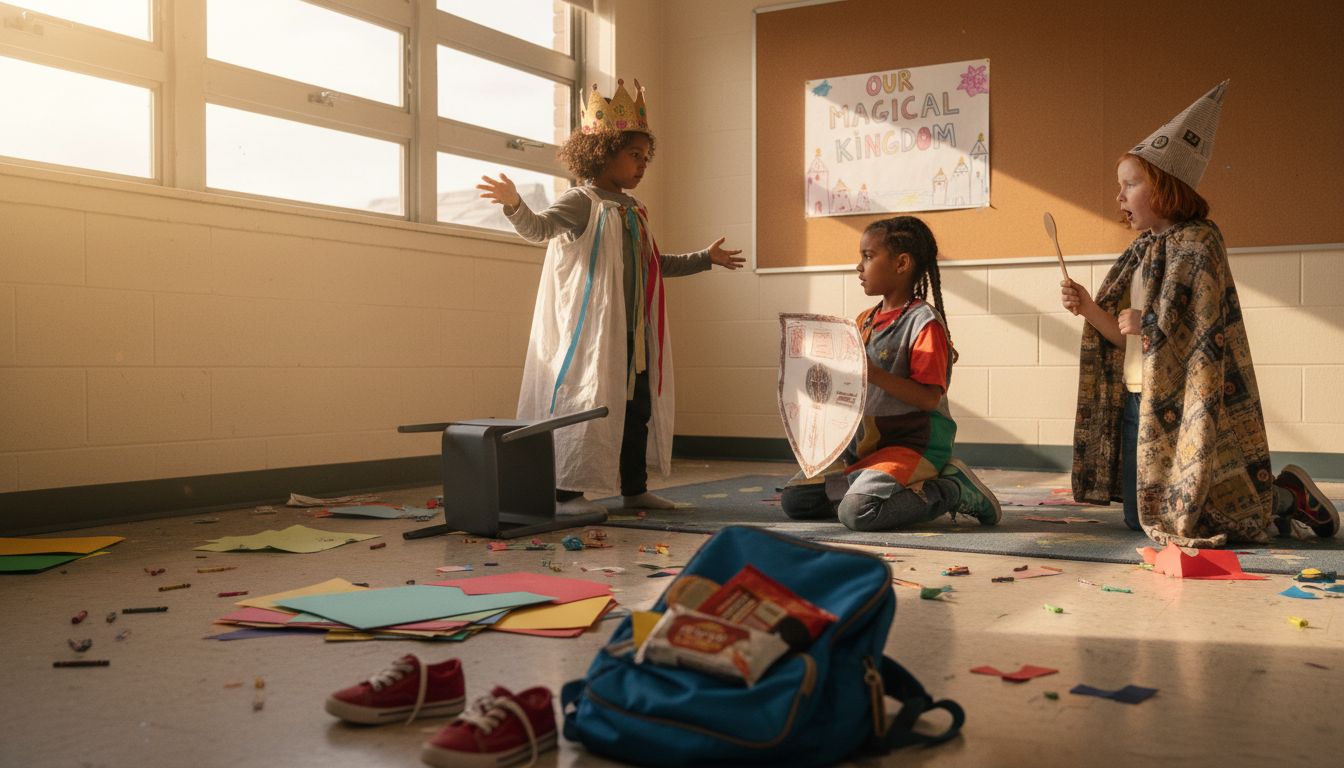
The transformation of fairy tales reflects societal developments. They teach children empathy, respect for differences, and the importance of cooperation. Rather than following simplified good-versus-evil dichotomies, modern fairy tales present nuanced characters who make mistakes, learn, and grow. These narratives encourage young people to develop compassion, question prejudices, and develop a more open, inclusive worldview.
Personalized Fairy Tales through Digital Storytelling Apps
The digital revolution is transforming the way children experience and understand stories. Personalized storytelling apps enable a completely new dimension of interactive storytelling where children are not merely passive listeners but active creators of their fairy tale world. These innovative digital platforms tailor stories individually to each child's interests, age, and personality.
Modern digital technologies allow parents and children to dynamically shape fairy tales. Characters can be customized as desired, story lines individually changed, and moral dilemmas explored interactively. Personalized stories offer children unique opportunities for identification and self-reflection by integrating their own experiences directly into the narrative.
The technology enables not only personalization but also expands educational potential. Artificial intelligence can generate stories in real-time that playfully convey complex values such as empathy, teamwork, and critical thinking. These digital fairy tales are more than entertainment—they are interactive learning spaces that help children develop social competencies and understand moral decision-making processes.
Opportunities and Challenges for Families
The digital transformation of the fairy tale world brings both remarkable opportunities and complex challenges for modern families. Digital storytelling opens new ways of shared interaction while simultaneously posing the challenge for parents to create balanced and meaningful media consumption. The technology offers families innovative ways to convey values and share educational experiences.
At the same time, increasing digitalization requires conscious media guidance. Parents must take a critical look at content and carefully select digital offerings. Personalized stories offer families new opportunities for shared learning, but they do not replace direct human interaction and personal interpretation of fairy tales.
The greatest challenge lies in balancing technological innovation with human closeness. Digital fairy tales can support learning processes but should be understood as a supplement to, not a replacement for, shared reading time and family interaction. Parents are called upon to actively accompany the content, discuss stories, and reflect on moral messages together with their children.
Discover Personal Fairy Tales for Modern Value Transmission
The challenge of bringing children current values such as empathy, respect, and self-determination through stories requires new approaches. While classic fairy tales convey important messages, modern families seek individually tailored solutions that address different age groups and interests of their children. This is exactly where Edory.ai comes in: With personalized, interactive stories, parents and children can playfully experience and deepen moral and emotional competencies together.
Experience how Uncategorized – Edory AI – Educational Children's Stories enriches children's learning process through customized narratives. Take advantage of receiving daily new stories specifically tailored to your child. Start now and discover on Edory.ai the future of digital storytelling that lovingly combines education and value transmission.
Frequently Asked Questions
What are the main values conveyed through fairy tales?
Fairy tales convey important values such as compassion, justice, personal development, and resilience. They help children understand and internalize complex moral concepts.
How do modern fairy tales promote equality?
Modern fairy tales often present more diverse characters and break old stereotypes. They portray princesses as self-determined heroines and show male protagonists in emotional roles, which supports equality and diversity.
How do digital storytelling apps help children with value transmission?
Digital storytelling apps enable children to interactively shape stories, allowing them to contribute personal experiences and explore moral dilemmas in a safe setting. This promotes identification and self-reflection.
What challenges exist in using digital fairy tales for families?
The main challenges are balancing digital media consumption with human interaction and the need for critical selection of appropriate content. Parents should use digital fairy tales as a supplement to traditional storytelling formats and actively discuss them with their children.
Recommendation
- Understanding the Benefits of Imaginative Play – The Zoofamily