 edory
edory
Every third child in Germany enters elementary school with significant language deficits. Especially in the preschool years, reading lays the foundation for cognitive, emotional, and social skills. When children are playfully motivated to read through individually tailored stories, they develop curiosity, compassion, and greater self-confidence. Discover how targeted reading aloud strengthens your child's development and why the right story offers far more than mere entertainment.
Table of Contents
- How Reading Supports Child Development
- Reading Types and Their Impact on Children
- Promoting Language and Imagination Through Stories
- Reading as a Key to Social Competence
- Avoiding Mistakes and Risks in Early Reading
Key Findings
| Point | Details |
|---|---|
| Reading Promotes Development | Reading supports children's cognitive, emotional, and social development by expanding vocabulary and improving language comprehension. |
| Different Reading Types | Analytical and creative reading types promote different skills that are crucial for academic and social success. |
| Stories as Development Tools | Stories help promote language skills and imagination by expanding grammar and vocabulary while stimulating creative thinking. |
| Managing Reading Demands | Balanced reading education is important to avoid overwhelm and performance pressure; reading should be perceived as a joyful experience. |
How Reading Supports Child Development
Reading plays a crucial role in the holistic development of children. It is much more than a simple leisure activity - it is a powerful tool for promoting cognitive, emotional, and social skills. For example, the University of Leipzig study shows that independent reading significantly improves children's attention performance.
Through regular reading, children develop important competencies: they expand their vocabulary, improve their language comprehension, and learn to follow complex lines of thought. Narrative structures help them understand cause-and-effect relationships and build emotional intelligence. Particularly important is the ability to put themselves in different perspectives and develop empathy.
Neurological development is also massively supported by reading. Oskar Jennis's research clarifies how important regular cognitive stimulation is for brain development. During reading, neural connections are strengthened, concentration ability is increased, and logical thinking is promoted. Children who read early and frequently demonstrate better academic performance and higher emotional resilience.
Pro Tip for Parents: Make reading a shared, playful experience. Read aloud daily, let your child retell stories, and choose age-appropriate, exciting books that spark curiosity and imagination.
Reading Types and Their Impact on Children
There are different reading types that significantly influence child development. Traditionally, we distinguish between linear, analytical, and creative reading types, each with unique significance for children's cognitive and emotional development. The Stavanger Declaration on the Future of Reading particularly emphasizes the differences between digital and printed reading.
The analytical reading type is characterized by structured and detailed understanding. Children of this reading type break down texts precisely, question connections, and develop deep comprehension of complex narratives. They learn to filter information, reflect critically, and make logical connections. Such skills are decisive for academic success and scientific thinking.
The creative reading type, on the other hand, is emotionally swept away by stories. These children strongly identify with characters, develop imagination and emotional intelligence. The University of Leipzig study shows that creative readers often develop higher attention spans and better social-emotional competencies.
Pro Tip for Parents: Encourage your child to try different reading types. Offer a variety of reading materials - from non-fiction books to fantasy literature - and observe which reading type brings your child the most joy.
Below you will find an overview of how different reading types promote different competencies in children:
| Reading Type | Cognitive Strengths | Emotional Strengths | Suitable Reading Material |
|---|---|---|---|
| Analytical | Precise text analysis, logical thinking | Critical reflection, perseverance | Non-fiction books, detective stories |
| Creative | Visual imagination, creativity | Empathy, imagination | Fairy tales, fantasy literature |
| Linear | Concentration, structure recognition | Stability, sense of security | Series books, adventure stories |
Promoting Language and Imagination Through Stories
Stories are a magical tool for promoting language and stimulating imagination in children. They offer far more than mere entertainment - they are a complex development instrument that stimulates creativity, language comprehension, and emotional intelligence simultaneously. Studies from the Foundation Children Research impressively demonstrate how targeted storytelling positively influences child language development.
By immersing themselves in narrative worlds, children unconsciously learn grammatical structures, expand their vocabulary, and develop a deeper understanding of linguistic nuances. Complex stories promote the ability to understand abstract concepts, recognize connections, and construct their own thought structures. Fairy tales and fantasy stories in particular stimulate children's imagination and enable them to develop creative problem-solving strategies.
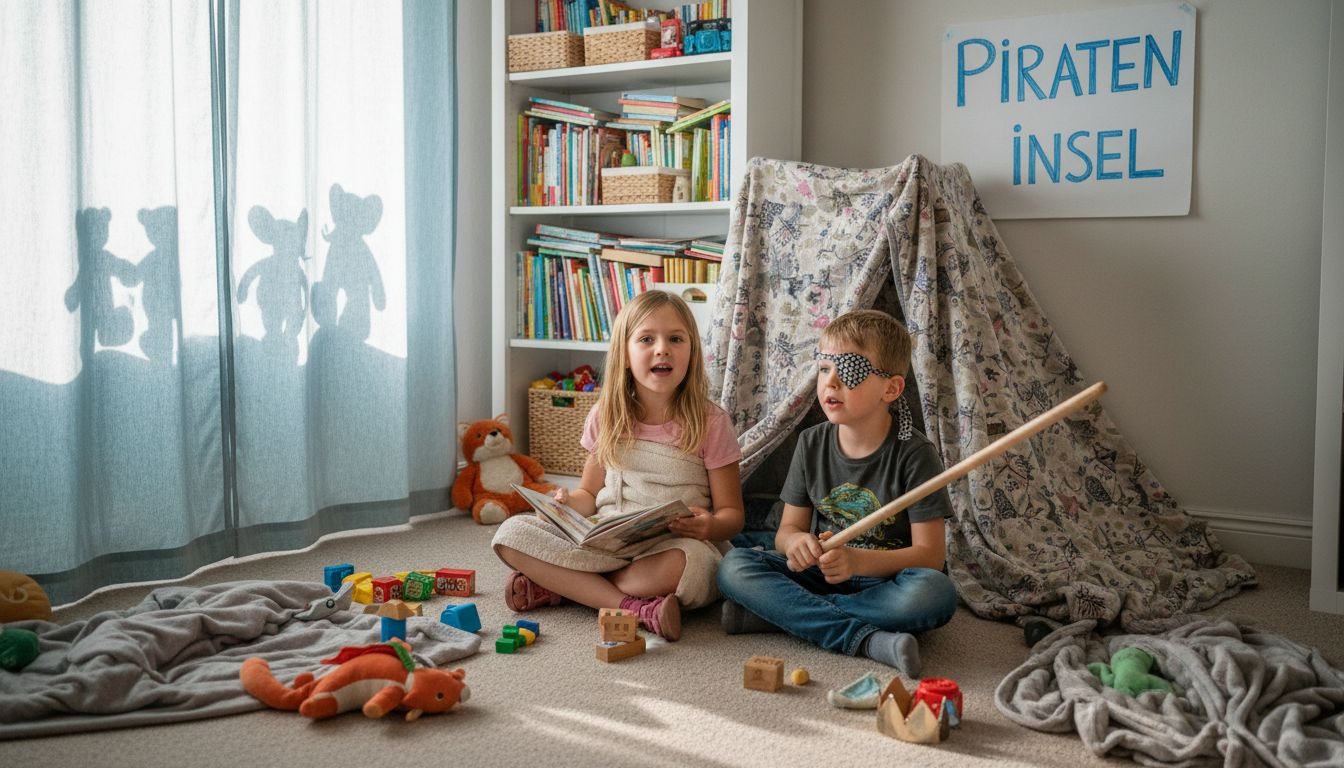
Developmental psychology studies from the University of Bremen clarify that interactive storytelling promotes language competence even more effectively. Children who are actively involved in stories - for example through retelling, adding to, or jointly inventing story lines - develop significantly higher linguistic flexibility and expressiveness.
Pro Tip for Parents: Make storytelling a shared experience. Let your child help shape parts of the story, ask open-ended questions, and encourage them to contribute their own ideas and interpretations.
Reading as a Key to Social Competence
Reading is far more than a cognitive skill - it is a crucial key to developing social competence. The Rostock Longitudinal Study convincingly shows how regular reading sustainably shapes children's social intelligence. By immersing themselves in various narrative worlds, children learn to put themselves in different perspectives, understand emotions, and grasp complex interpersonal relationships.
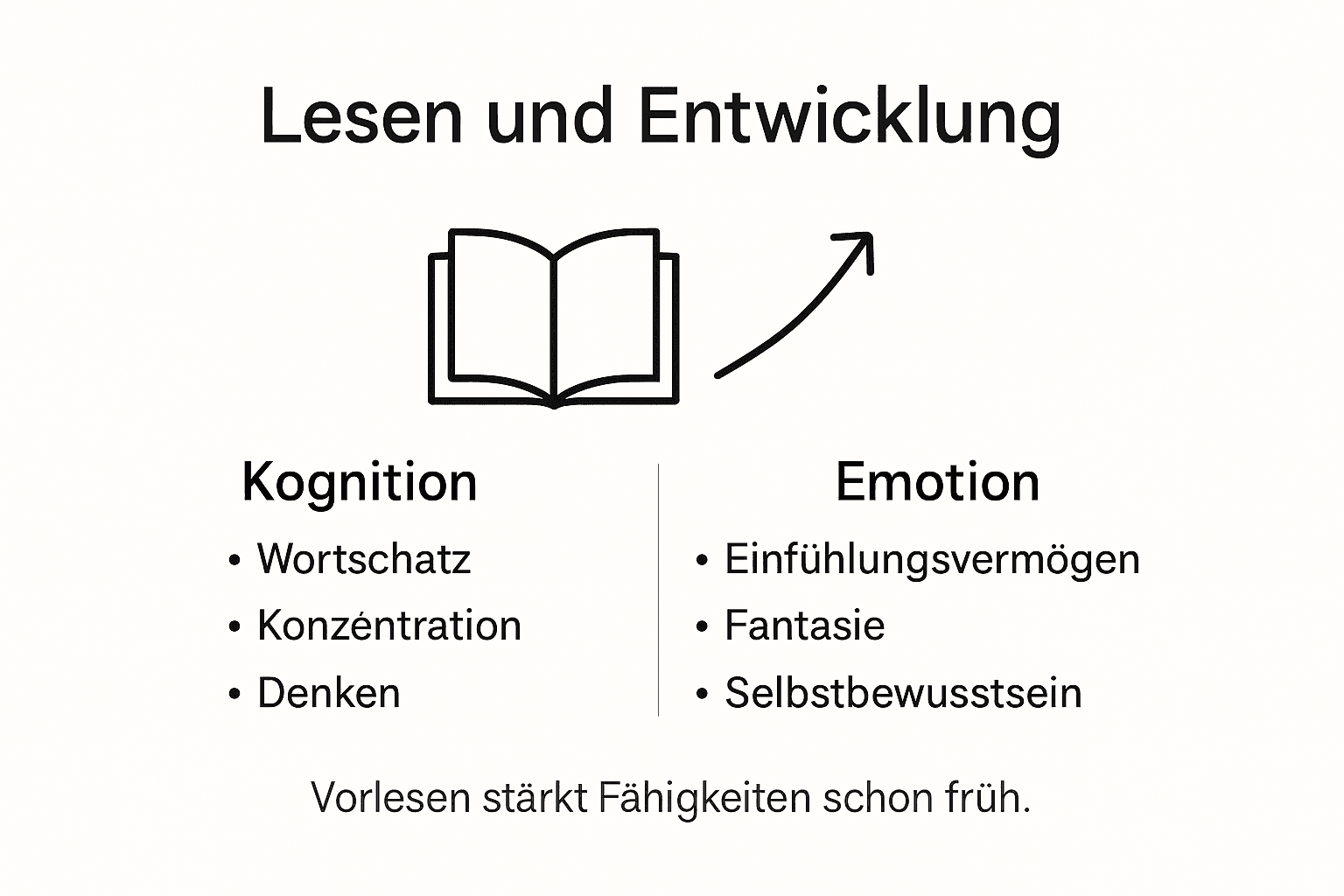
Stories function like a social training ground: they enable children to explore conflicts, emotional states, and relationship dynamics without being directly involved. Characters become mental models for social behavior. Children learn empathy, conflict resolution, and emotional intelligence - skills that extend far beyond book pages. A child who reads regularly develops a deeper understanding of different life situations and human behaviors.
The ACE Study also underscores the significant role of positive activities like reading in healthy social development. Books can act like a shield, helping children remain resilient and emotionally stable even in challenging life situations. They provide guidance, convey values, and demonstrate strategies for managing interpersonal challenges.
Pro Tip for Parents: Make reading a shared experience. Talk with your child about the stories, ask about their feelings and thoughts regarding the characters - this actively promotes their social and emotional development.
Avoiding Mistakes and Risks in Early Reading
When it comes to early reading, there are crucial aspects that parents and educators must absolutely consider. The Bayley Scales of Infant Development show that excessive or poorly designed reading promotion can unintentionally impair child development. Not every reading method is equally suitable for every child, and individual development levels must be taken into account.
A common mistake is the pressure that parents unconsciously create. Children must perceive reading as a joyful experience, not as performance pressure. Overwhelm can lead to reading frustration and long-term aversion to books. It is important to adapt the pace and intensity of reading promotion individually to the child's development and interests.
The Zurich Longitudinal Studies clarify that balanced reading education is crucial. Risks arise when digital media completely replace reading or when children are confronted too early with overly complex texts. Instead, age-appropriate, motivating materials should be chosen that spark curiosity and enable playful learning.
The following table summarizes common mistakes in early reading and corresponding solutions:
| Typical Mistake | Possible Consequences | Recommended Solution |
|---|---|---|
| Overwhelm with difficult texts | Frustration, rejection of books | Choose age-appropriate, motivating materials |
| Performance pressure from parents | Reading fatigue, stress | Present reading as fun, promote shared reading |
| Using only digital media | Lower reading competence | Use printed and digital media in balance |
Pro Tip for Parents: Observe your child carefully and flexibly adapt reading offers to their development and interests. Read together, make it an adventure, not a chore.
Promoting Reading with Individually Tailored Stories
Promoting child development through reading is a valuable task for parents. The article topic clearly shows how important it is for children to be motivated with age-appropriate and exciting stories. Challenges like overwhelm or reading frustration can be playfully overcome with suitable stories. Therefore, creative and pedagogically meaningful reading promotion is essential to support cognitive and emotional development.
Edory.ai offers you an innovative solution where you receive personalized, child-friendly stories every day. Our platform combines education and imagination and adapts precisely to your child's interests and developmental level. Discover diverse reading types and specifically promote language and social competencies in a playful way. Learn more in our section Uncategorized – Edory AI – Educational Children's Stories.
Let your child grow with stories from Edory.ai and experience consistent, loving reading promotion that works without pressure. Visit Edory.ai now and start today with personalized stories that spark joy in reading and promote development.
Frequently Asked Questions
How does reading promote children's cognitive development?
Reading improves attention performance, expands vocabulary, and promotes language comprehension, all of which contribute to cognitive development.
What role does storytelling play in language development?
By immersing themselves in stories, children learn grammatical structures and expand their vocabulary, which strengthens their language competence.
What are the differences between different reading types?
There are analytical, creative, and linear reading types, with each reading type promoting unique cognitive and emotional strengths, such as analytical thinking or empathy.
How can I encourage my child to read?
Make reading a shared experience by reading aloud daily and selecting age-appropriate books that spark your child's interest and imagination.