 edory
edory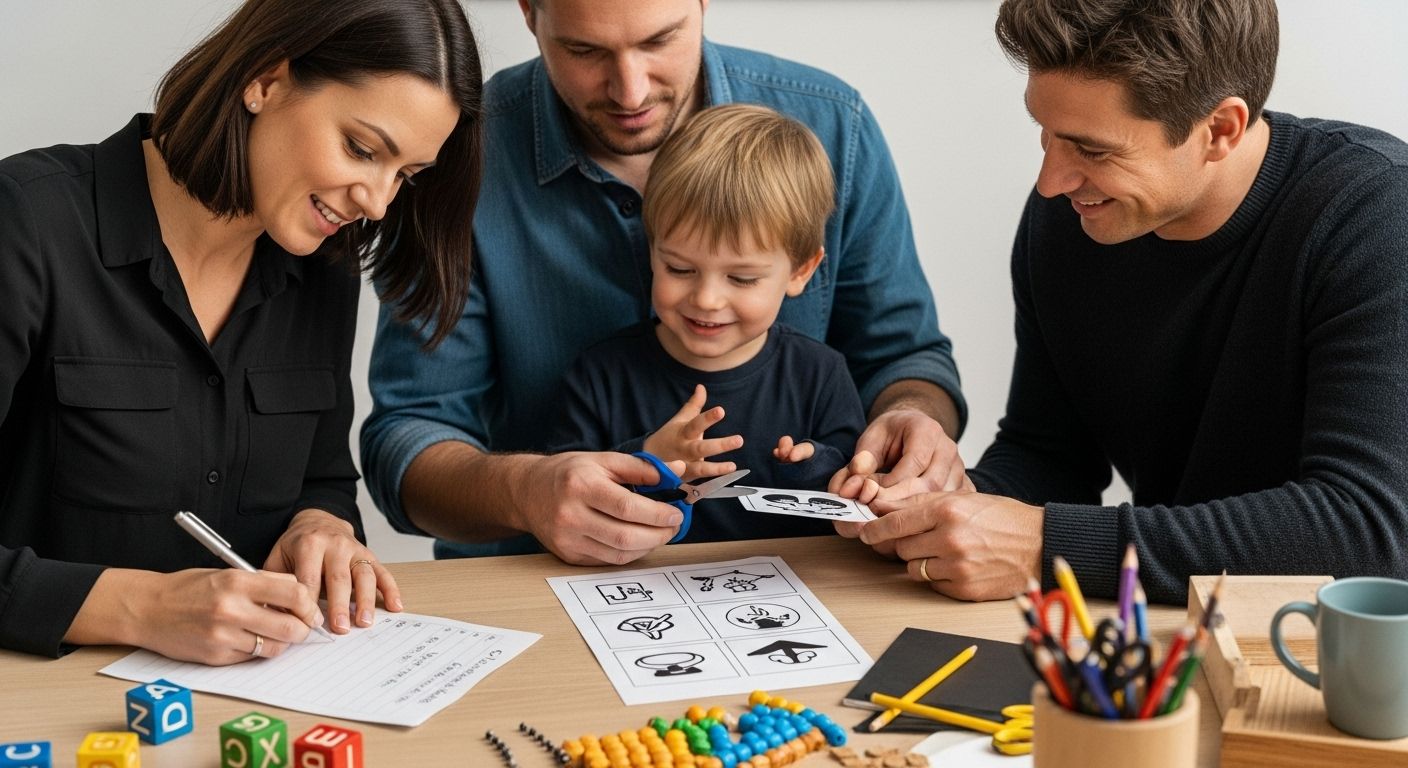
Preparing for school often significantly shapes how children start elementary school. Many parents rely on classic workbooks and practice sheets to get their child ready. However, surprisingly, according to experts, playful activities have a significantly stronger influence on the development of school readiness. It is not just bureaucratic checklists, but small, targeted steps in everyday life that provide more confidence and joy in learning.
Table of Contents
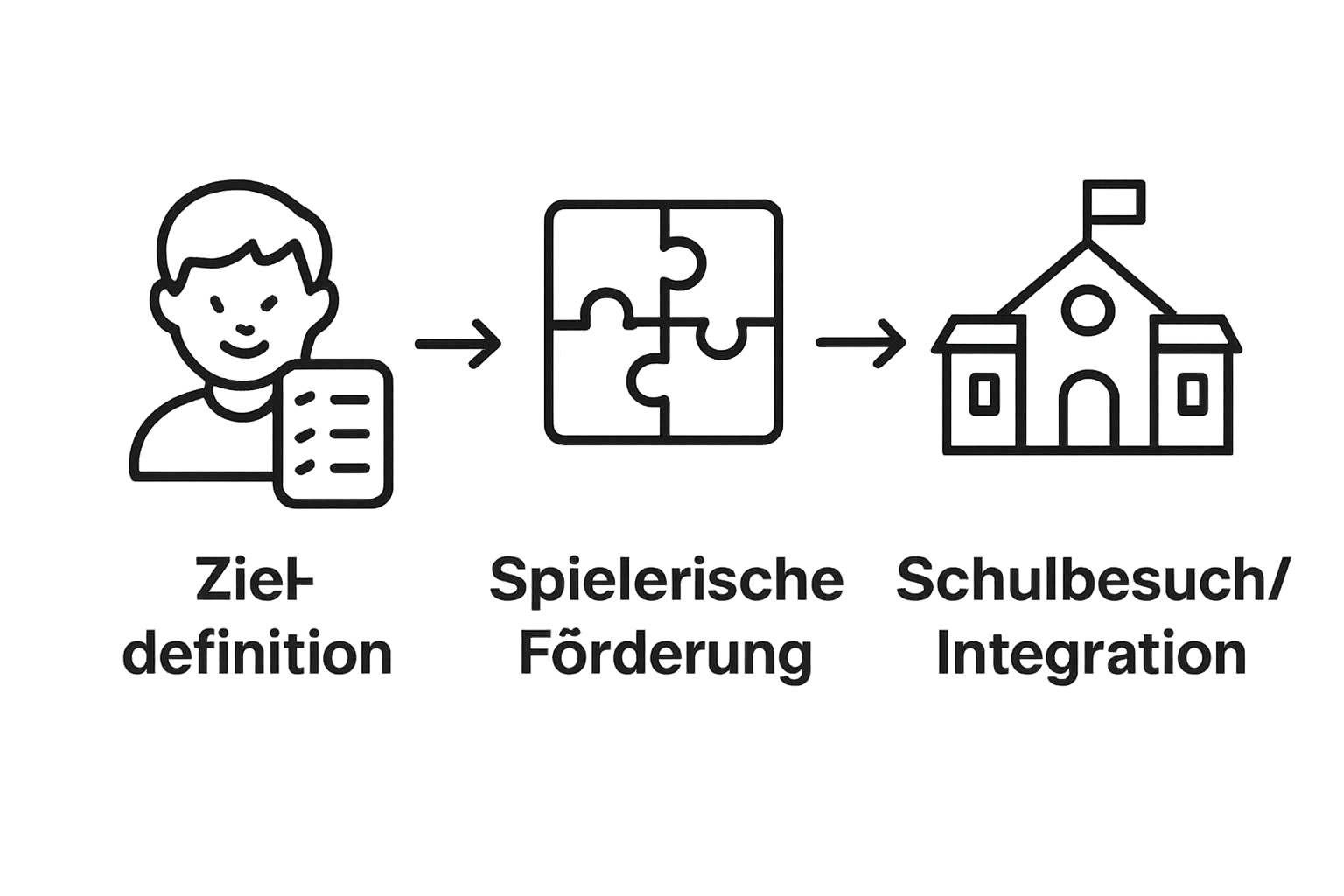
- Step 1: Create a Development Plan for Your Child
- Step 2: Foster Basic Skills Through Playful Activities
- Step 3: Organize Regular School Visits
- Step 4: Communicate with Teachers and Other Parents
- Step 5: Review Your Preparation with an Elementary School FAQ
Quick Summary
| Main Point | Explanation |
|---|---|
| 1. Create a Development Plan | Identify your child's strengths and needs to set targeted development goals. |
| 2. Foster Basic Skills Playfully | Integrate learning activities into play to develop skills in language, math, and social competencies. |
| 3. Organize School Visits | Visits to school help foster familiarity and confidence in your child. |
| 4. Communicate Openly with Teachers | Open communication with teachers and parents ensures a supportive school environment for your child. |
| 5. Use an FAQ for Preparation | Create a question catalog to systematically clarify all aspects of elementary school preparation. |
Step 1: Create a Development Plan for Your Child
The transition to elementary school is a significant phase in your child's development and requires careful, individual preparation. A development plan helps you promote your child's school readiness in a targeted and structured way. This first step focuses on identifying your child's unique strengths, challenges, and learning needs, and developing a customized preparation approach.
Begin with a comprehensive assessment of your child's current abilities. Carefully observe how your child demonstrates motor, social, emotional, and cognitive competencies. Document progress in areas such as concentration ability, independence, social behavior, and basic learning skills. This assessment forms the foundation for your individual development plan.
According to findings from the German Academy for Child and Adolescent Medicine, the following development areas are particularly crucial:
- Language expression ability
- Mathematical basic understanding
- Motor skills
- Social interaction abilities
- Emotional regulation competency
Based on this analysis, define concrete, age-appropriate development goals. These goals should be realistic, measurable, and motivating. Avoid overwhelming your child, instead focusing on small, gradual progress. A balanced plan considers both learning activities and adequate space for play, relaxation, and age-appropriate leisure activities.
An effective development plan integrates playful learning elements that maintain your child's motivation and joy in learning.
To give you a quick overview of the crucial development areas in your child's development plan, here is a summary table of the most important competencies and their examples.
| Development Area | Exemplary Skills |
|---|---|
| Language Expression Ability | Telling stories, creating rhymes |
| Mathematical Basic Understanding | Recognizing numbers, comparing quantities |
| Motor Skills | Cutting, painting, crafting |
| Social Interaction Abilities | Playing with others, making compromises |
| Emotional Regulation Competency | Expressing feelings, dealing with disappointment |
Regular review and flexible adjustment are essential. Plan an interim review every two to three months to evaluate progress and adjust the plan if needed. Stay positive and patient—every child develops at their own pace.
Step 2: Foster Basic Skills Through Playful Activities
Elementary school preparation requires more than just theoretical learning. Playful activities are the key to preparing your child comprehensively and motivatingly for school. This step focuses on strengthening basic skills through fun and developmentally supportive games and interactions.
Children learn best while having fun. Integrate learning moments into everyday play situations that naturally develop your child's motor, cognitive, and social competencies. Transform homework, movement games, and creative activities into exciting challenges that your child eagerly takes on.
According to findings from the Conference of Ministers of Education, the following competency fields are particularly important:
- Language expression ability
- Mathematical basic understanding
- Logical thinking
- Fine motor skills
- Social interaction ability
For language development, role-playing, shared storytelling, and memory games work excellently. Let your child invent their own stories, sort words, or create rhymes. These activities not only train vocabulary but also foster creativity and communication skills.
Mathematical foundations can be wonderfully conveyed through everyday situations. Counting ingredients together while cooking, playing dice games, or comparing quantities makes numbers and mathematical concepts tangible and exciting. Build counting games into movement activities to make mathematics come alive.
Particularly important are activities that promote fine motor skills and concentration. Puzzles, modeling clay, drawing, or craft work develop not only manual dexterity but also prepare for learning to write. Ensure that these activities are enjoyable and not perceived as mandatory exercises.
Social competencies develop through group games, shared projects, and cooperative tasks. Encourage your child to play with siblings, friends, or family members, understand rules, and make compromises. These experiences are fundamental for later school life.
Continuously observe progress and adapt activities to your child's developmental level. The art lies in finding a balance between challenge and overwhelm, so your child learns with motivation and joy.
Step 3: Organize Regular School Visits
The transition to elementary school can be an exciting but also challenging experience for children. Regular school visits are crucial to provide your child with familiarity, security, and confidence for the upcoming school start. This step aims to reduce fears and awaken curiosity for the new learning environment.
Contact your local elementary school early and ask about possibilities for trial days or orientation programs. Most schools offer special events that give children and parents a first impression. These visits are more than just formal appointments—they are important opportunities to build trust and make the unknown familiar.
According to research findings in Frontiers in Psychology, such transition activities are particularly significant for:
- Emotional preparation
- Social adaptability
- Reduction of school anxiety
- Strengthening self-confidence
- Development of orientation knowledge
Plan school visits systematically and prepare them together with your child. Speak positively about school, show enthusiasm and excitement. Encourage your child to ask questions and develop curiosity. If possible, attend parent information evenings and use them to learn about procedures, expectations, and support options.
During school visits, it is important that your child explores the facilities. Let them explore the schoolyard, visit the classroom, and make first contact with future classmates and teachers. Take photos together of areas your child likes—these images can serve as positive reminders later.
Prepare your child for the impressions. Discuss what to expect: new faces, different routines, unfamiliar rules. While doing so, convey security and confidence. Show understanding for possible uncertainties, but also emphasize the exciting aspects of school life.
After each school visit, take time for an open conversation. Listen to the impressions and feelings that occupy your child. Validate their emotions and give space for questions and uncertainties. This trusting communication helps reduce fears and develop anticipation.
Finally, document the progress. A small diary or photo collage can help your child visualize development and build pride in the upcoming school time.
Step 4: Communicate with Teachers and Other Parents
Successful elementary school preparation is based on open, respectful, and constructive communication between parents, teachers, and the school community. This step focuses on building solid relationships that enable your child an optimal transition into the school world.
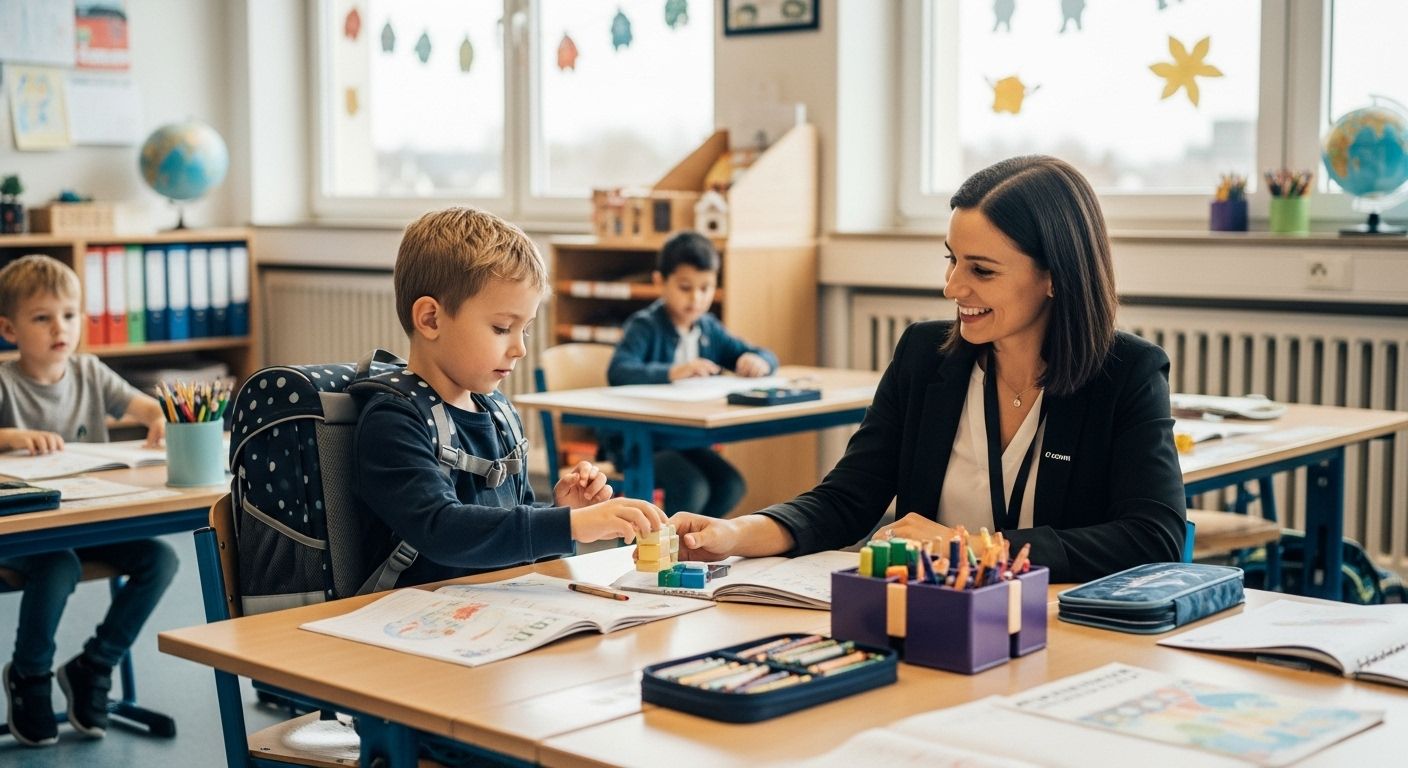
The first contact with teachers should be professional and appreciative. Prepare carefully for parent evenings and initial conversations. Write down questions about curriculum, teaching methods, support opportunities, and individual developmental aspects. Show genuine interest in the teachers' perspective and signal your willingness to collaborate.
According to current educational research findings, the following communication aspects are particularly important:
- Regular and constructive dialogue
- Respectful encounters on equal footing
- Mutual support
- Transparency and openness
- Focus on the child's needs
Actively network with other parents. School entry groups, parent evenings, and informal meetings offer excellent opportunities to make contacts. Exchange experiences, share worries and joys. This community can provide valuable support and practical tips.
Develop a proactive communication strategy with teachers. Arrange regular brief contacts, whether by email or short conversations. What matters is not the quantity but the quality of communication. Focus on constructive feedback and shared problem-solving approaches.
Be honest about your child's strengths and challenges. Inform the teacher about special talents, but also about possible areas for development. This openness enables individually adapted support and shows your genuine commitment to your child's school development.
Always maintain an appreciative communication culture. Avoid confrontations or accusatory tones. Approach teachers and other parents with respect, empathy, and the shared goal of giving the child the best possible start.
Document important conversations and agreements. Brief conversation notes or notes help keep agreements in view and prevent misunderstandings. This structure supports trusting and constructive collaboration.
Step 5: Review Your Preparation with an Elementary School FAQ
Elementary school preparation culminates in a systematic review of all important aspects to ensure that you and your child are optimally equipped for school start. A comprehensive FAQ helps you clear up final uncertainties and ensure a smooth transition.
Create a personal question catalog that covers all essential areas of elementary school preparation. Divide it into categorical areas to guarantee a structured approach. Not only the answers are important, but also the process of asking targeted questions and researching.
According to findings from elementary school experts, the following core areas should be covered:
- School materials and equipment
- Class times and schedule
- Social interactions
- Learning organization
- Emotional preparation
Start with practical questions about school materials. What is needed? Which backpacks are age-appropriate? Which notebooks and pens are suitable? Research not only online but also use personal conversations with experienced parents and teachers.
Consider aspects of learning organization. How is the daily routine structured? What homework routines make sense? How can you help your child complete tasks independently? These questions help develop realistic expectations and build support structures.
An important focus is on emotional aspects. How can your child overcome separation anxiety? What strategies help build self-confidence? How do you support them with new social challenges? These questions require empathy and individual solutions.
Use various information sources: school websites, parenting guides, personal conversations, and experience reports. Create a digital or physical folder where you collect answers, contacts, and important information.
In summary, your FAQ should not only answer questions but also reduce your uncertainties. Take time to reflect on the answers and discuss them with your child. A well-prepared child enters elementary school with confidence and curiosity.
This table provides a clear overview of the relevant question areas you should consider in your elementary school preparation FAQ for your child.
| Question Area | Exemplary Key Questions |
|---|---|
| School Materials & Equipment | Which pens, backpacks, and school notebooks are needed? |
| Class Times & Schedule | When does class begin and end? |
| Social Interactions | How does my child make friends? |
| Learning Organization | How do we structure homework and learning times? |